Typical of the sorcery currently taking place in the Synodal Church, Leo XIV and the filthy pornographer Fernandez, want to tell us on the one hand that the “Church” doesn’t bless same sex unions in the way the Germans and Jimmy Martin wants it done, while on the other allowing this little sin-odal nugget to sneak through in the latest Synodal report.
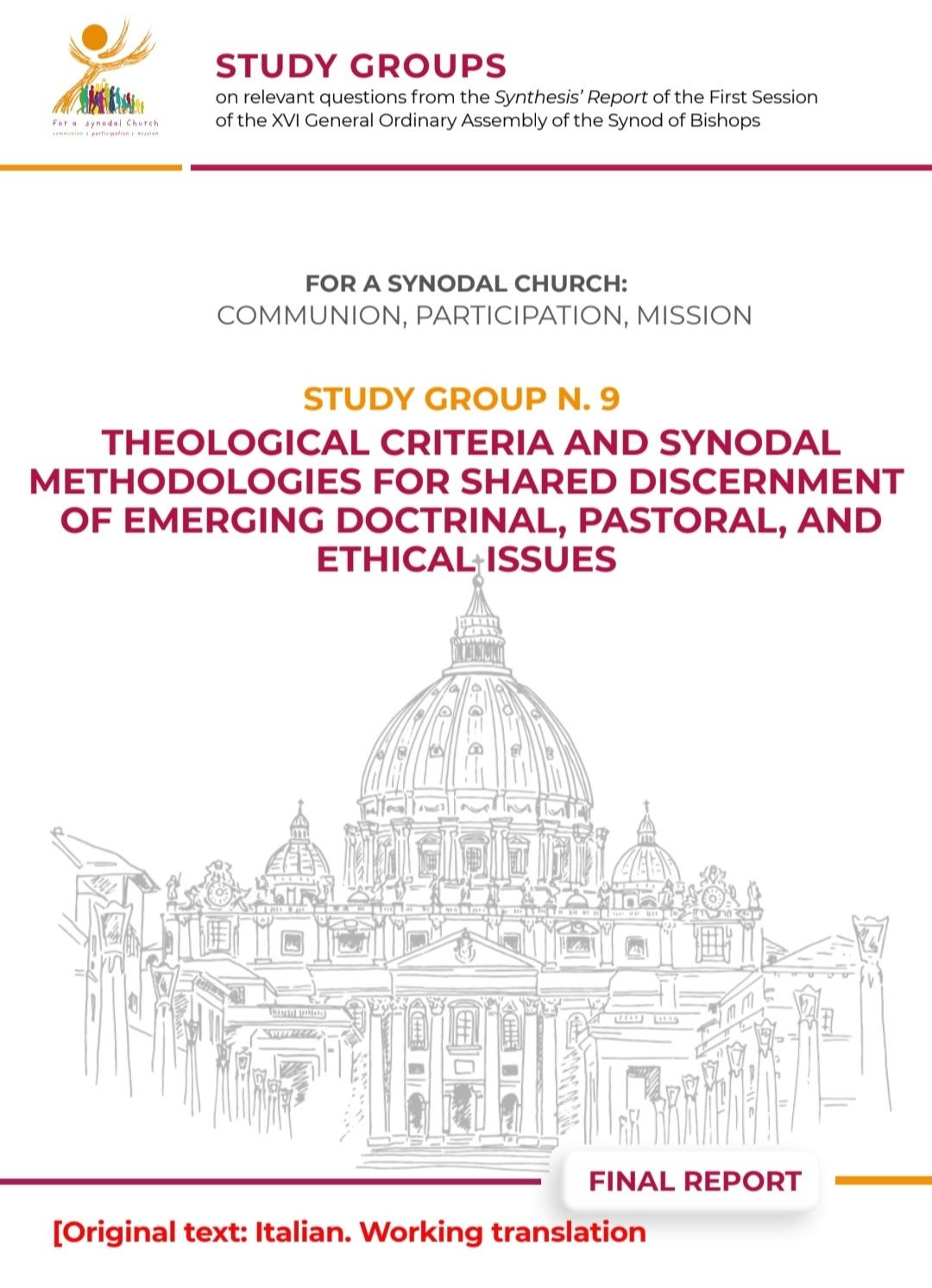
Nestled in the Study Group 9 final report and obscured by synodalese, we find the suggestion that “sin, at its root, does not consist in the (same sex) couple relationship” but rather in a “lack of faith in a God who desires our fulfilment.”
This crafty manipulation of the meaning of sin shifts the discussion away from objective moral acts toward subjective interior disposition. In other words, as long as your heart is “right with God”, the sin you commit isn’t really a sin. Not only is this a grievous misrepresentation that will be jeopardizing souls (as the pro-sodomite Jimmy Martin has already latched onto this phrase to show his followers that LGBTQ sin is okay with apostate Rome), but in essence it is a Protestant notion of religion. Such a shift represents not merely a change in emphasis but a further rupture with the consistent moral theology of the Catholic Church.
The Catholic understanding of sin is not reducible to a vague failure of trust in God. Sin certainly includes a rupture in one’s relationship with God, but it is also concretely expressed in actions that violate divine and natural law. Catholic teaching clearly distinguish between inclination and act. While same sex attraction itself is not considered sinful, homosexual acts are described as contrary to natural law and therefore morally disordered.
The report’s language collapses this distinction. By implying that the moral problem lies not in the relationship itself but in a deficiency of faith, it appears to relativize the objective moral content of actions. This is precisely the concern raised historically whenever moral theology drifts toward subjectivism. If sin is primarily understood as an interior attitude, then external acts lose their moral significance, and the Church’s moral teaching becomes negotiable. Negotiable and subjective moral teaching has of course already become one of the main characteristics of the Synodal false religion.
Such an approach contradicts the consistent teaching reaffirmed even in recent magisterial clarifications. The Church has maintained that sexual relations are licit only within marriage between a man and a woman, and that unions outside this framework cannot be morally approved. The pastoral desire to accompany individuals does not negate this doctrinal foundation. Indeed, authentic accompaniment presupposes clarity about the moral law, not ambiguity.
The report’s emphasis on “fulfilment” introduces another theological ambiguity. Fulfilment in Christian anthropology is not equivalent to subjective happiness or emotional satisfaction. It is ordered toward union with God and conformity to His will. To suggest that a relationship might be morally neutral or even implicitly justified because it contributes to a sense of fulfilment adopts the modern, therapeutic understanding of the human person rather than the classical teleological one rooted in natural law. This too we see flowing from apostate Rome with disturbing frequency.
Catholic theology insists that true fulfilment often requires sacrifice and renunciation. The call to chastity, for example, applies universally, though in different forms depending on one’s state in life. For those experiencing same sex attraction, the Church has consistently taught that chastity entails abstaining from sexual acts. This teaching is not a denial of human dignity but an affirmation of the higher good to which all are called.
The history of synodal discussions again and again shows that ambiguous language leads to divergent interpretations. In previous synodal documents, phrases perceived as overly accommodating sparked significant concern among those who feared a departure from established teaching.
This pattern is symptomatic of a deeper methodological issue. The synodal approach prioritizes dialogue and consensus, but truth in matters of faith and morals is not determined by majority opinion or experiential narratives. When documents emphasize “listening” without equally emphasizing doctrinal boundaries, they create the impression that teaching itself is open to revision.
Another deception is found in the report’s anthropological assumptions. The language of “relationships” as morally neutral or even positive apart from their sexual expression reflects a modern tendency to separate affection from action. Yet, relationships are not abstract entities but lived realities that include moral choices. A relationship ordered toward acts contrary to natural law cannot be morally neutral, even if elements within it such as friendship or mutual support are good.
The report also inadvertently weakens the “Church’s” witness in a broader cultural context, but that is exactly what the Synodal hierarchy craves: acceptance by the world.
Inclusion can NEVER come at the expense of truth. The challenge is not to dilute moral teaching but to present it in a way that is both faithful and compassionate. Traditional Catholic spirituality offers a rich framework for this, emphasizing conversion, grace, and the universal call to holiness. It does not reduce moral demands but situates them within the context of God’s mercy and the transformative power of grace.
The modernists heretics might be trying to sell you the report’s attempt to redefine the root of sin as an effort to emphasize God’s desire for human flourishing, but in the end this emphasis only obscures the concrete demands of the moral law and opens the door for a slow and soft justification of this sin. By doing this they edge even closer to their ultimate end goal, which is to officially normalize perversion.