The timing is no accident. Just days before Pope Leo XIV's apostolic journey to Algeria, the European Centre for Law and Justice (ECLJ), a Strasbourg-based NGO with consultative status at the United Nations, publishes a sixty-page report that provides a damning assessment of the situation of Algerian Christians. Soberly titled "The Oppression of Christians in Algeria," this document, the fruit of dozens of interviews with the faithful, pastors, journalists, academics and former diplomats, systematically dismantles the double discourse of a regime that claims to guarantee freedom of worship while methodically strangling it.
Ranked 20th on the list of 50 countries where Christians are most persecuted in the 2026 index of the NGO Open Doors, Algeria presents a particular profile: this is not a spectacular persecution made of attacks and pogroms, but an administrative, cold, patient oppression, disguised as respect for the law. Yet the result is the same — the asphyxiation of a community.
156,000 Christians in a 98% Muslim country
A brief reminder of context. For the general French public, Algeria evokes colonization, settlers, the war of independence — rarely Christianity. This forgets that this land was one of the great centers of ancient Christianity, homeland of Tertullian and Saint Augustine of Hippo, before the Muslim conquest of the 7th-13th centuries gradually erased Christian presence from it. Until the French colonial period in the 19th century, which saw churches reappear, and until independence in 1962, which caused the massive departure of the "million repatriates" and the near-disappearance of Christianity from Algerian soil.
Advertising
Yet Christianity has taken root again in Algeria, particularly thanks to the terrible "Black Decade" (1991-2002), this civil war that killed between 100,000 and 200,000 people and during which seven Trappist monks from Tibhirine were assassinated in 1996 (their moving story remained in all French memories). Facing radical Islamism and the moral collapse of society, many Kabyles turned to Christianity, mainly to evangelical Protestantism, deemed more flexible and better adapted to clandestinity.
Today, the ECLJ report figures the Christian community at approximately 156,000 faithful out of a population of 48 million inhabitants, or 0.3% of the country. About 8,000 Catholics, mostly foreigners (Sub-Saharan and European), and a large majority of evangelical Protestants, mainly Berbers from Kabylie. Let us add for the record the few Jews still present — who "would live like Muslims or hidden," according to a researcher cited in the report, with synagogues all closed and the last Torahs sent to France.
58 churches closed, three still open
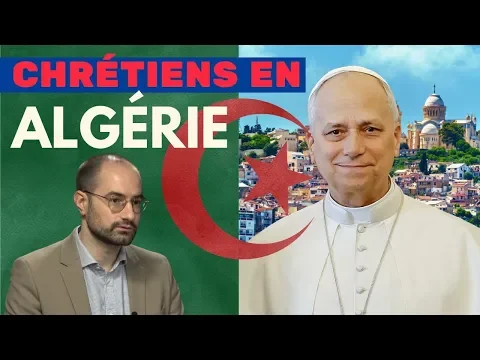
This is the shocking figure in the report: 58 Protestant churches have been closed by Algerian authorities. Among them, 47 belonged to the Protestant Church of Algeria (EPA), the country's main evangelical federation. Since January 2025, virtually all of its places of worship have been under administrative seals. Only three churches remain open, one of which is international. Algerian Protestants now have nowhere to pray legally.
The mechanism is relentless. It rests on two texts: ordinance no. 06-03 of February 28, 2006, which requires administrative authorization for any non-Muslim place of worship, and law no. 12-06 of January 12, 2012, which obliges any religious association to register with the administration. Result: since 2006, authorities have rejected all requests to open new places of worship. And the EPA, which filed its renewal request in 2012, has never received a response. Administratively, it no longer exists.
Closures accelerated in 2017 under the pretext of "health inspections," then in 2019 with the sealing of 13 Kabyle places of worship, including the two largest churches in the region, those of Tizi Ouzou and Makouda. The UN Special Rapporteur Clément Nyaletsossi Voule, on an official visit in September 2023, himself noted that the faithful "had corrected the security problems of the buildings identified and that their registration requests were not receiving responses." In other words: the health pretext masks a political will for eradication.
Praying in garages, chicken coops… or "under the olive trees"
Deprived of places of worship, Algerian Christians do what they can. Some gather secretly in private apartments, transformed into "house churches," under constant surveillance. Others gather in the open air: "We try to live our communion as best we can, the most important thing is to be together," testifies an EPA representative. The co-director of Open Doors NGO speaks of "churches under the olive trees" to designate these groups of faithful who pray in the mountains or by the sea, at the risk of arrest. Internet, via Zoom or Google Meet, serves as a last resort.
The authorities, for their part, openly assume: "These were garages, chicken coops, stables and anarchic dwellings transformed into places of worship that we closed," they explain, reminding that "the Algerian Constitution recognizes freedom of worship, but within the framework and respect of the law." A formulation that sums up the entire double discourse of the regime.
Law against faith: proselytism and blasphemy, the tools of power
The ECLJ report devotes lengthy sections to the penal arsenal that allows authorities to strike Christians far beyond simple questions of places of worship. Two provisions are particularly formidable.
The first is Article 11 of the 2006 ordinance, which punishes with 2 to 5 years imprisonment and up to one million dinars in fines anyone who "shakes the faith of a Muslim" or uses "means of seduction" to convert them. A deliberately vague term, entirely at the discretion of judges. An Algerian who asks questions about Christ to a Christian, via the internet or in a church, can therefore lead to the conviction of his interlocutor for "proselytism." Wearing a cross around one's neck, having a Bible in one's bag, distributing a brochure — all of this exposes one to imprisonment.
The second is Article 144 bis 2 of the Penal Code, which punishes 3 to 5 years imprisonment anyone who "offends the prophet" or "denigrates the precepts of Islam." Again, a provision elastic enough to incriminate just about anything. The examples cited in the report are staggering: ten years imprisonment sought against Yacine Mebarki in 2020 for an old Quran with a torn page; five years against Hamid Soudad in 2021 for sharing a caricature of the prophet on Facebook; three years against Walid Kechida for a satirical Facebook page; 18 months against Mohammed Derrab for giving a Bible to a listener… According to the Open Doors association cited by the ECLJ, more than 50 Christians have been brought before the courts in recent years in Algeria.
The authorities even go so far as to hunt Yule logs in bakeries and condemn "non-fasters" during Ramadan. Pastor Youssef Ourahmane, vice-president of the EPA, was convicted in May 2024 to one year imprisonment and 100,000 dinars in fines for organizing a simple spiritual retreat. Pastor and bookseller Rachid Seighir, one year suspended for selling Christian books in his bookstore.
Slimane Bouhafs, the face of repression
The report devotes an entire section to the emblematic case of Slimane Bouhafs, a former Muslim converted to Christianity in 1997. Arrested in 2016 for simple Facebook posts deemed offensive to Islam, he is sentenced to three years imprisonment. Released in 2018 thanks to international mobilization, he takes refuge in Tunisia where he obtains political refugee status recognized by UNHCR. But in August 2021, he is abducted in Tunis, forcibly brought back to Algeria, tortured, and sentenced again to three years imprisonment for "belonging to a terrorist organization."
Today free on paper, he has actually become a stateless person in his own country. "I have no identity documents. I am deprived of all my rights. Algerian authorities refuse to give me documents proving my identity. Even my retirement pension was taken from me," he testifies in a desperate appeal from February 2025. On March 20, 2026, weeks before Pope Leo XIV's visit, he sent a personal letter to the Holy Father to alert him.
A system that humiliates even in daily life
Beyond arrests and church closures, the report describes institutional discrimination that deprives Christians of civic existence. The administration presumes that every Algerian is Muslim; there is no official register of Christians. The Family Code, largely inspired by Muslim law, reserves unfavorable treatment for them: impossibility for a Christian woman to inherit from a Muslim husband, automatic divorce in case of conversion, refusal of Christian names in the civil register, sometimes refusal of death certificates for the deceased bearing non-Arabic names.
In the workplace, Christians are regularly reported to the political police by their employers, filed, excluded from public service. The Constitution itself, in its Article 87, prohibits non-Muslims from accessing the presidency of the Republic. Christian teachers are "identified and immediately fired," testifies a human rights activist interviewed by the ECLJ. Catholic priests themselves have been progressively excluded from any work in hospitals or education.
In September 2022, it was Caritas Algeria, the Catholic humanitarian service present in the country for sixty years, that was simply shut down by authorities, qualified as a "nest of spies." Its successor was never authorized.
Kabylie, epicenter of resistance — and repression
An entire chapter is devoted to Kabylie, this mountainous Berber region east of Algiers, historically resistant to Islamicization, which today houses more than 30 of the 47 EPA churches and the majority of Algerian Christians. "I couldn't identify with Islamic culture as a Kabyle," testifies Taous, a Kabyle convert cited in the report. Kabylie thus cumulates in the eyes of the central power two "defects": a distinctive cultural and linguistic identity, and a strong Christian presence.
Authorities deliberately conflate Kabyle autonomists and Christians. The former French ambassador to Algiers Xavier Driencourt, interviewed by the ECLJ, explains that for Algerian power, churches must remain "a legacy of French colonization," and thus an "anti-Algerian" phenomenon. Anyone who is Christian is suspected of treason. The report also cites the case of French journalist Christophe Gleizes, sentenced on December 3, 2025 to seven years imprisonment for producing a report on the Kabylie Youth Sports club. Or that of Franco-Algerian writer Boualem Sansal, sentenced to five years imprisonment in March 2025 for "undermining national unity," and finally pardoned in November after international mobilization.
The guilty silence of Paris and Brussels
This is perhaps the most awkward chapter of the report — particularly for French readers. The ECLJ makes a severe assessment of the lack of reaction from international institutions and, above all, of French passivity.
The UN? Symbolic condemnations, no coercive sanctions, and a Human Rights Council of which Algeria was a member until December 2025. The European Union? A European Parliament resolution in November 2019 calling for the reopening of churches, followed by a non-binding resolution in January 2025 that does not even explicitly mention Christians. A written question from MEP Markus Buchheit in June 2025 to which the Commission responds laconically that it "plans to raise this issue again at the next meeting." Move along.
As for France, the report is unambiguous: no official condemnation of the persecution of Christians by the Quai d'Orsay. When Emmanuel Macron stepped up for Boualem Sansal, he did not do so for imprisoned Kabyle pastors. Only a few isolated voices — Christian Estrosi, senator Valérie Boyer who co-signed an op-ed in Le Figaro in December 2025 with historian Charlotte Touati — dared break the silence. Why such reluctance? The report advances two reasons: the "sensitivity of the religious question in Algeria" and the continuous deterioration of Franco-Algerian diplomatic relations since 2024. In plain terms: France prefers not to add fuel to the fire, even if it means abandoning Christians to their fate.
Only the United States, via the U.S. Commission on International Religious Freedom (USCIRF), maintains Algeria on its "special watch" list since 2020. On January 13, 2026, Pastor Nourredine Benzid, secretary general of the EPA, was heard in Washington — a first for a Kabyle pastor before an American federal institution.
The Catholic Church: fragile tolerance under conditions
The case of Algerian Catholics, about 8,000 faithful mostly foreign, is treated with nuance in the report. Their churches remain open. Their faithful are rarely troubled. But this "tolerance" hinges on a precarious balance: the Catholic Church, since independence, has chosen extreme discretion. No missions, no visible baptisms, no public criticism of the regime. The Archbishop of Algiers Mgr Jean-Paul Vesco, recently elevated to the cardinalate, has even obtained Algerian nationality and positions himself as an artisan of Christian-Muslim dialogue. Criticized by some for his "excessive zeal" diplomacy, he acts in the continuity of his predecessor Mgr Desfarges, who had shocked by declaring in 2018 that "there is no problem of freedom of worship in Algeria."
It is in this ambiguous context that Pope Leo XIV's visit to Algiers on April 13, 14 and 15, 2026 takes place, the first papal visit to Algeria. The Tebboune regime sees in it an opportunity to rehabilitate its image: the Cathedral of the Sacred Heart in Algiers is even undergoing restoration at the expense of the Algerian State, "a sign sent to the entire world that Algeria guarantees freedom of worship," according to Minister of Religious Affairs Youcef Belmehdi. The ECLJ report, published days before this visit, thus comes at the right time to dismantle this fine facade.
What the ECLJ is asking for
The report formulates a series of clear recommendations: to Algeria, the suppression of crimes of proselytism and blasphemy, the reopening of closed churches, the return of Caritas, the reform of the Family Code. To the European Union, to condition its cooperation programs on respect for religious freedom. To the UN, to organize an official visit by the Special Rapporteur on freedom of religion (the last one was in… 2002).
It remains to be seen whether France will one day agree to break its silence (or its role as a doormat, take your pick). At a time when bilateral relations between Paris and Algiers are going through a deep crisis — visas, colonial memory, refugees — the defense of Algerian Christians would nevertheless be a legitimate and, let's say it, honorable issue. For as a quote repeated at the beginning of the report sums it up: "The region that saw ancient Christianity flourish is today the one where Christians must again hide." This region, it must be remembered, is also that of the monks of Tibhirine. And those who die there today for their faith — symbolically or concretely — deserve better than Paris's averted gaze.
Illustration photo: DR
[cc] Article written by the editorial staff of breizh-info.com and reviewed and corrected (spelling, syntax) by artificial intelligence.