Synodality is bringing people closer to Christ. “We are so busy discussing how the Church should journey together that we sometimes forget where it is headed”
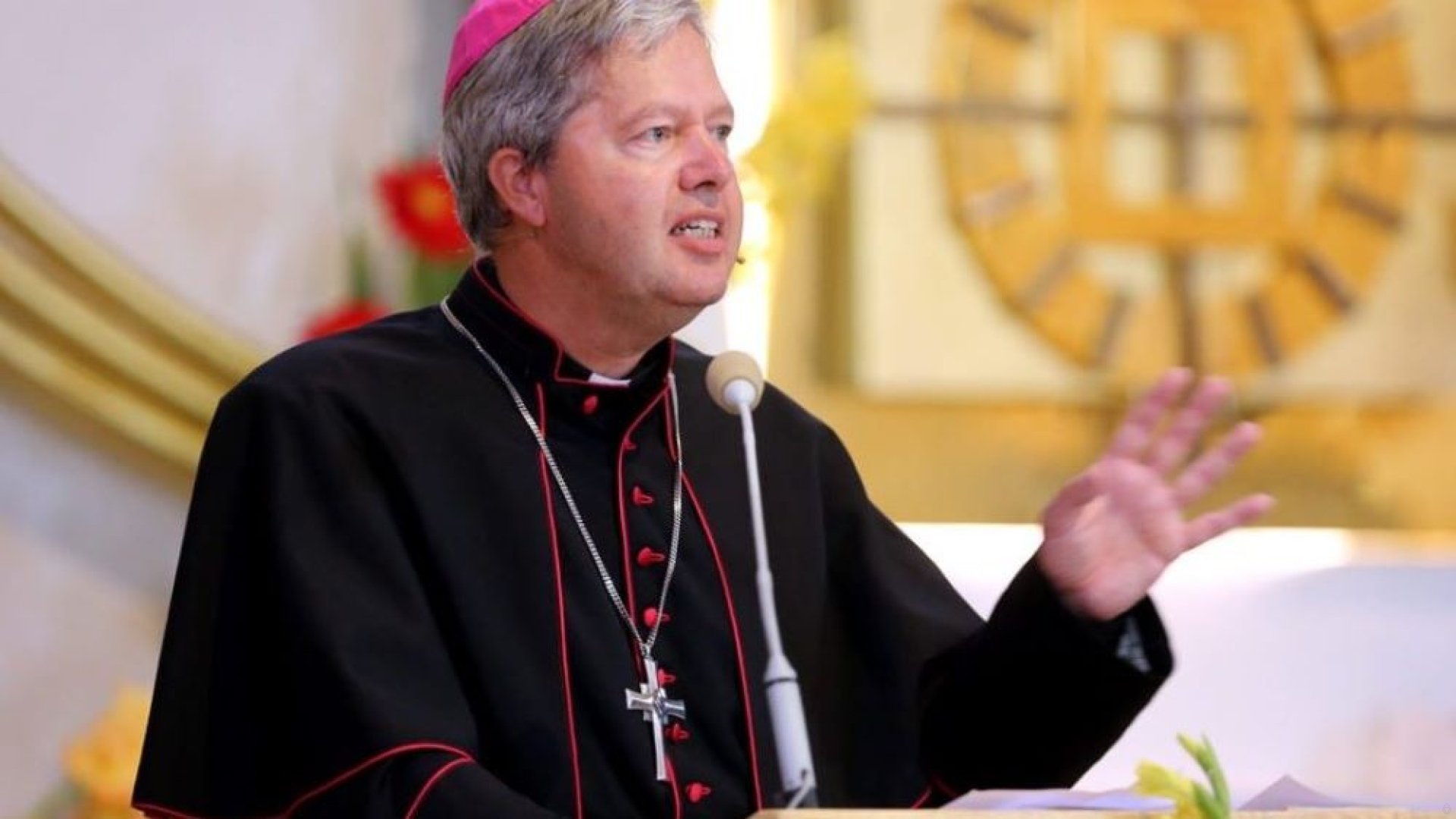
Auxiliary Bishop Rob Mutsaerts of ’s-Hertogenbosch has written an open letter to Pope Leo XIV questioning whether the Synod on Synodality is achieving its central purpose of bringing souls to salvation.
In the lengthy letter, published on the bishop’s blog on 13 August, Bishop Mutsaerts says the decisive test of the synodal process is not the number of meetings held or documents produced, but whether it has strengthened the Catholic faith and encouraged conversion.
“Has faith become stronger? Has Christ been proclaimed more clearly? Have more people come to conversion?” Bishop Mutsaerts asks. The Auxiliary Bishop also questions whether Sunday Mass attendance has increased, whether priestly vocations have grown, whether catechesis has become stronger and whether greater reverence for the Eucharist has emerged.
Bishop Mutsaerts begins by stressing his respect for the papal office and says his decision to address Pope Leo publicly comes from concern for the salvation of souls. “My question is a simple and earnest one: does the synodal process actually help bring souls closer to Christ and to eternal salvation?” Bishop Mutsaerts writes.
The bishop invokes the traditional Catholic principle, Salus animarum suprema lex – the salvation of souls is the supreme law – and says the principle should be applied to the fruits of the synodal process. He acknowledges the good intentions of those who have taken part in the Synod and says his criticism is not directed against individuals. However, Bishop Mutsaerts argues that “Christ himself has given us a simple criterion for this: ‘By their fruits you shall know them.’”
Bishop Mutsaerts argues that the Synod has involved extensive consultation, meetings and discussion, but says these activities cannot themselves establish whether the process has succeeded. He asks instead whether the Church has become more effective in proclaiming Christ and whether more people have been brought to conversion.
His criticism concerns a synodal process that continues beyond the two sessions of the Synod of Bishops held in 2023 and 2024. The implementation process is due to continue through local, national and continental stages before an ecclesial assembly in Rome in October 2028.
Bishop Mutsaerts argues in his letter that the continuation of the process raises questions about whether synodality is becoming a permanent feature of Church governance rather than a defined process addressing particular ecclesial questions. He contrasts this with the historical role of synods and councils, which were generally called to address particular matters concerning the life and mission of the Church.
“The first remarkable aspect is already in the name: Synod on Synodality,” Bishop Mutsaerts writes. Bishop Mutsaerts states that the Church has always deliberated collectively and uses the examples of the apostles’ meeting in Jerusalem and the great councils of the Church. However, he distinguishes this from making the process of consultation itself a permanent ecclesial paradigm.
“The classical synod was a means,” Bishop Mutsaerts writes. “In contemporary synodal discourse, synodality threatens to become an end in itself.”
At the centre of Bishop Mutsaerts’s concern is the question of where the Church should look for the basis of her faith. He says the Church does not create the faith through discussion but receives it from Christ and preserves what has been entrusted to her through Scripture, Apostolic Tradition and the Church’s teaching. “Truth is not produced by consensus,” Bishop Mutsaerts writes.
The bishop says listening is essential to pastoral ministry but argues that the Church must ultimately listen to Christ, Scripture, Apostolic Tradition, the saints and the Church’s Magisterium. Bishop Mutsaerts warns that beginning primarily with contemporary expectations can create difficulties when those expectations conflict with the Gospel.
“Then it is not the Gospel that must change; then the man must change,” Bishop Mutsaerts writes. “In Christianity, that is called conversion.”
Bishop Mutsaerts points to emptying churches, declining knowledge of Catholic teaching, weakened sacramental life, disappearing monasteries and religious communities, and low numbers of priestly vocations as realities which, in his view, should shape the Church’s priorities.
He does not dismiss questions of participation, responsibility, structures or Church governance as illegitimate. Rather, the bishop argues that they should not displace evangelisation.
“These can be legitimate topics,” Bishop Mutsaerts states. “But a burning house has different priorities than matters of a domestic nature.”
Bishop Mutsaerts also warns about expectations created by prolonged discussion of controversial questions. He says that when issues such as the female diaconate, priesthood, sexual morality, the role of women and ecclesial authority remain under discussion for years, Catholics may conclude that the Church is prepared to change her teaching. When such expectations cannot be fulfilled without breaking with Catholic doctrine, Bishop Mutsaerts argues, disappointment can follow.
Bishop Mutsaerts points to Catholics who attend Mass regularly, pray, raise families in the faith or pursue a life of contemplation but may never take part in diocesan consultation meetings. “The People of God are greater than the circle around the meeting table,” Bishop Mutsaerts writes.
The bishop then turns to the implications of synodality for ecclesiology and the Church’s understanding of herself. Bishop Mutsaerts argues that the Church must continually reform herself but cannot redefine the faith she has received. “The Church must continually convert, but it is built upon the apostles,” Bishop Mutsaerts explains.
The bishop also identifies the liturgy as an important measure of the Church’s spiritual health. Bishop Mutsaerts argues that the state of Catholic worship reveals the strength of Catholic belief and points to the Eucharist, confession, silence and reverence as essential aspects of the Church’s life. “A new participation structure cannot solve that,” Bishop Mutsaerts writes. “Nor can a new assembly.”
Bishop Mutsaerts returns repeatedly to the missionary purpose of the Church. He writes that the contemporary world is on a search for meaning while facing loneliness, family breakdown, technological change and uncertainty about human purpose. In such circumstances, Bishop Mutsaerts says, the Church already possesses what she needs for her mission: the Gospel, the sacraments, the Eucharist, Scripture, the wisdom of the Church’s tradition and, above all, Jesus Christ.
“The world is not waiting for yet another organization that listens to it,” Bishop Mutsaerts writes. “There are enough of those. The world is waiting for someone who tells it what it was created for.”
The bishop concludes by turning to the Gospel account of the disciples on the road to Emmaus, presenting it as a model for how the Church should understand walking together. Christ listens to the disciples, Bishop Mutsaerts notes, but does not simply confirm their interpretation of events. Instead, Christ corrects them, opens the Scriptures and leads them towards recognition of him. “We are so busy discussing how the Church should journey together that we sometimes forget where it is headed,” Bishop Mutsaerts writes.
Bishop Mutsaerts asks the Pope to strengthen Catholics in faith, remind the Church of the importance of proclaiming Christ and prevent ecclesial processes from becoming detached from evangelisation and the salvation of souls. “My prayer to you is therefore simple: give us clarity,” Bishop Mutsaerts writes.
“For once all synods have concluded, all documents have been written, all committees have been dissolved, and our own names have been forgotten,” he concludes, “only the question that truly matters remains: have we brought the people entrusted to our care closer to Jesus Christ?”