Sometimes Rome publishes a document so useful that a traditionalist scarcely needs to editorialize.
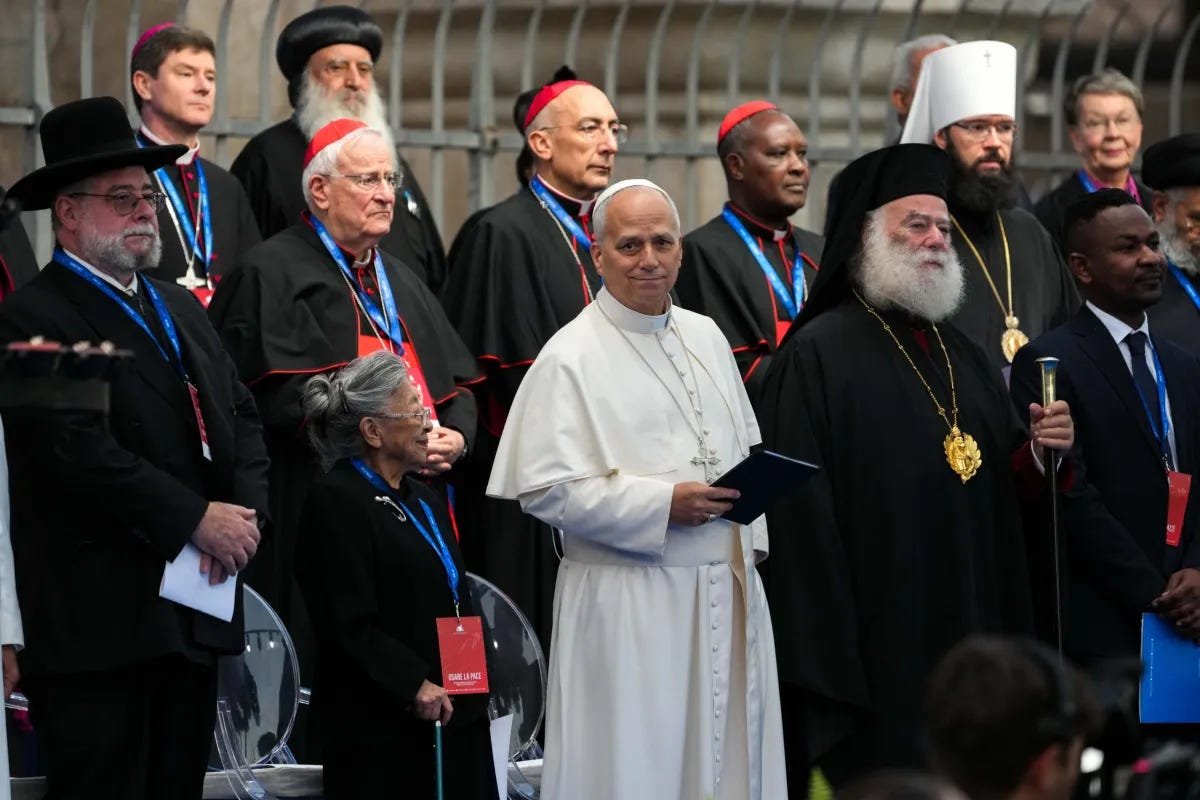
On September 16, three Vatican dicasteries jointly released A Journey of Hope, commemorating sixty years of Nostra Aetate. The Dicasteries for the Doctrine of the Faith, Christian Unity and Interreligious Dialogue all signed it.
Hiraeth In Exile is a reader-supported publication. To receive new posts and support my work, consider becoming a paid subscriber.
Leo XIV personally approved it on June 22 and ordered its publication.
The document tells us that Vatican II produced a “profound change” in the Church’s understanding of other religions.
It calls followers of false religions our “travelling companions on the path of truth.”
It describes interreligious dialogue as a “theological locus where the Holy Spirit wishes to be heard through the encounter with the other.”
It speaks of the “sacred texts” of various religions.
It calls for a “shared search for truth.”
Then, near the end, comes this beauty:
“The defensive entrenchment in one’s own position and the view that proselytism is the only way to engage with the other no longer make sense.”
And the conclusion tells Catholics to move forward sustained by God’s grace “and the spiritual treasure of religious traditions.”
There it is.
Sixty years after Nostra Aetate, Rome has finally produced something close to a progress report.
The experiment worked.
Just perhaps not in the way Catholics were once taught to understand the mission of the Church.
Apparently the Holy Ghost Now Has a Classroom in Other Religions
Start with paragraph 51.
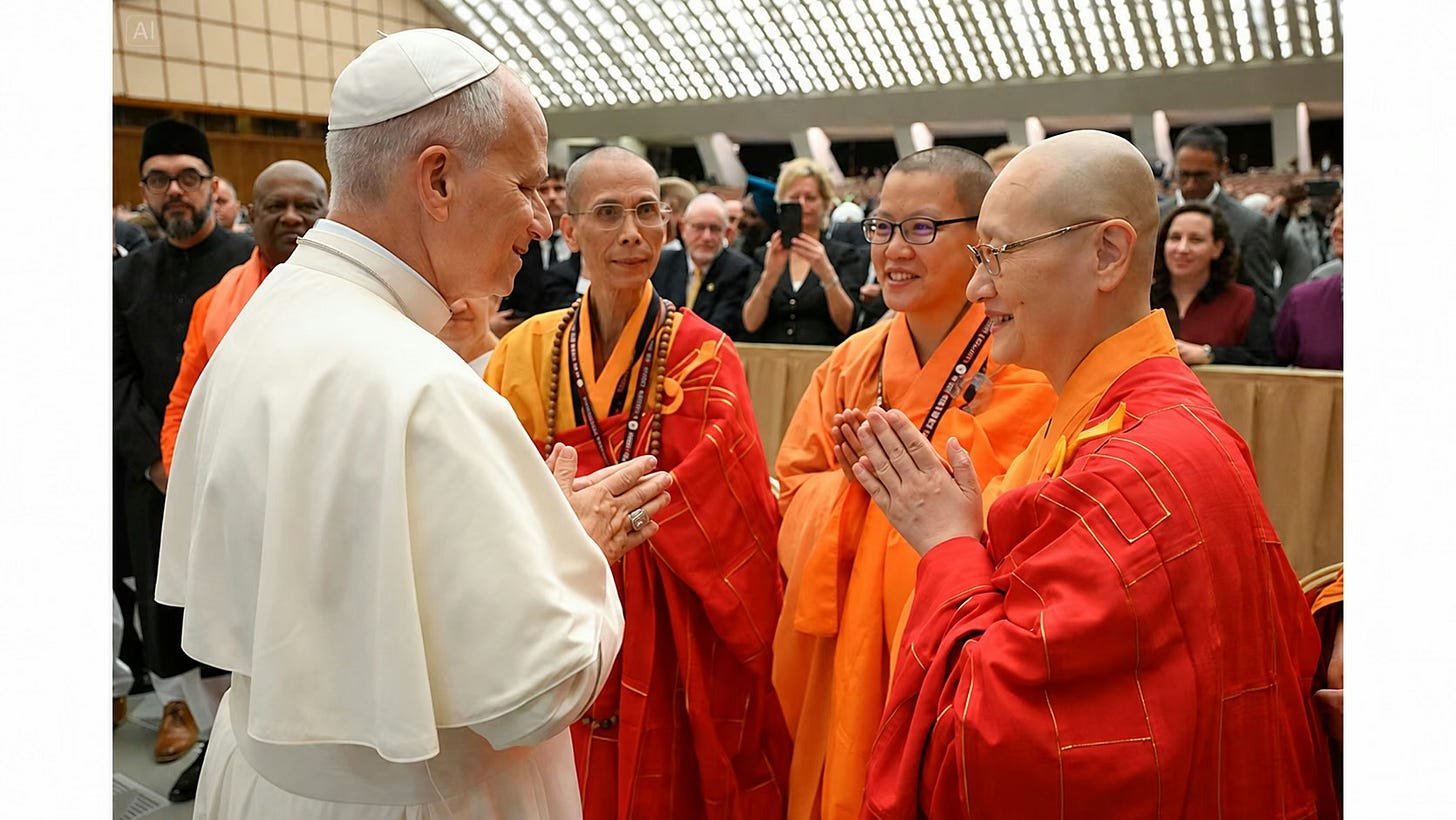
Interreligious dialogue, the document says, is a theological locus where the Holy Spirit “wishes to be heard” through encounter with the religious other.
A theological locus is no throwaway phrase. It means a place or source in which theological understanding is found and developed.
Catholics have always recognized fragments of natural truth outside the visible boundaries of the Church. Aristotle knew real things. A Muslim can affirm one God. A Buddhist can condemn greed. A Hindu can perform an act of natural virtue.
Truth remains truth wherever somebody happens to utter it.
That is miles away from treating religious encounter itself as a place where the Holy Ghost wishes to speak to the Church.
Because religions contain more than isolated truths.
They contain claims.
Islam teaches that Jesus Christ is not God.
Rabbinic Judaism rejects Him as the Messiah.
Hindu traditions contain conceptions of God, reincarnation and salvation irreconcilable with Christian revelation.
Buddhism does not even operate within the Christian understanding of Creator and creature.
What, then, is the Spirit teaching Catholicism through these contradictory religious systems?
The new document never gives the distinction the urgency it deserves.
Instead we receive “dialogue,” “encounter,” “pilgrims of truth,” “spiritual treasure” and the now obligatory polyhedron.
The impression accumulates.
Other religions cease to look primarily like mixtures of natural truth and grave religious error whose adherents need Christ. They begin to look like neighboring spiritual ecosystems from which Catholics themselves should expect theological enrichment.
That is quite a journey from “Go therefore and make disciples of all nations.”
Pius XI Would Apparently Be Guilty of “Defensive Entrenchment”
Put this next to Mortalium Animos.
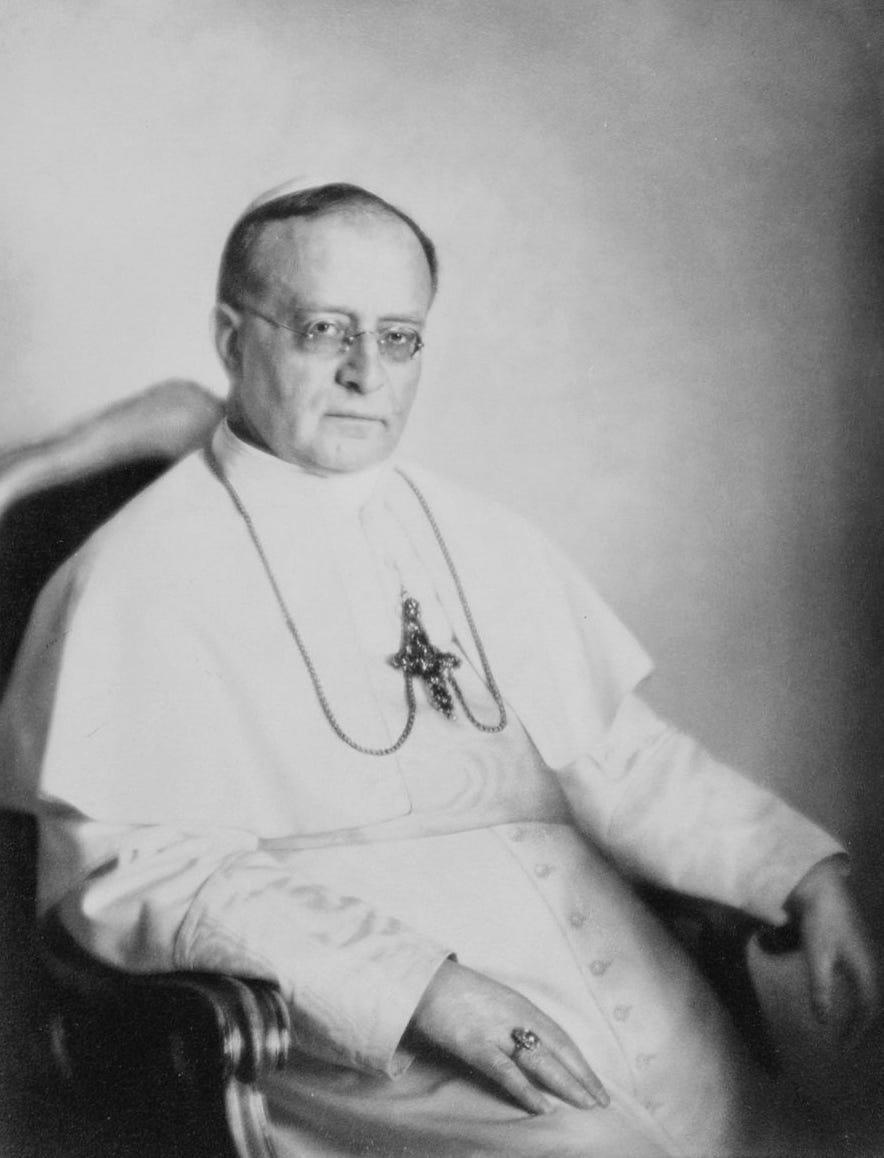
In 1928 Pius XI confronted almost exactly the mentality now celebrated by Rome: religious gatherings organized around common spiritual aspirations, fraternity, peace and shared truths.
He did not call them theological loci.
He warned that treating religions as various praiseworthy expressions of mankind’s religious instinct leads toward indifferentism. God has revealed a religion, Pius XI insisted, and mankind’s obligation is to believe it. Christ founded one visible Church to bring men to eternal salvation.
The contrast is almost embarrassing.
Read Pius XI and then read paragraph 54 of the new Vatican note.
One speaks of bringing those outside back to the one true Church.
The other warns against “defensiveness,” “hostility,” “conquest” and “monolithic and isolated models.”
The modern apologist immediately reaches for the word proselytism.
Quite rightly, there is a distinction between evangelization and proselytism if the latter means coercion, manipulation, buying converts or treating human beings as trophies.
Catholic missionary work never required trickery.
But Rome has made the term so elastic that missionary urgency itself now lives under suspicion.
Even John Paul II still wrote in Redemptoris Missio that interreligious dialogue does not dispense from evangelization. Other religions, he said, contain “gaps, insufficiencies and errors”; mission remains directed toward those who do not know Christ and His Gospel.
Dominus Iesus was blunter still. The one true religion subsists in the Catholic and Apostolic Church, and men are obliged to seek, embrace and remain faithful to the truth once known.
Now dialogue is a place where the Spirit wishes to be heard through the other.
A shared search for truth.
Travelling companions.
Spiritual treasures.
Something has moved.
The Vatican document itself admits as much in its opening paragraph: Nostra Aetate marked a “profound change in the Church’s understanding and expression” of her relationship with other religions.
Thank you.
Traditionalists have spent sixty years being told that nothing substantial changed.
Rome just used the word profound.
Paragraph 59 says the Holy Spirit works “within the diverse cultures and religions of peoples.”
Paragraph 60 invokes the “spiritual treasure of religious traditions.”
Paragraph 32 finds a universal criterion in the religions’ “sacred texts.”
Paragraph 33 repeats Leo’s description of their followers as fellow travelers “on the path of truth.”
And Leo approved all of it.
That is the story.
The man claiming universal jurisdiction over the Catholic Church approved a document from the doctrinal dicastery which describes religious pluralism in precisely this fashion.
A sedevacantist hardly needs to raise his voice.
He can simply slide Mortalium Animos across the table and ask what indefectibility is supposed to mean.
Meanwhile Leo Promotes Michele Di Tolve
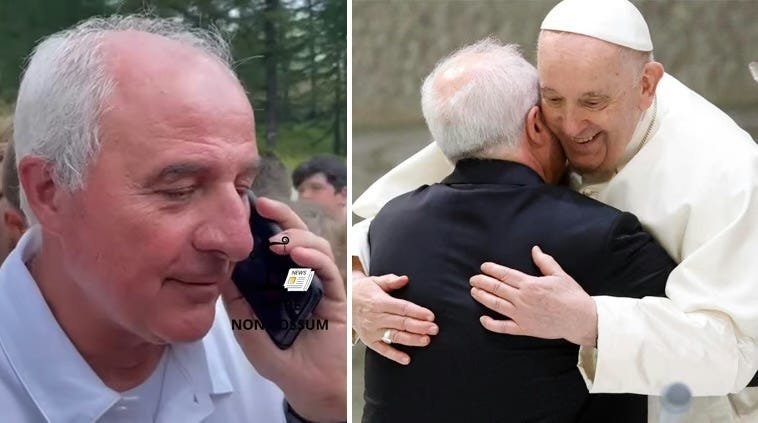
On the same day, Leo named Bishop Michele Di Tolve the new Bishop of Chioggia.
The Vatican biography is straightforward. Di Tolve ran Milan’s archdiocesan seminary from 2014 to 2020. Francis made him auxiliary bishop of Rome in 2023 and then rector of the Pontifical Roman Major Seminary, with an unusual provision that matters of major importance in priestly formation be reported directly to Francis. Leo has now given him a diocese of his own.
His formation record has attracted ugly allegations.
Silere non possum, relying heavily upon anonymous clergy and former seminary sources, accused Di Tolve of creating an oppressive atmosphere in Milan, installing extensive surveillance cameras, closely monitoring seminarians and requiring candidates approaching ordination to sign declarations concerning homosexuality to absolve himself of responsibility. It also alleged inconsistent treatment of candidates. Those allegations have circulated for years, but the documented material is troubling enough.
Emanuele Tempesta passed through the Milan formation system while Di Tolve was rector. Tempesta was later ordained and, in 2024, convicted at first instance of sexually abusing minors and sentenced to six years and six months. He has denied the allegations, and Italian law preserves the presumption of innocence through the appeals process. Milan itself confirmed the conviction and an ongoing canonical process.
An abuse-survivor organization has alleged that Tempesta’s formation had previously been interrupted and that Di Tolve subsequently allowed him to proceed. I have found no public documentation establishing what information Di Tolve personally possessed at the time, so guilt by hindsight would be irresponsible.
But then there is the ideological direction of formation.
In April 2025 Di Tolve was a featured speaker at the Lateran Palace launch of Vocazioni felici: Integrare orientamento sessuale, affetti e relazioni—a book devoted explicitly to integrating sexual orientation and affectivity within priestly and religious vocations. Francis supplied the preface. The prefect of the Dicastery for the Clergy participated.
This is the man Leo has moved from forming Roman seminarians to governing Chioggia.
The Church once responded to the homosexual crisis in seminaries by asking how men with deeply rooted homosexual tendencies were admitted.
The new formation culture keeps asking how sexual orientation can be “integrated.”
Words again.
Always the words.
A Peruvian Seminarian Asks When the Church Got Screwed
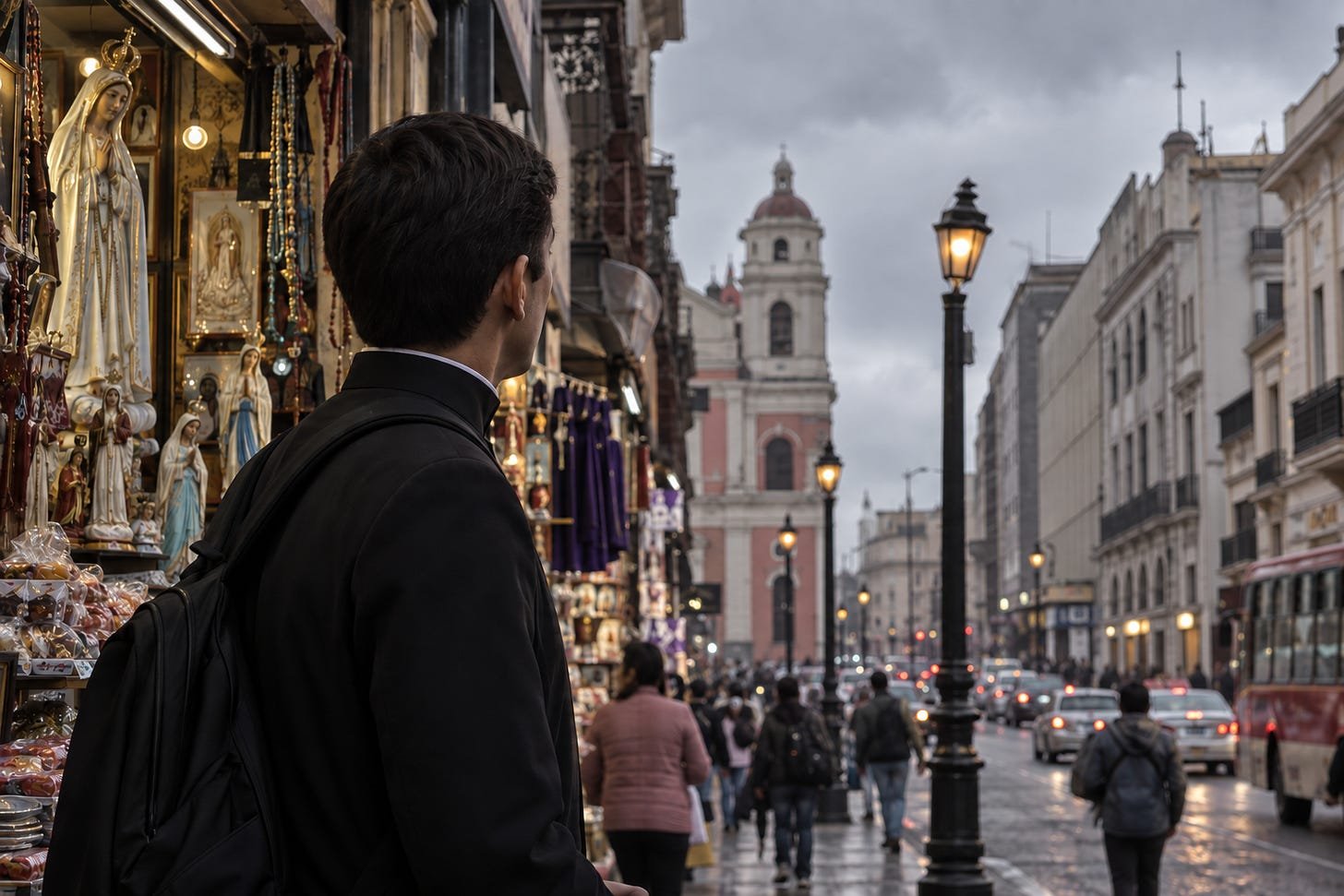
Then there is an anonymous testimony from Peru.
It cannot be independently authenticated, so treat it for what it is: one young man’s account published by a traditionalist outlet, under anonymity because he says he fears reprisals.
Still, it rings with a kind of weary specificity that deserves attention.
Walking down Tacna Avenue in Lima, past religious shops, sweets and the Convent of St. Rose, the seminarian borrows the famous question from Vargas Llosa’s Conversation in the Cathedral:
“At what point did the Church get screwed?”
His list is painfully familiar.
Empty seminaries.
Empty convents.
Desacralized liturgy.
Children’s Masses with puppets.
Priests reduced to community animators.
Synodality.
“Integral ecology.”
Holy Communion in the hand.
A Mass in which thanksgiving survives while sacrifice, propitiation, adoration and reparation fade from Catholic consciousness.
The prose is angry, funny, vulgar in places and unmistakably unhappy.
That matters because seminaries depend upon something bureaucracies cannot manufacture: a young man must believe the sacrifice is worth making.
Celibacy asks everything.
So does obedience.
A seminarian gives away the wife he might have loved, children he might have fathered, ordinary career ambitions, privacy and a large measure of control over his own future.
For what?
For “conversation in the Spirit”?
For workshops?
For integral ecology?
For parish management?
Young men capable of radical sacrifice need a radical object worthy of it.
Give them Calvary made present on the altar, souls to save, sins to absolve, demons to fight and Christ to carry into a dying world, and some will give you everything.
Offer them facilitator training and a headset microphone.
Then commission another study into the vocation shortage.
Lyon Has Discovered the Headset Microphone
Which brings us neatly to Sainte-Blandine in Lyon.
Video circulated from a September 13 Mass showing what French Catholic media described as something approaching a concert: contemporary praise band, singers, large screens, hands in the air and the celebrant wired with a headset microphone.
The parish calendar itself advertises these liturgies quite straightforwardly as “Messe avec louange”—Mass with praise.
The problem is deeper than instrumentation.
What is the Mass?
Once the atmosphere teaches that the central drama consists of our enthusiasm—our music, our energy, our participation, our emotional response—the sacrificial action can become almost invisible.
The Mass does not need to feel exciting.
Calvary was not a youth rally.
The priest is not there principally to animate the room. He stands in persona Christi and offers the Sacrifice.
That theological center has consequences for everything: architecture, silence, posture, music, vestments, the altar, the priest’s orientation and even the instinct to know when to shut up.
The revealing defense of these spectacles is always that young people “love them.”
Young people also love concerts.
The Church once understood that worship forms tastes rather than begging existing tastes for permission to survive.
One Document Explains the Rest
That anonymous Peruvian seminarian complains that nothing seems fixed anymore.
Lyon turns liturgy into experience.
Vocational formation increasingly treats human experience as something to be integrated and managed.
And now Rome publishes a doctrinal note in which religious encounter itself becomes a theological locus.
These are not identical problems.
They share an instinct.
Received Catholic forms—whether doctrinal, liturgical, missionary or ascetical—are treated as starting points for further development through encounter with modern experience.
The old Church went outward carrying something she believed she already possessed.
Truth.
Sacraments.
A commission.
A Lord who commanded conversion.
The new model goes outward expecting the encounter to transform Her too.
That sounds humble.
It can also become catastrophic.
Because if Islam helps broaden the Church’s theological horizon, if dialogue becomes a place where the Spirit teaches through the religious other, if mission gives way to shared searching, then eventually somebody has to answer the question the Peruvian seminarian asks on Tacna Avenue.
What exactly is the priest being trained to give his life for?
A Church certain enough of Christ to convert the world?
Or a Church still walking with the world in search of truth?
Pius XI knew the answer.
The missionaries who crossed oceans knew it.
The martyrs knew it.
The frightening thing in 2026 is that Rome increasingly sounds less certain.
And this time Leo signed the document.