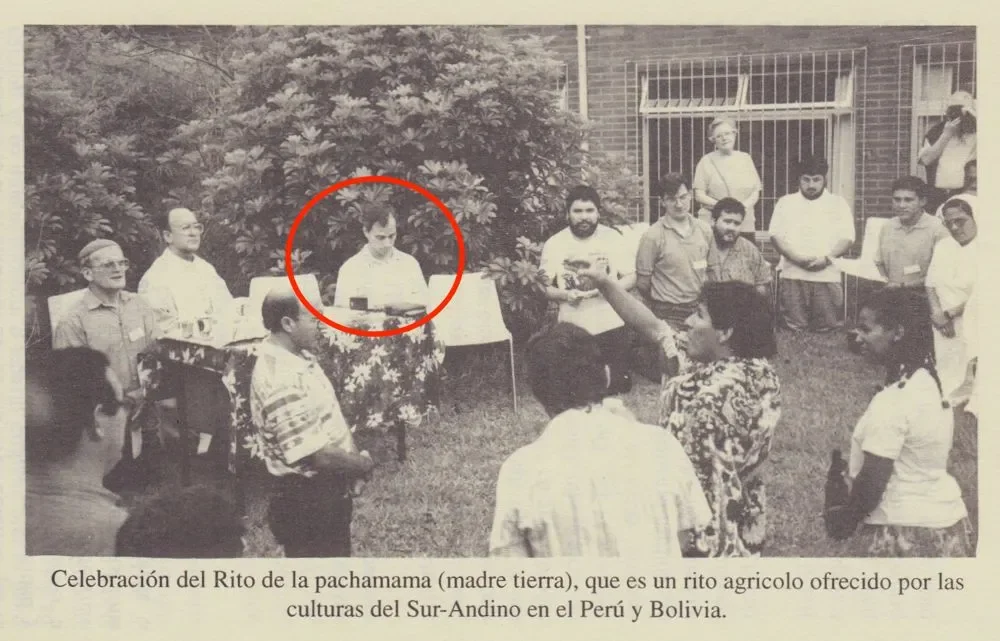
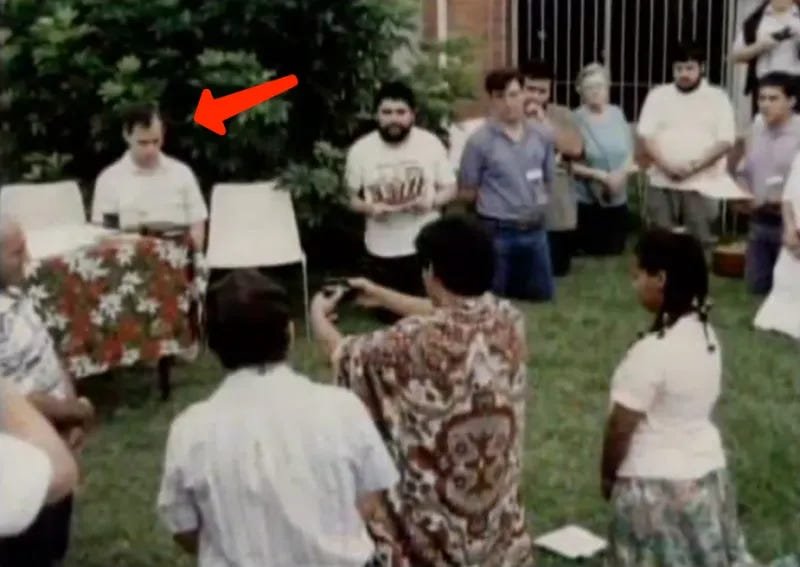
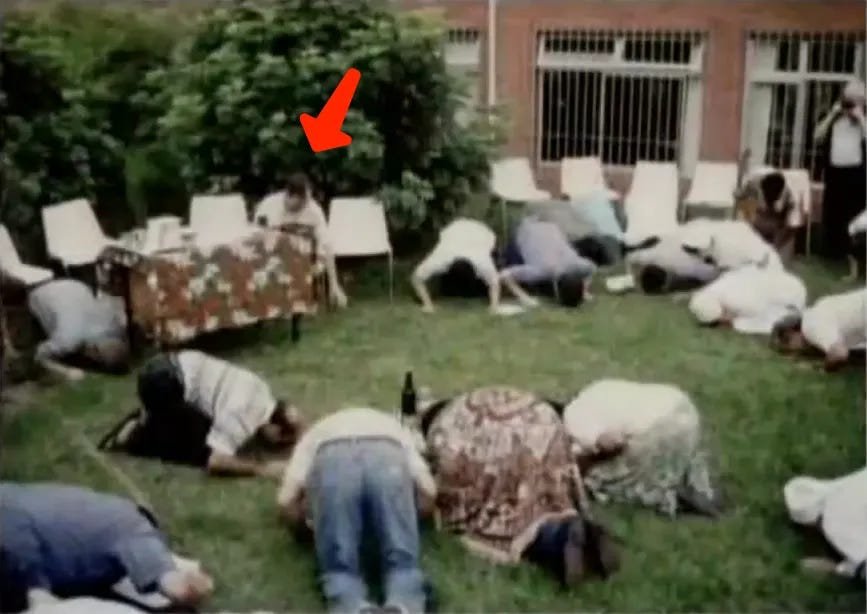
(Photos courtesy of Novus Ordo Watch- Robert Prevost participating in a Pachamama ritual on 1995)
Hiraeth In Exile is a reader-supported publication. To receive new posts and support my work, consider becoming a paid subscriber.
March 18 Was Not Just Another Bad News Cycle
What broke on March 18 landed like a second Amazon Synod, except this time the issue was not whether Leo XIV would tolerate Pachamama theater somewhere in his orbit. LifeSite News broke that Robert Prevost himself had participated in a Pachamama rite decades earlier, at an official Augustinian symposium, in a setting preserved in a printed proceedings volume with a caption that did not bother to hide what it was. Novus Ordo Watch swiftly followed up with more independently researched information confirming the story.
Catholics had already been dragged through the 2019 Vatican Gardens debacle. They had already watched the defenders of the conciliar order smirk, minimize, rename, reframe, and gaslight the faithful as if kneeling before pagan imagery at the heart of Rome were merely an unfortunate communications problem. But March 18 hit harder because it suggested something more corrosive than Francis-era permissiveness. It suggested continuity. It suggested that what later appeared in Rome was present in seed form long before, inside the very world that produced Leo XIV.
And just as revealing as the story itself was the reaction that followed.
Or rather, the lack of one.
The Caption Is What Makes the Story Deadly
The whole reason the usual apologists are so uncomfortable is that this controversy does not depend on a rumor floating around X. At the center of it is a proceedings volume tied to a 1995 Augustinian symposium in São Paulo. The caption under the disputed photograph identifies the ceremony as the “Rito de la pachamama (madre tierra),” an agricultural rite associated with Andean cultures in Peru and Bolivia.
That matters because it cuts off the normal exits.
They cannot lazily mutter that this was probably just a misunderstood cultural display. The caption already names it. They cannot tell you that overexcited traditionalists are inventing the Pachamama angle after the fact. The label is right there on the page. They cannot hide behind the vague language of ecology, symbolism, fertility, or respect for indigenous peoples, because the document itself is far more candid than the men who now have to explain it away..
The artifact is real. The symposium is real. The caption is real. The theological world that made such a scene possible is real. And when multiple outlets say that Augustinians recognized Prevost in the image, the burden shifts quickly. The crisis is no longer borne by internet skeptics who say, “Nothing to see here.” The crisis belongs to the men in Rome who now owe Catholics an answer.
Why This Feels Worse Than 2019
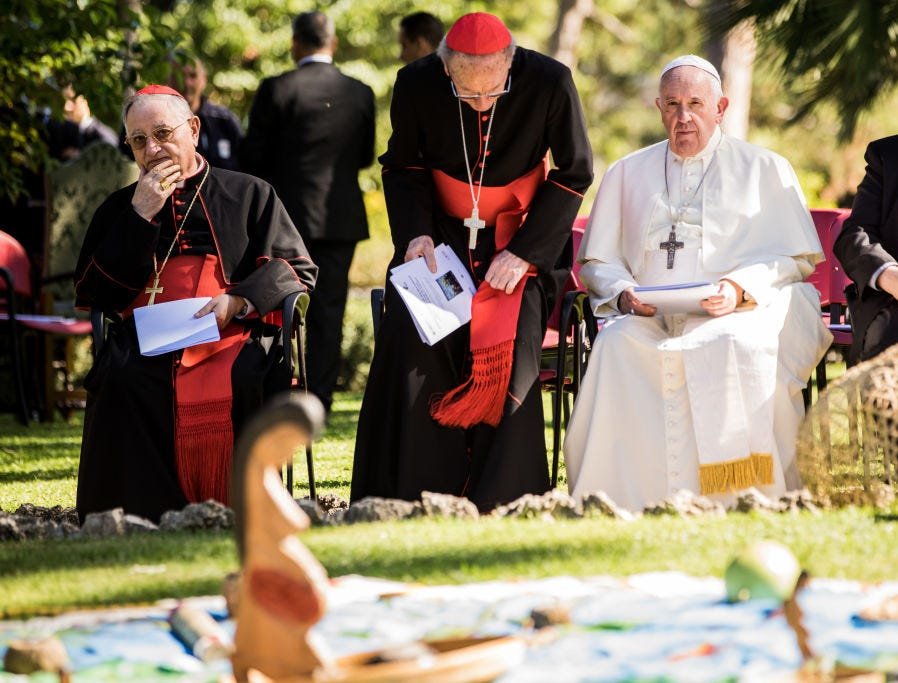
In 2019, conservatives could still console themselves with a familiar script. Francis was reckless. The synod organizers were ideological. The Amazon spectacle was ugly and confusing, but perhaps it could be isolated as a moment of bad judgment, bad optics, bad symbolism, bad management. All the usual euphemisms were there to keep the structure intact.
March 18 made that script much harder to maintain.
Because if Robert Prevost was personally participating in a rite explicitly identified as Pachamama in 1995, then the Vatican Gardens spectacle begins to look less like an anomaly and more like an eruption. The problem is no longer one pope’s carelessness in old age. The problem is a postconciliar religious culture that had already learned to flirt with syncretism, baptize ambiguity, and call it openness.
That is what so many people instinctively felt yesterday, even before they had fully digested the details. They were not just reacting to one old photograph. They were reacting to the possibility that the entire line from Assisi to the Amazon to today is straighter than the conservative gatekeepers have been willing to admit.
And once that possibility enters the room, the whole recognize-and-resist balancing act starts to wobble.
Taylor Marshall’s Courage Arrived Right on Schedule
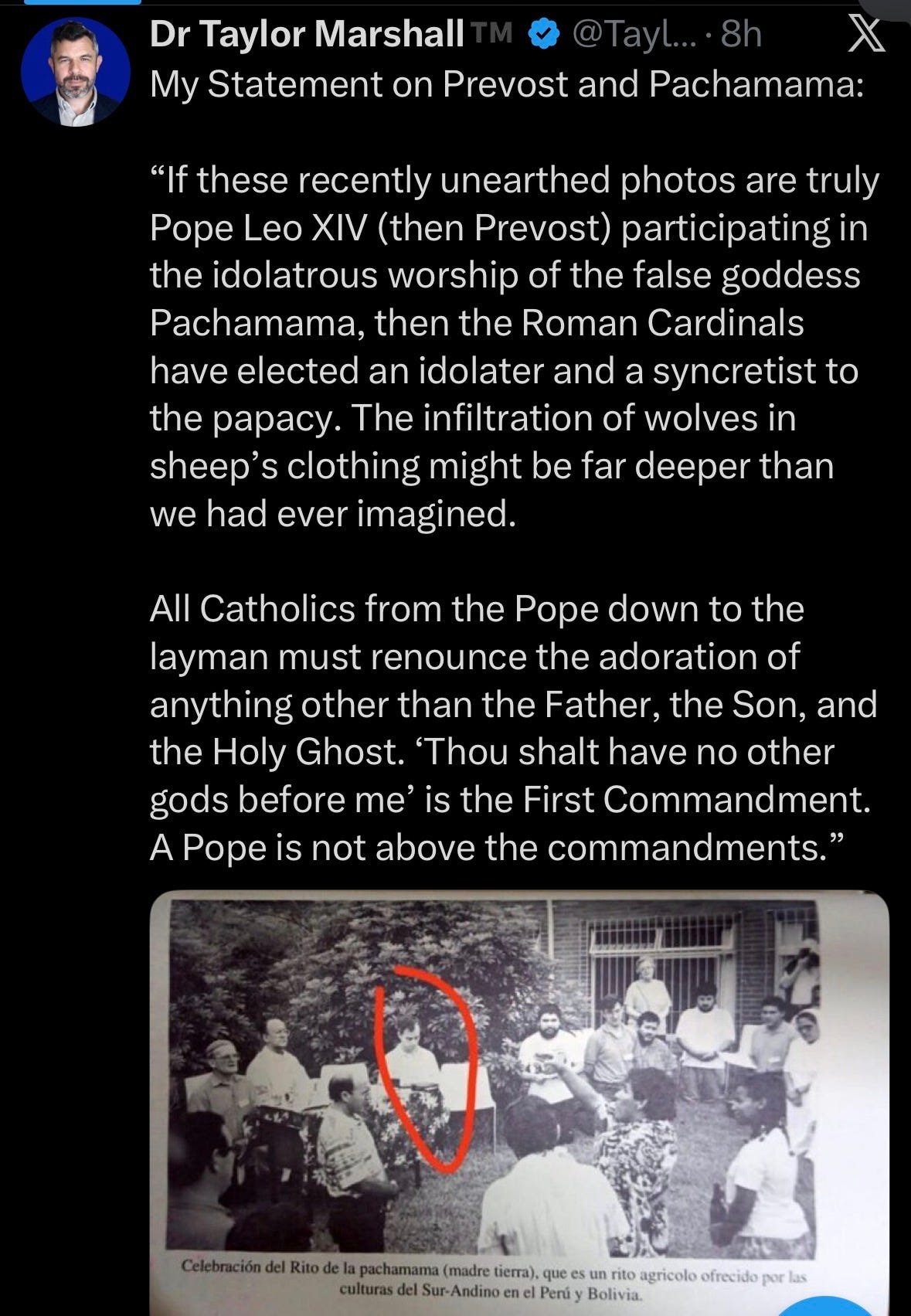
One of the only two public reactions of Trad Inc. came from Taylor Marshall, and even that reaction told the whole story.
His post began with a conditional. “If these recently unearthed photos are truly” Leo XIV participating in the worship of Pachamama, then the cardinals elected “an idolater and a syncretist.” On paper, that sounds strong. It was certainly stronger than silence. But the problem with Marshall is no longer a single sentence. It is the pattern.
The statement lands badly because it comes from a man with a long public habit of arriving late, pivoting once the ground is safe, and then presenting himself as though he just discovered the crisis by force of principle. That is why so many readers rolled their eyes instead of applauding. He had months to treat Leo XIV as a problem, months to stop soft-pedaling him, months to stop lashing out at those who were already pointing to the daily scandals. Instead, the posture was caution, deference, and managed expectation until the evidence became too ugly to ignore.
That is market timing.
The audience notices this. They are not stupid. They know the difference between a man taking a risk and a man waiting for the crowd to move before climbing onto the platform and pretending he led the procession.
And the deeper irony is that Marshall himself had earlier warned that Prevost would be a worst-case scenario before the election, only to pivot into a more loyal, stabilizing posture after the election, only to pivot again once the Pachamama story detonated. That whiplash is not a minor communications issue. It is the problem. It tells you that the governing instinct is not truth at all costs, but branding at the right moment.
Kennedy Hall Offered the Standard Conciliar Excuse in a Different Accent
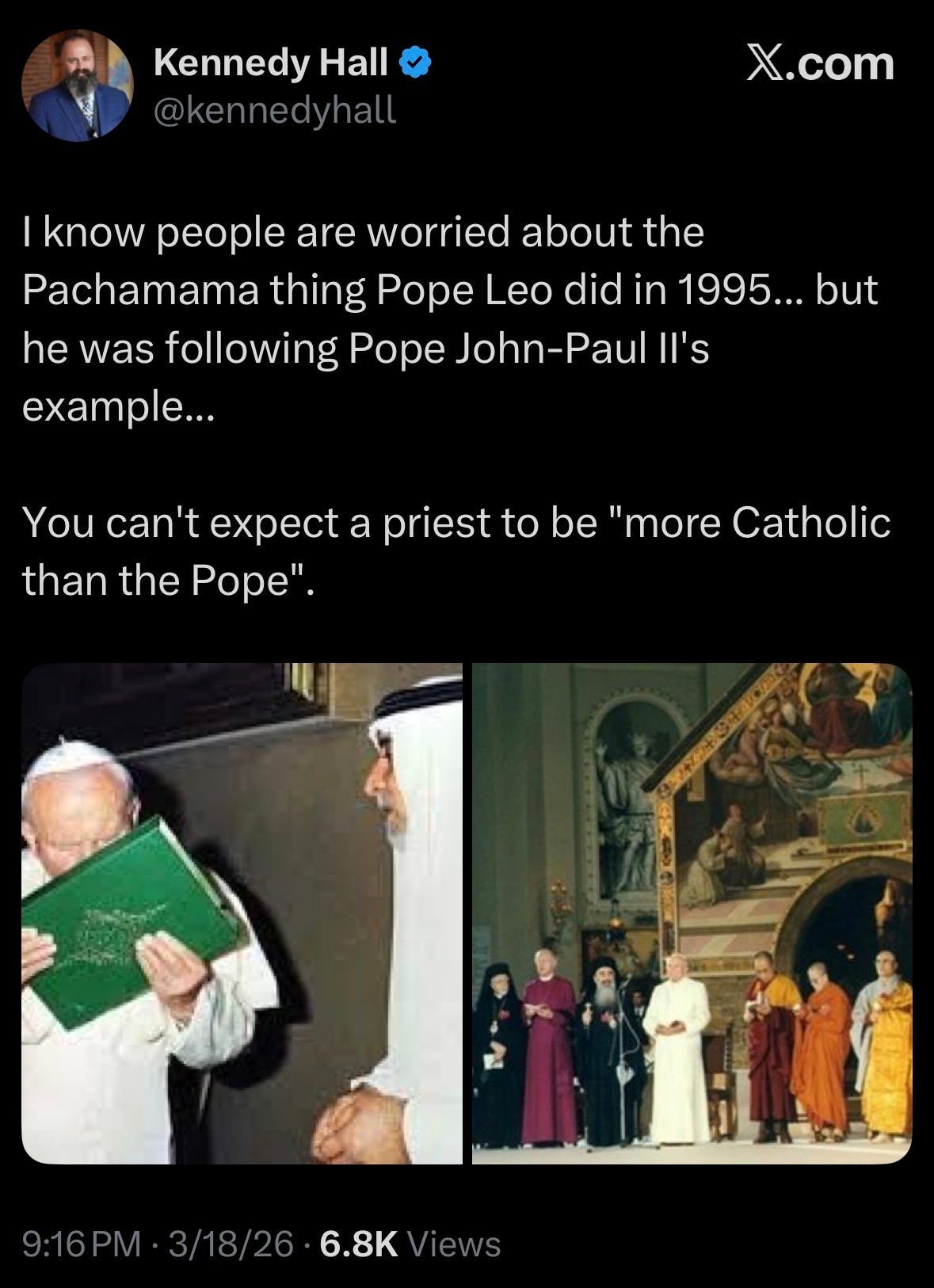
Kennedy Hall’s post was revealing for a different reason. Taylor Marshall at least tried to sound scandalized. Hall went straight to minimization. He told readers that Leo’s 1995 Pachamama involvement should be viewed in light of John Paul II’s example and that one cannot expect a priest to be “more Catholic than the Pope.”
That line was a convenient rewrite.
The real problem is that Hall had spent the early Leo period striking a much softer note. The line was that Leo was not Francis, that he seemed more reasonable, that Catholics should give him the benefit of the doubt, that perhaps he might even loosen the screws on the Latin Mass. But the moment genuinely bad news lands, the tone changes completely. Suddenly it becomes, what did you expect, he is a Vatican II guy, this is par for the course. In other words, when optimism was useful, Hall sold optimism. When the optimism blows up, he pivots to inevitability and acts as though the rest of us are naïve for noticing the explosion.
That is not analysis. It is gaslighting.
The effect is always the same. When Francis did these things, the rhetoric was alarm, outrage, civilizational stakes, betrayal, desecration. When Leo is attached to the scandal, the audience is told to calm down, adjust expectations, and remember that this is just the postconciliar pattern. But that only raises the obvious question: if you knew all along that this was the pattern, why were you encouraging people to expect something materially different from Leo in the first place?
Hall’s excuse about John Paul II actually makes the case worse, not better. Because once he says Leo was simply following the example set above him, he is admitting the continuity that conservative writers spend so much time trying to blur. He is conceding that the problem is not one bad pope here and there, but a whole line of formation, symbolism, and religious instinct that has run through the conciliar structure for decades. Yet instead of drawing the harder conclusion, he uses that continuity as a sedative. Do not be shocked. Do not react too strongly. Do not treat this as decisive. This is just how the system works.
But that is precisely why people are angry. Catholics were told Leo was a more measured alternative to Francis, a man worth watching with guarded hope. Then, when evidence surfaces that he may have been kneeling at a Pachamama rite in 1995, the same voices turn around and say, essentially, why are you surprised? That is an attempt to have it both ways, selling reassurance on the front end and resignation on the back end.
Hall likely meant to lower the temperature. What he really did was expose the game. Leo is presented as different when that helps stabilize the audience, then presented as unsurprising when scandal makes the earlier optimism look foolish. And that is why his post irritated so many people. It did not merely excuse Leo. It insulted the memory of everyone who remembers how loudly the same crowd screamed when Francis did less explicit versions of the same thing.
The Most Deafening Voice Was Silence
Still, the biggest story after the story was not Marshall’s hedge or Hall’s excuse. It was the void.
In the face of the most scandalous news since Leo was elected, what did Trad Inc. do?
Tim Flanders, One Peter Five, and the Kwas posted nothing on X the entire day.
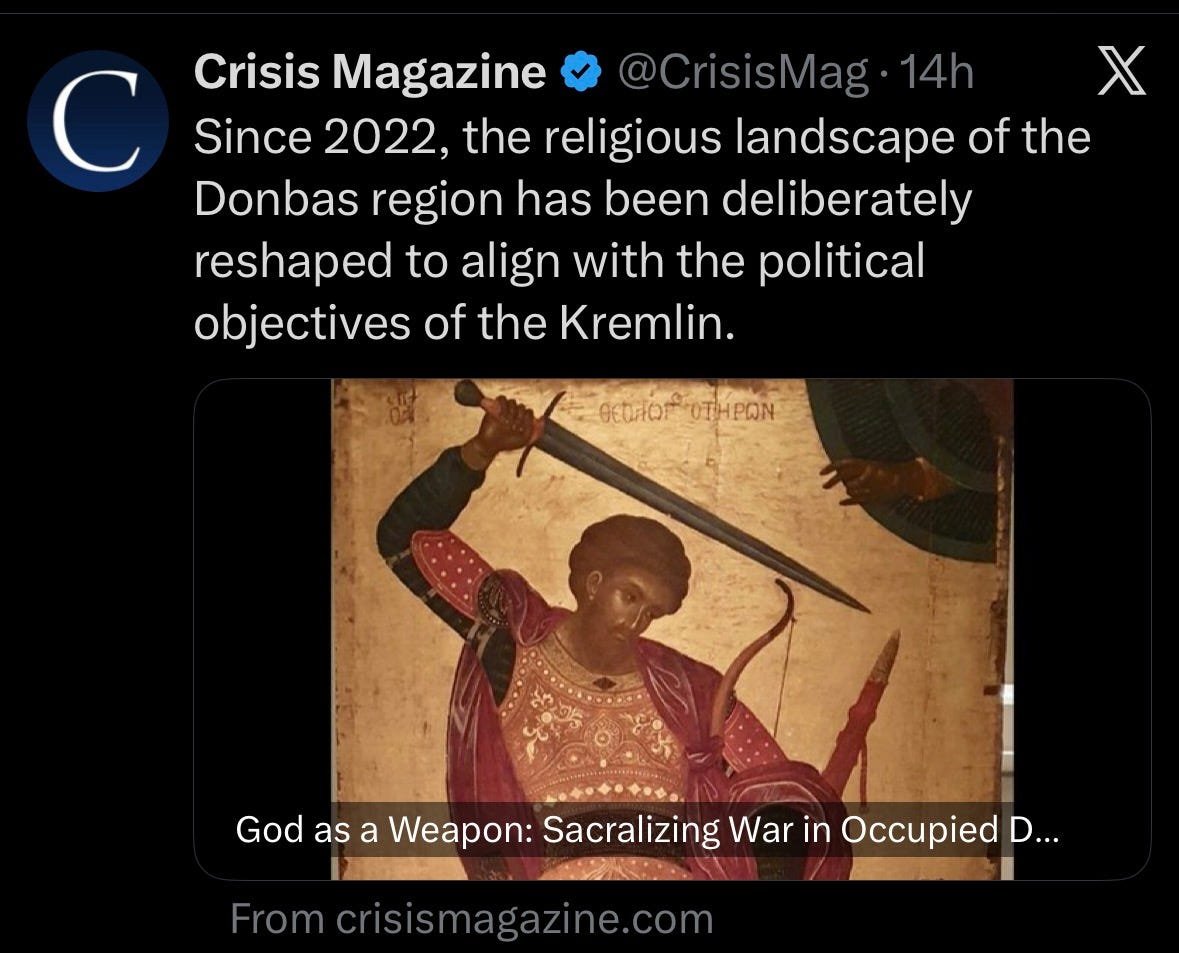
Crisis Magazine posted a “riveting” story on the religious landscape of the Donbas.
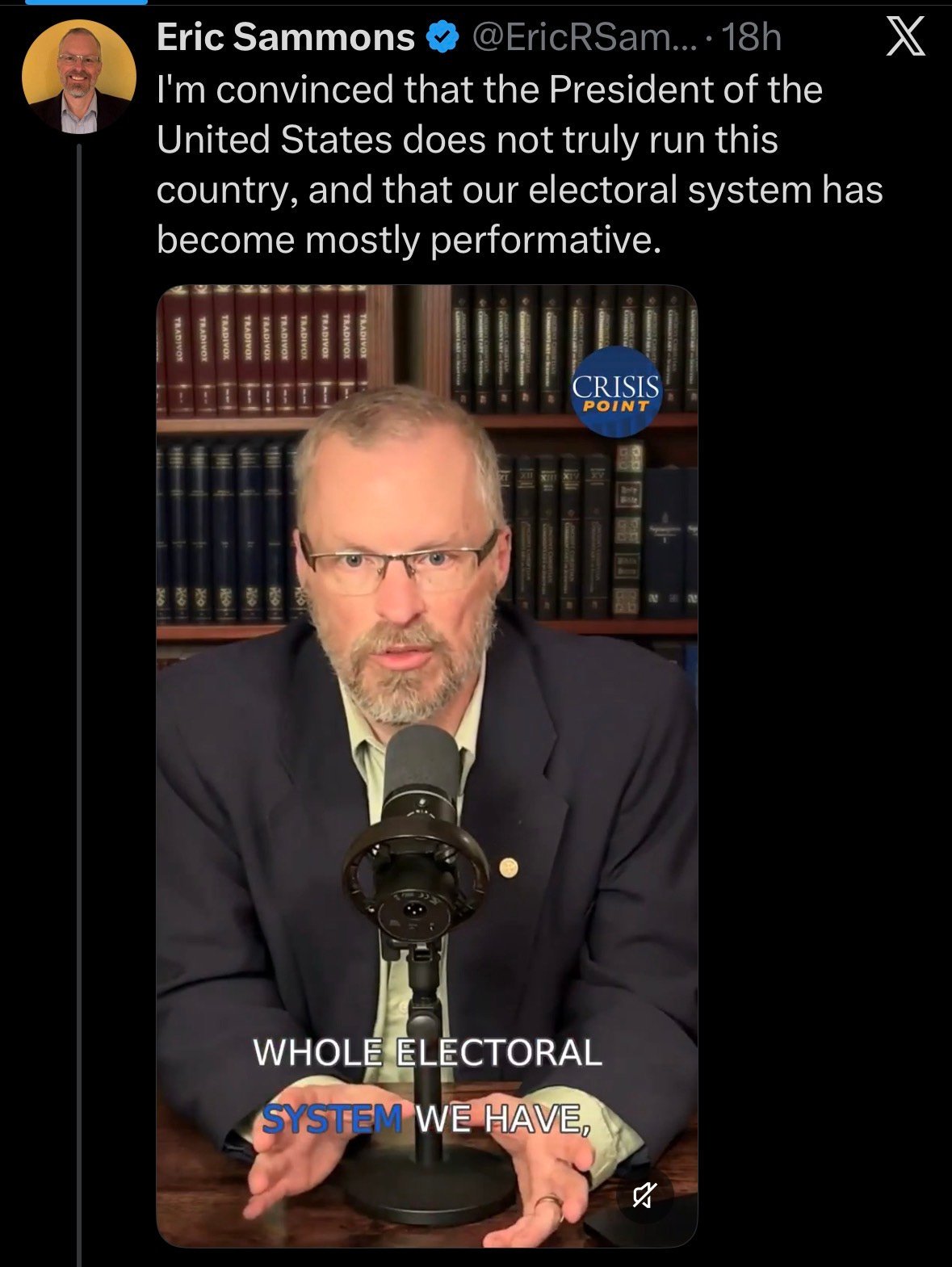
Eric Sammons wasted an opportunity to report on the biggest Catholic news story of the year by instead posting YouTube videos of himself spouting political conspiracy and doomerism. The saddest part of this is that he thinks anyone cares what he has to say about politics.
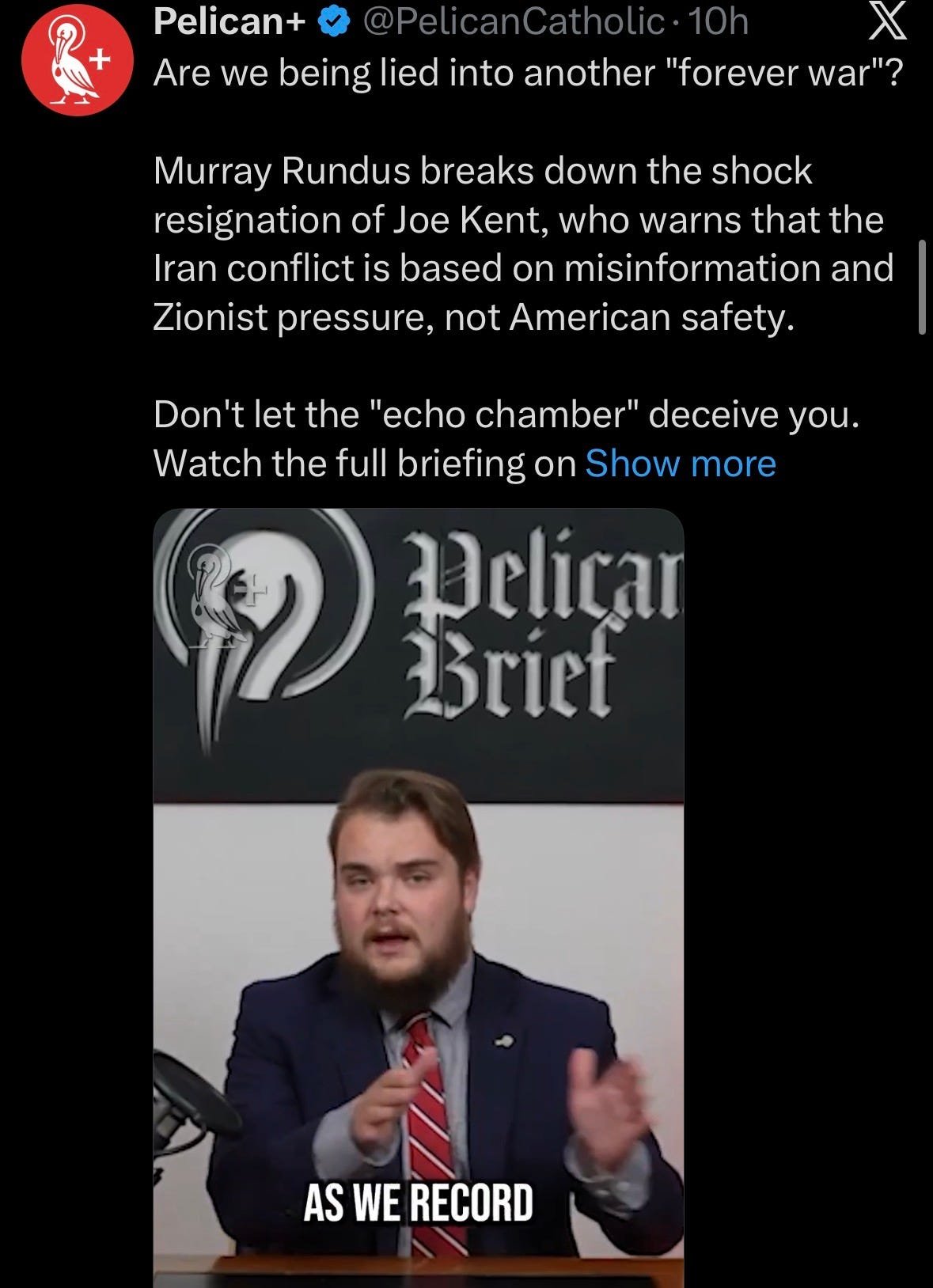
Pelican Plus posted previews to stories about immigration and the Cardinal Becciu case you have to subscribe to see. But the coup de grâce was ignoring Leo’s bowing to Pachamama to post a video of former Mousketeer, Murray Rundus, giving his take on politics.
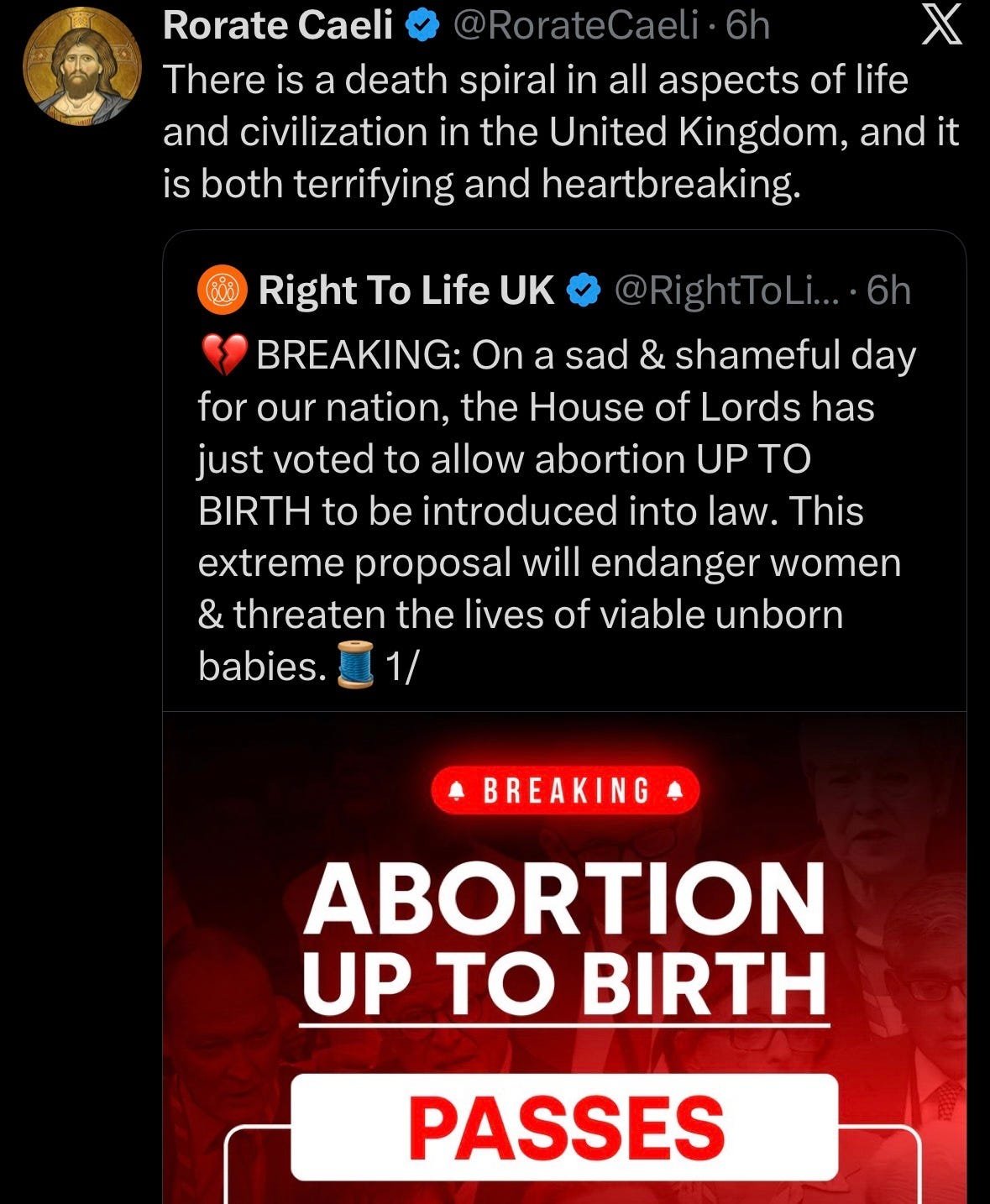
Rorate chose to punt the Pachamama story in favor of British abortion news (that Leo didn’t condemn or comment on) as well as criticism of US foreign policy.
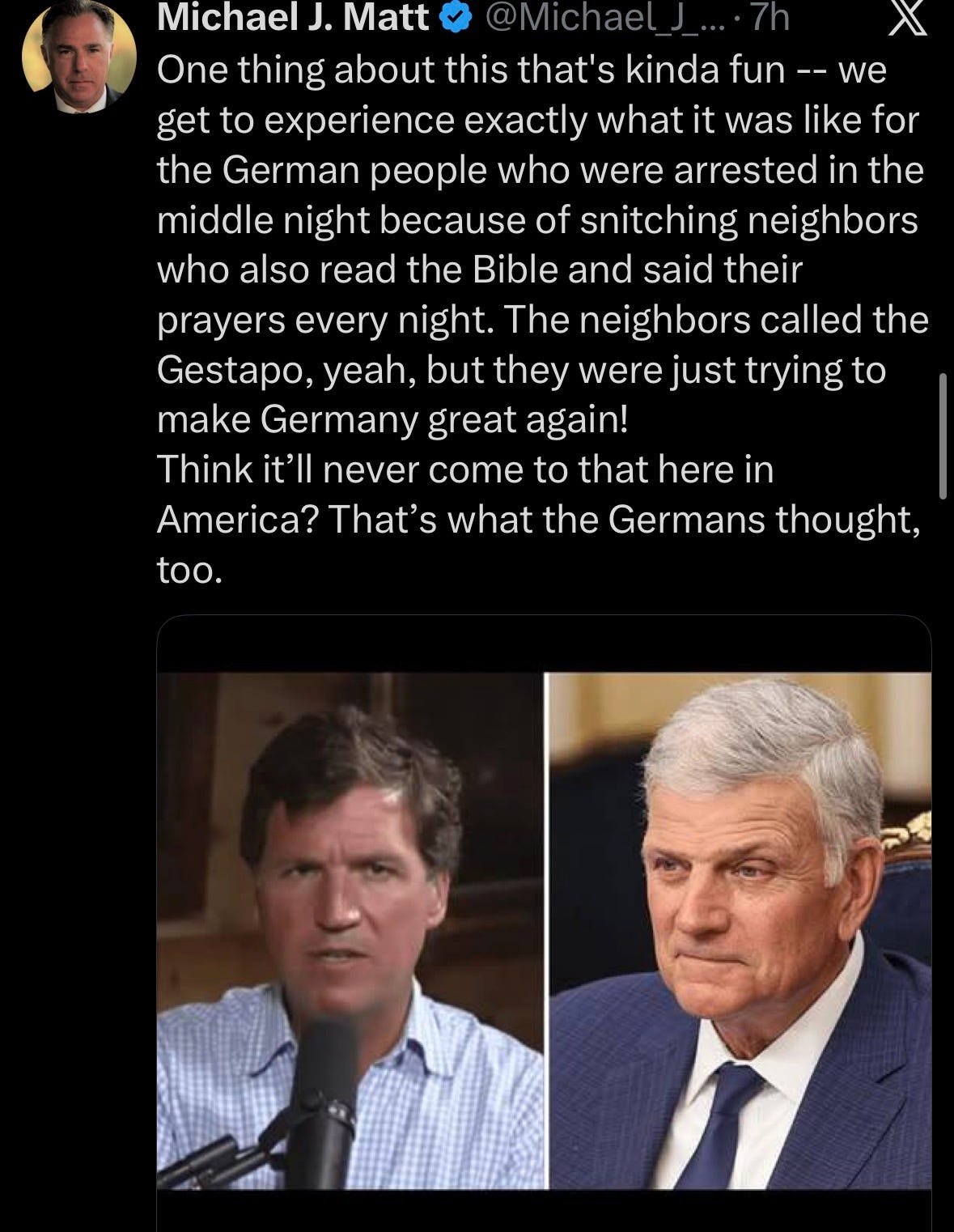
But the award of the day goes to Michael Matt of the Remnant who managed to completely ignore the earthquake Leo/ Pachamama choosing instead to make four lengthy posts informing his readers of Zionism, Zionism, and more Zionism, as well as spreading alarmism comparing our situation today to that of the Germans under Hitler.
Too bad Remnant readers barely know that Leo or the Church exist anymore, much less that Leo XIV bowed down to a pagan idol long before his election. The Remnant is now all politics all the time. It sadly sounds like an Info Wars broken record rather than a Traditional Catholic Newspaper.
The usual men and outlets who could once summon soaring rhetoric, historical analogies, apocalyptic urgency, and righteous indignation when Francis handed them material suddenly found themselves either speechless or covering stories with less risk to their bottom lines.
That silence was not neutral. It was diagnostic.
For years, these people trained their audiences to believe that they were the vigilant watchmen, the men willing to speak when the bishops would not, the voices prepared to defend the First Commandment and the integrity of Catholic worship against pagan contamination and conciliar decay. But when the scandal attached itself to Leo XIV, a great many of them discovered competing priorities. Some busied themselves with other commentary. Some pivoted to politics. Some pretended the day had no story worth addressing. Some likely hoped the story would blur, soften, or get tangled in verification disputes before they had to commit themselves.
That is how an industry behaves, not a remnant.
And Catholics should notice the asymmetry. When Francis was the villain, these men often sounded like Maccabees. When Leo is the problem, suddenly everyone becomes a lawyer, a tactician, a prudent evaluator of evidentiary thresholds, a patient observer waiting for a few more data points. Principle hardens when it is cheap and dissolves when it becomes expensive.
This is why so many ordinary laymen have lost patience with the conservative Catholic gatekeepers. They are tired of being told to speak in grave tones about the crisis while watching the professionals vanish whenever naming the crisis would inconvenience the coalition.
The First Commandment Does Not Change With the Polling
The moral category here is not hard to understand. Idolatry is real. Scandal is real. Public acts that confuse the worship owed to the true God are not healed by private caveats and strategic noncommittal.
If the categories applied in 2019, they apply now.
If Pachamama in the Vatican Gardens was a desecration then, Pachamama in a 1995 Catholic symposium does not become spiritually harmless because it happened before a man put on white. If conservatives once said reparation was needed when pagan imagery entered the precincts of Roman Catholic life, then they do not get to treat this as an embarrassing archival nuisance best handled with careful throat-clearing.
That is why the silence is so damning. It tells the faithful that a great many supposedly hard principles were always contingent on the identity of the defendant. The rhetoric was maximal when the target was convenient. It becomes procedural once the target is Leo XIV.
But the First Commandment is not procedural. It is not an optics issue. It is not a communications challenge. And it does not wait for the market leaders in Trad Inc. to tell the laity whether now is the correct moment to be offended.
The Middle Position Is Running Out of Road
At some point, the endless formula breaks down.
Recognize the man. Resist the errors. Deplore the scandals. Explain the gestures. Preserve the office. Delay the conclusions. Repeat.
That arrangement could limp along when each fresh outrage could be packaged as one more exception, one more overreach, one more abuse of an otherwise intact authority structure. But a story like this strains the whole mechanism. If the same postconciliar order keeps producing men, symbols, ceremonies, appointments, and public acts that collide with the Church’s traditional exclusivity about worship, then the question is no longer whether this or that episode was ugly. The question is what kind of authority structure this actually is.
Kennedy Hall’s post inadvertently helps here. If Leo’s alleged act in 1995 can be explained by appeal to John Paul II’s example, then the line of causation extends upward and backward. That is not a small point. It is the whole point. Once the defenders admit continuity, they can no longer pretend the problem is merely personal style. The crisis is institutional, theological, and inherited.
The Photo Is a Mirror
In the end, the Pachamama photograph is not only an accusation against Leo XIV. It is a mirror held up to the postconciliar church and to the media class that has tried for years to manage Catholic outrage without letting it become too coherent.
The picture may yet be debated in some of its particulars. Rome may stall. Defenders may wriggle. More evidence may surface. But already the event has done its work. It has shown how brittle the conservative script has become. It has shown how quickly loud men go quiet when their preferred narrative is threatened. It has shown that even the few who speak tend to speak too late or with built-in escape hatches.
And it has shown something else as well. The faithful still know scandal when they see it. They do not need a roundtable of branded commentators to tell them whether kneeling in a rite labeled Pachamama is compatible with Catholic instinct. They do not need ten months of think pieces to decide whether the same people who screamed during Francis and freeze during Leo are playing a game.
March 18 was not just a bad day for Leo XIV. It was a bad day for the entire cottage industry built on selective outrage, delayed honesty, and profitable resistance.
The photograph surfaced. The caption spoke. Two men posted. The rest said nothing.
That silence said plenty.