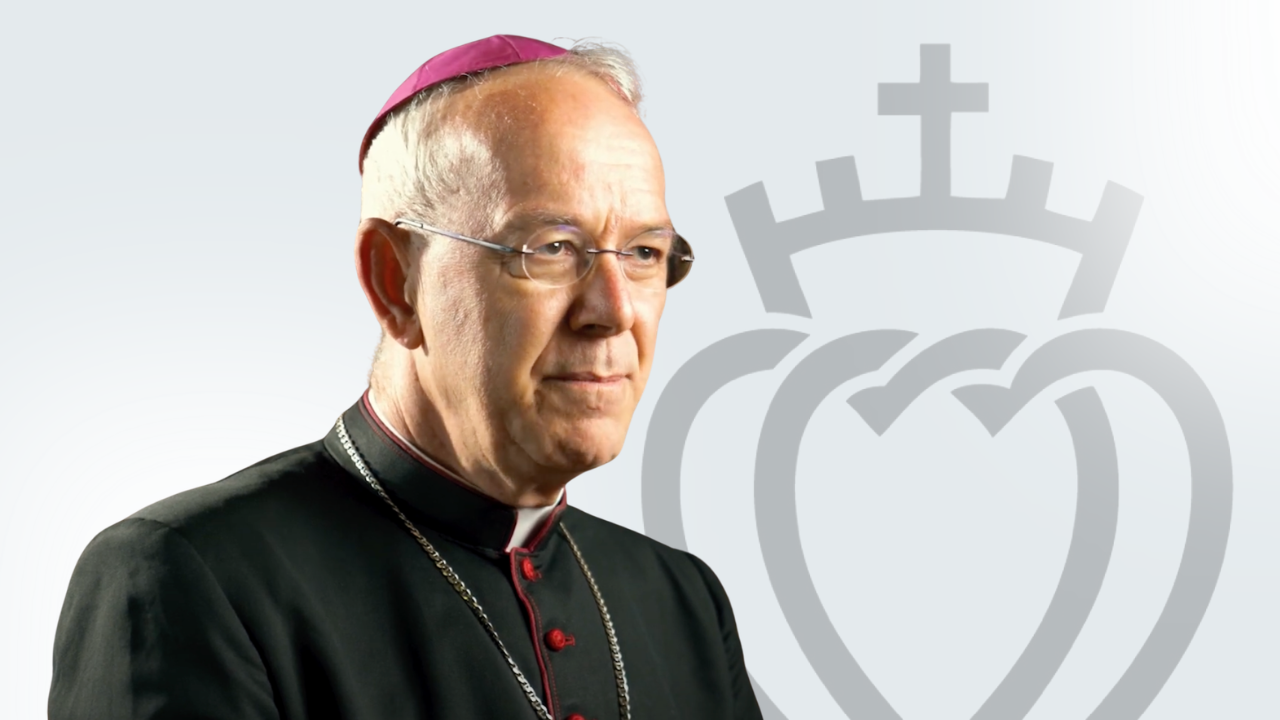
Bishop Athanasius Schneider was interviewed on Certamen regarding the ordinations organized by the FSSPX:
Excellency, in your appeal, you urge Pope Leo XIV to grant the Fraternity of Saint Pius X the apostolic mandate for episcopal consecrations, even before the conclusion of doctrinal discussions. In your opinion, what would be a first concrete step?
First, the leadership of the Fraternity of Saint Pius X, regardless of its still unresolved canonical situation, should ask Pope Leo XIV to grant the apostolic mandate for episcopal consecrations by submitting the files of candidates, as Bishop Lefebvre did in 1988. At the same time, the Superior General of the Fraternity and the candidates should sign the traditional Professio Fidei (Tridentino-Vaticana), valid until 1967, and send it to the Pope. Moreover, they should also draft a brief statement recognizing Pope Leo XIV and expressing their desire to offer their service to the Church through the apostolate of the Fraternity, by preserving and transmitting the traditional faith and liturgy, particularly through priestly formation and a sacramental and pastoral life of the faithful according to the proven form, as the Roman Church has always required and practiced for centuries, and that the priestly Fraternity has no other intention than to make of its bishops, priests and faithful true children of the Roman Church.
You are one of the few bishops to take a public and clear stand in favor of the Fraternity of Saint Pius X. Where is the solidarity of your brethren? Even bishops considered conservative and attached to the extraordinary form of the Roman rite remain silent or have no kind words for the Fraternity. How do you explain this?
This depends on several factors. Over the last centuries, an erroneous interpretation contrary to tradition of two dogmas of the First Vatican Council has spread: the dogma of the jurisdictional primacy (governmental authority) of the Pope and that of his infallibility. A so-called papalism has developed, that is to say an absolutization, even a form of deification, of the person of the Pope, making him the central figure of all the life of the Church. This phenomenon has the consequence of obscuring the centrality of Christ and the traditional character of faith and liturgy. In this excessive conception of the papacy, any disobedience to a papal decree is regarded as schism. Furthermore, an erroneous notion of papal infallibility has become widespread. Contrary to the clear and very precise conditions of papal infallibility established by the First Vatican Council, an absolutization of this infallibility has become established in the minds of the faithful and pastors, which means that every word of the Pope is de facto considered infallible. Furthermore, a reductive and excessively restrictive conception of schism has developed, assimilating to schism any canonically irregular situation, whatever the intentions or particular circumstances, and even if those concerned publicly recognize the Pope and pray for him and the local bishop at Mass. Moreover, an episcopal consecration carried out against the will of the Pope—that is, an illicit consecration—is automatically characterized as an act of schism, even as an act intrinsically evil. Now, such a conception contradicts the constant canonical tradition of the Church. Until the new Code of Canon Law of 1983, an illicit episcopal consecration was not subject to excommunication, but merely to suspension (deposition). Even in current canon law, such a consecration is not classified among acts against the unity of the Church, but rather among acts of usurpation of office or discrimination against the sacraments. In general, over the last centuries, an attitude of absolutism toward legal positivism has developed within the Church, that is, a norm established by men, in this case by ecclesiastical authority. Consequently, in the life of the Church, the observance of an ecclesiastical norm de facto takes precedence over the need to preserve the clarity of doctrine and the oneness of the faith and liturgy of the Catholic Church.
In an interview, you expressed suspicions that certain influential circles at the Vatican do not truly desire reconciliation. What would it take for Pope Leo XIV to overcome this resistance, and do you believe he has the will to do so?
The Pope possesses full authority and is sovereign in his decisions. He can therefore, of course, act even against the advice of the personnel of the Roman Curia. If he were constantly dependent on the advice of this personnel, he would not be free and would not truly exercise his function as Pope. The Pope must stand above partisan struggles and act as the true shepherd and father of his entire flock, which includes the clergy and faithful of the Fraternity of Saint Pius X.
What would be the consequences for the hundreds of thousands of FSSPX faithful (families, children, converts, etc.) if ordinations were to take place on July 1st without papal mandate? What pastoral reality might we see emerging?
If the Pope does not renew the apostolic mandate and, even in pronouncing excommunication for illicit episcopal consecrations, only the bishops who consecrated and those who were consecrated would be, properly speaking, legally excommunicated, that is, according to the letter of the law, but not the priests and faithful of the Fraternity. Pastoral practice would most likely continue as it currently does. It is also possible that worldwide media attention and significant media coverage of this event would bring new believers and converts to the Fraternity, all the more so as the grave crisis of faith—a true emergency within the Church today—continues to worsen before our eyes. At present, nothing indicates that this crisis and emergency within the Church are diminishing.
The crisis is intensifying rapidly; it is even more manifest than in 1988. What are your prospects for the future? How far can this escalation between the Vatican and the Fraternity of Saint Pius X go, and what would be the worst scenario for the Church?
We are witnessing an incredible, almost apocalyptic scenario each day: the open propagation of heresies, the legitimation of homosexuality (that is, sodomy), religious syncretism (pagan rituals), indifferentism (all religions are the same path to God), the undermining of the apostolic discipline of the Church in the sacraments and the celibacy of priests, sacrileges and apostasy. All this is encouraged, even perpetrated with complete impunity by bishops and cardinals in various parts of the world. In this situation, only a divine intervention can save us, such as massive persecution of the Church and the Pope himself by anti-Christian political elites. It could also be a profound conversion of the Pope to tradition and renewed apostolic courage, the fruit of the prayers and sacrifices of countless faithful, particularly the humblest. One thing is certain: the Church is always in the hands of almighty God, and Christ is the helmsman of his ship, even though he is currently sleeping on board, tossed by violent storms, and the creaking of a few rotten planks seems to announce an imminent shipwreck, as Saint Gregory the Great said. We firmly believe that once again, Christ will arise and master the storm, and that the Holy Roman Church, our Mother, will again be the beacon and the chair of truth.