(from 10:55)
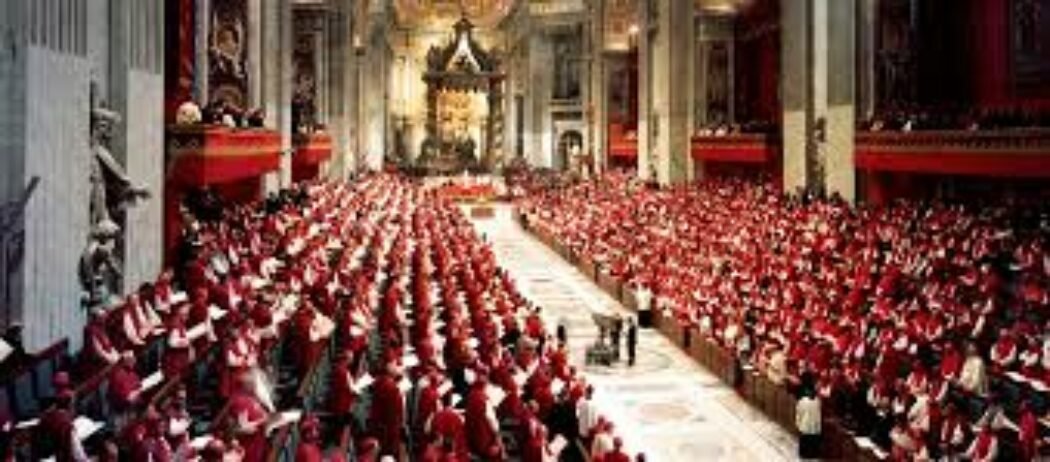
We are light-years away from the scope of the liturgical reform that followed the Second Vatican Council and altered everything with the Missal of St Paul VI!!
Indeed, the Missal of 1965 implemented the modest changes truly desired by the Council!
It is therefore inaccurate to claim that the present Mass and calendar are direct outgrowths of the Council.
Recalling Archbishop Lefebvre’s opinion on the 1965 Missal
…must we conclude that all those elements [of the 1962 Missal amended in the 1965 edition] should have been retained without change? In measured and prudent fashion, the Council responded in the negative. Something was in need of reform and restoration.
It is clear that the first part of the Mass, designed to instruct the faithful and enable them to give voice to their faith, required a more forthright and, in some respects, more intelligible approach. In my humble judgment, two reforms in this direction appeared salutary: first, the rites of that opening section and, second, the use of vernacular translations.
Permitting the priest to draw near to the faithful, to commune with them, to pray and chant with them — standing, that is, at the ambo — and to proclaim in their tongue the prayer of the oration, the Epistle and the Gospel readings; enabling the priest to sing with the faithful the Kyrie, the Gloria and the Credo in traditional sacred melodies — all of these are felicitous reforms that restore this section of the Mass to its proper end. For the ordering of that instructional portion to be fashioned first with a view to sung Sunday Masses — so that these rites serve as the model by which others are adapted — all are aspects of renewal that appear excellent. Above all, we must add the necessary guidance for true, simple, stirring and faith-filled preaching, resolute in its determination. Among the most vital points to be attained in the liturgical renewal of this part of the Mass.
With respect to the sacraments and sacramental rites, the use of the faithful’s own tongue appears even more necessary, since these rites bear directly and personally upon them.
(Article from 6 June 1965, published in Itinéraire)