
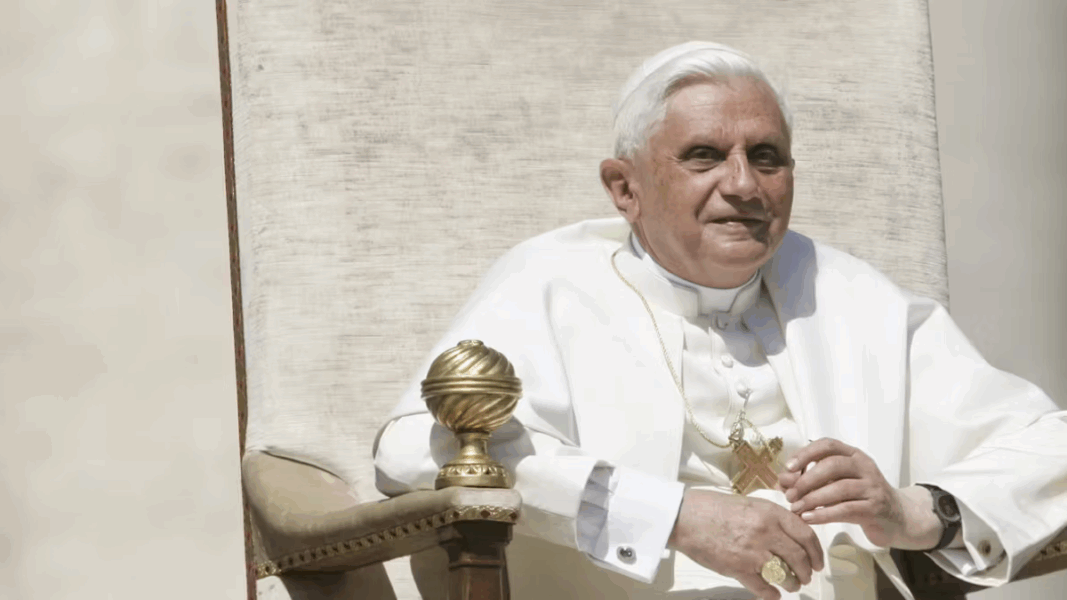
The note with which three dicasteries celebrate the sixtieth anniversary of Nostra aetate cites the address of Benedict XVI at the University of Regensburg. It does so only once, in number 24, without writing the name Regensburg and without reproducing the sentence that in 2006 provoked an international crisis with the Islamic world. The reference appears in the critical apparatus, under the official title of the act: 'Address on the occasion of the meeting with representatives of the scientific world (12 September 2006)'.
The text of number 24 states, in the Spanish version published by the Holy See, that 'perseverance in interreligious dialogue aims to be the demonstration that fundamentalism is a falsification of religions, which opposes their deepest vocation', and adds: 'In a well-known address, taking up the words of a Byzantine emperor, he affirmed that "the spread of faith through violence is something irrational. Violence is in contradiction with the nature of God and the nature of the soul"'.
Regensburg without naming Regensburg
The sentence exists and is from Benedict XVI. In the Regensburg lecture of 12 September 2006 it is the conclusion the Pope draws from the reasoning of Manuel II Palaeologus after having cited him. What the note does not include is what came before in that text: the harsh mediaeval quotation about Mohammed and violence upon which the international controversy of 2006 concentrated.
The operation is, in documentary terms, straightforward. From that address the note takes the only sentence that no interlocutor can reject—that violence is contrary to the nature of God—and uses it to maintain that fundamentalism betrays religions. It is exactly the argument Benedict XVI sustained. But it arrives stripped of the context that made it famous and without the name that identifies it.
Citing an address by its official title is not concealing it: it is the ordinary practice of Vatican documents, which refer to the Insegnamenti with the formal reference and date. The datum is another. A text of sixty numbers on interreligious dialogue, approved by Leo XIV on 22 June and published on 16 September—four days after the twentieth anniversary of Regensburg—incorporates that address into its chain of authorities without mentioning the controversy, without explaining it and without taking a position on it.
A note signed by three dicasteries and approved by Leo XIV
The note is signed by Cardinals Víctor Manuel Fernández, Kurt Koch and George Jacob Koovakad, prefects of the Doctrine of the Faith, Christian Unity and Interreligious Dialogue, with their three secretaries: Armando Matteo, Flavio Pace and Indunil Janakaratne Kodithuwakku Kankanamalage. Below appears the formula 'Ex Audientia, 22 June 2026' and the Pope's signature.
The citation is of interest because Regensburg is not a pacific text within the Church itself. At the end of August, the German Jesuit and Islamologist Felix Körner described that intervention as an 'objective error' and maintained that Benedict XVI had then presented Christianity as the religion of rationality in contrast to an Islam characterised differently. That a document signed by three dicasteries and approved by the Pope should resort to that address to ground the critique of fundamentalism is, at the very least, an implicit taking of position on its validity.
Read also: A Jesuit describes as 'objective error' the historic address of Benedict XVI at Regensburg
The two citations from Benedict XVI
Number 24 cites Benedict XVI twice. The first is from the message for the twentieth anniversary of the Assisi meeting, also from 2006: 'we cannot invoke God as Father of all if we refuse to behave as brothers towards some men created in the image of God'. The second is that from Regensburg. The two follow one another and both serve the same purpose: to maintain that faith in God imposes universal fraternity and excludes religious violence.
The Holy See disseminated interviews with the three prefects who sign the note on the occasion of its publication, but in the published material there is no specific explanation concerning the presence of the reference to Regensburg nor concerning the criterion by which that passage was chosen. The American portal Crux noticed the citation on 16 September itself.
Read also: A selective memory: what the new Vatican Note cites and what it leaves out