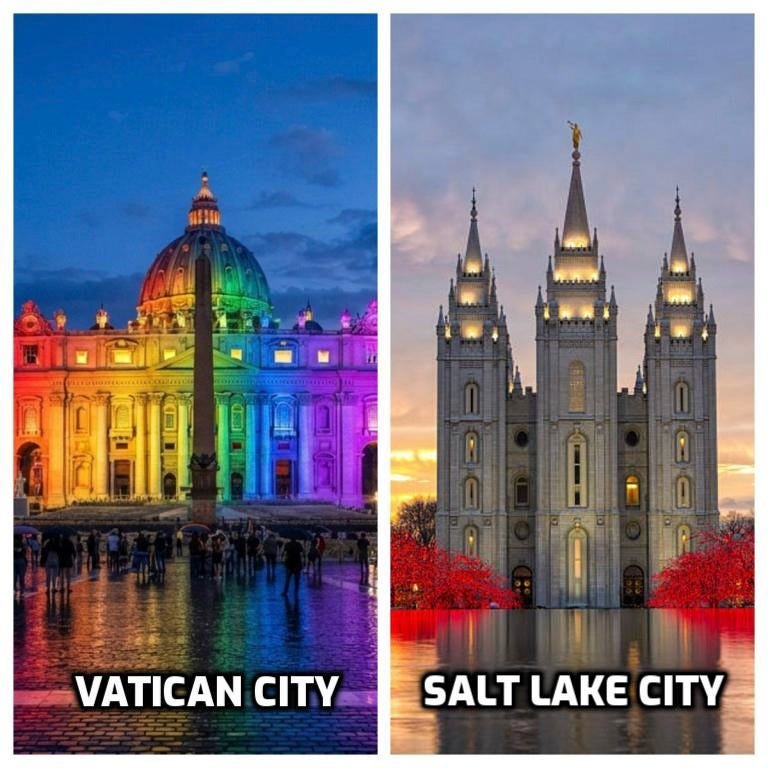
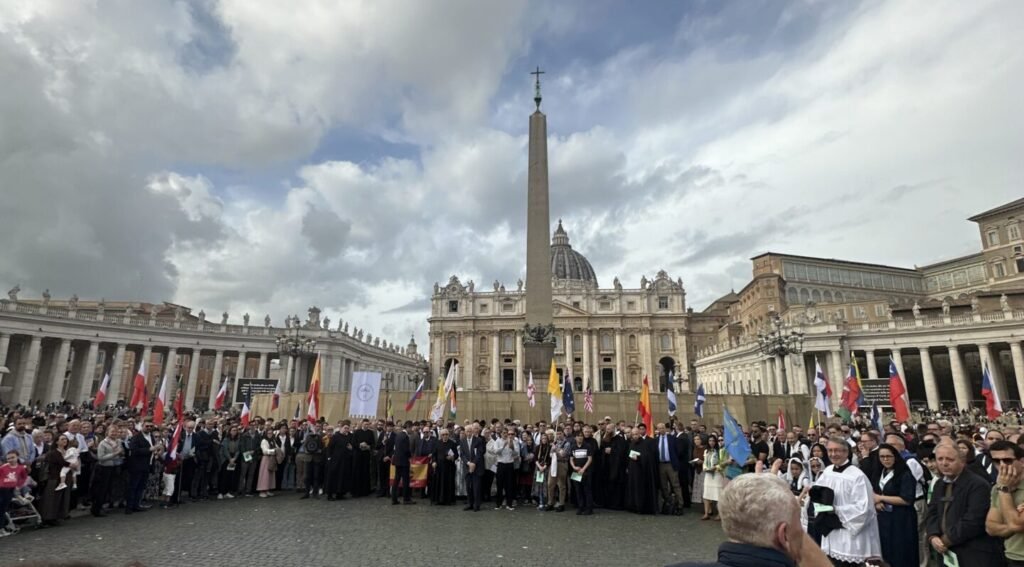
The rites that exist within the Catholic Church demonstrate, through their peaceful coexistence with the Novus Ordo, that this is indeed possible. The Eastern Churches in full communion are even sui iuris (autonomous) particular Churches within the universal Catholic Church. No one views them as a threat to the unity of the Church. No one would deny them an altar or bar them from entering a Catholic church. No one except the Vatican, which denies access to conservative Catholics who are, incidentally, loyal to the Pope. The synodal hypocrisy (inclusivity) has thus been exposed for what it is. The “Ad Petri Sedem” pilgrims are not the FSSPX.
But we’ve known this for a long time: certain people are only inclusive as long as it serves their own goals. They ruthlessly and cold-bloodedly exclude alternative ways of thinking and different approaches to pastoral care and spirituality. That has been my consistent experience. We recognize the same pattern in politics as well.
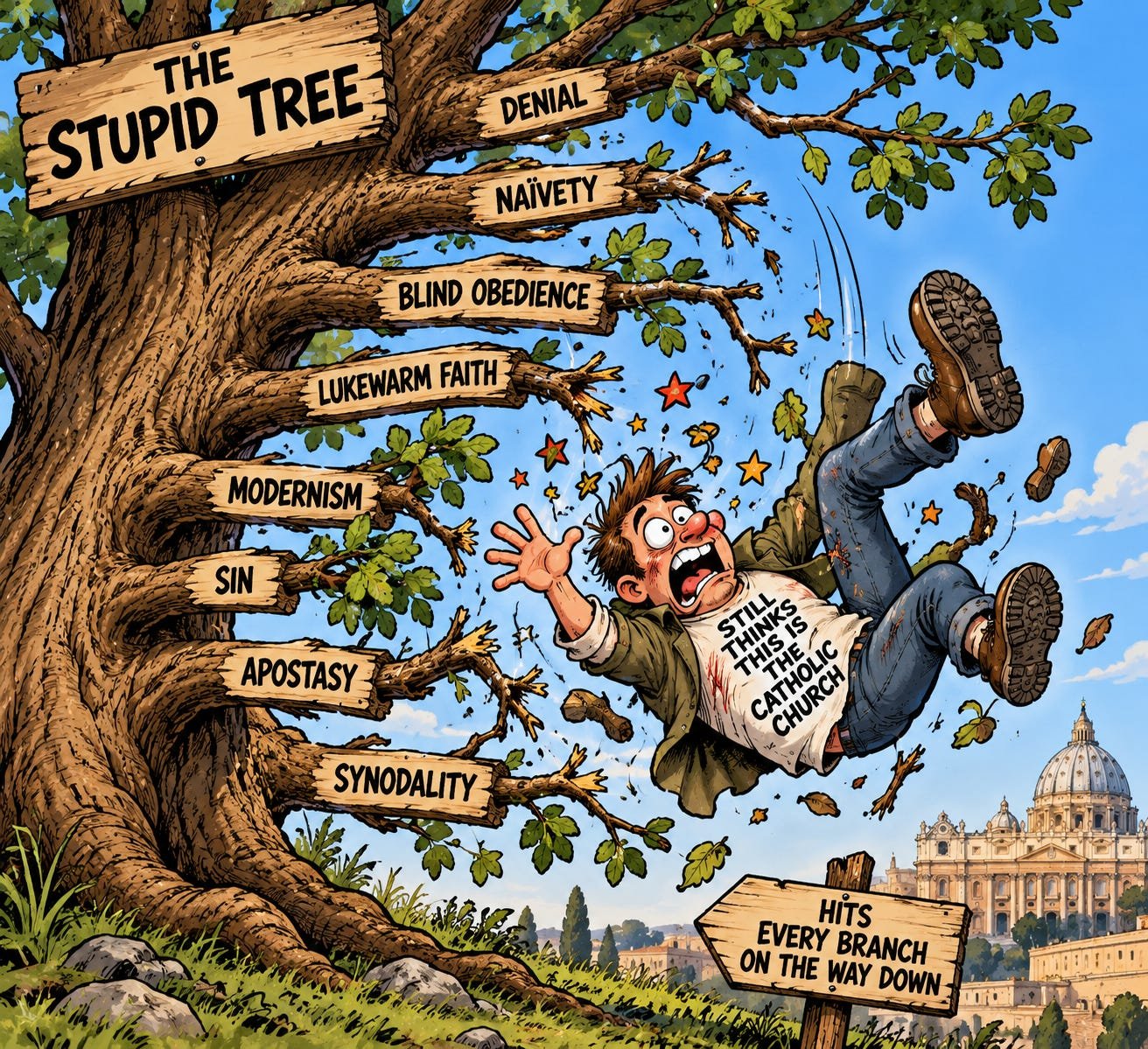
Well, so-called synodality has thus shown its true colors. It selects whom or what it includes. “Todos, todos, todos” does not mean everyone, but only certain people.
We have been familiar with the efforts and postulates of so-called “reform Catholicism” since the 1970s. Its protagonists have come and gone in waves and often changed their attire, without ever abandoning their ever-same goals. The result is today’s synodality, which is not the synodality of yesterday – namely, tradition. It is becoming apparent that, in the end, this is a belated, Protestant-style structural reform and the rejection of Familiaris Consortio (1981) and Veritatis Splendor (1993). It is highly recognizable to converts from the Anglican Church.
Intercultural learning and listening – I am a Benedictine missionary – have been key concepts I’ve been familiar with since the early 1990s, concepts that have paralyzed our missionary dynamism for decades. The Congregation for the Doctrine of the Faith’s declaration “Dominus Jesus” of August 6, 2000, was already a response to this, but it was not heeded, which is why we now have this synodal overkill of words and processes.
Yet the truth is so simple: Dominus Jesus! So more than 25 years ago, the Holy Spirit called on us to (once again) present Christ to the nations as the exclusive, absolute truth, as the only door to the Father, as the universal, ever-valid Teacher, and as the world’s sole Savior. Instead, we sit in circles and on chairs, waiting to hear. From whom?
But nothing comes. I mean: Nothing new except the gradual implementation of the demands of yesterday’s reform Catholicism (democracy and participatory decision-making; checks on power; laypeople in leadership positions; women in church offices; revision of sexual morality; normalization of divorce and remarriage; recognition of homosexual lifestyles and partnerships; transgenderism; care for creation and the climate; socialist-inspired universalism: open migration and universal brotherhood; interreligious coexistence instead of mission).
The elephant in the room – the correlation between abuse and homosexuality in the Catholic clergy (Dariusz Oko; Paul Sullin) – continues to be ignored.
The roundtable discussions are scripted. The commissions are producing heterodox proposals. Rome is offering no valid answers to the problems in the Church triggered by liberal progressivism. An honest, objective evaluation of liturgical renewal – without seeking to return to the pre-1965 era – is lacking. The shift among young people toward conservative attitudes, even within the Church, is not being objectively reflected upon as a sign of the times.
Meanwhile, on the streets of Europe’s cities, we see Islamo-leftist, migrant, and chaotic forces at work, which symptomatically demonstrate what happens when the traditional Christian order disintegrates and the value-neutral secular state fails. Its leading politicians possess neither credibility nor values or virtues; in a post-Christian era, they simply have nothing to offer. It is incomprehensible that just recently a pope called on young people to stir up chaos. Chaos has never been a category of the spirit, but rather of demonic, revolutionary forces. The spirit, as is well known, is the one who brought order to chaos in the beginning. Where chaos runs rampant, the devil reigns.
Signs of decay in society and the Church in our part of the world are impossible to overlook. In my opinion, the former (society) has no chance of surviving without Christianity; the latter (the Church), while upheld by God, fails to proclaim the exclusivity (in both senses of the word!) of Jesus Christ (the Way, the Truth, and the Life). It now serves merely as a stepping stone for humanity, a concept often described as “openness.”
The category of sin is being replaced by that of fragility. The focus is primarily on closeness. Heresy and error are not named. Instead, dialogue flourishes. For years, the Church has resembled a never-ending workshop of circle discussions and roundtable talks without producing any sustainable results – except for those that undermine its doctrine, its proclamation, and its hierarchical-sacramental structure in deed and truth, but also semantically.
Finally, the good news.
We are heading toward 2033. After 2,000 years, it will be a special year. Jesus Christ is the same yesterday and today. he remains the Father’s answer to all our problems and the atonement for our sins. Above all, we must remember the latter. Wherever He enters a heart, everything becomes new! He is the pearl that the Church has to offer to the nations. Whoever has recognized its value wants nothing else. Nor can such a person place Jesus Chrst on the same level as others. The joy of having found Him eclipses everything else. God made man is, after all, a singularity! For everyone!
Translated by Michael Haynes (Per Mariam)