The Age of Magnificent Man
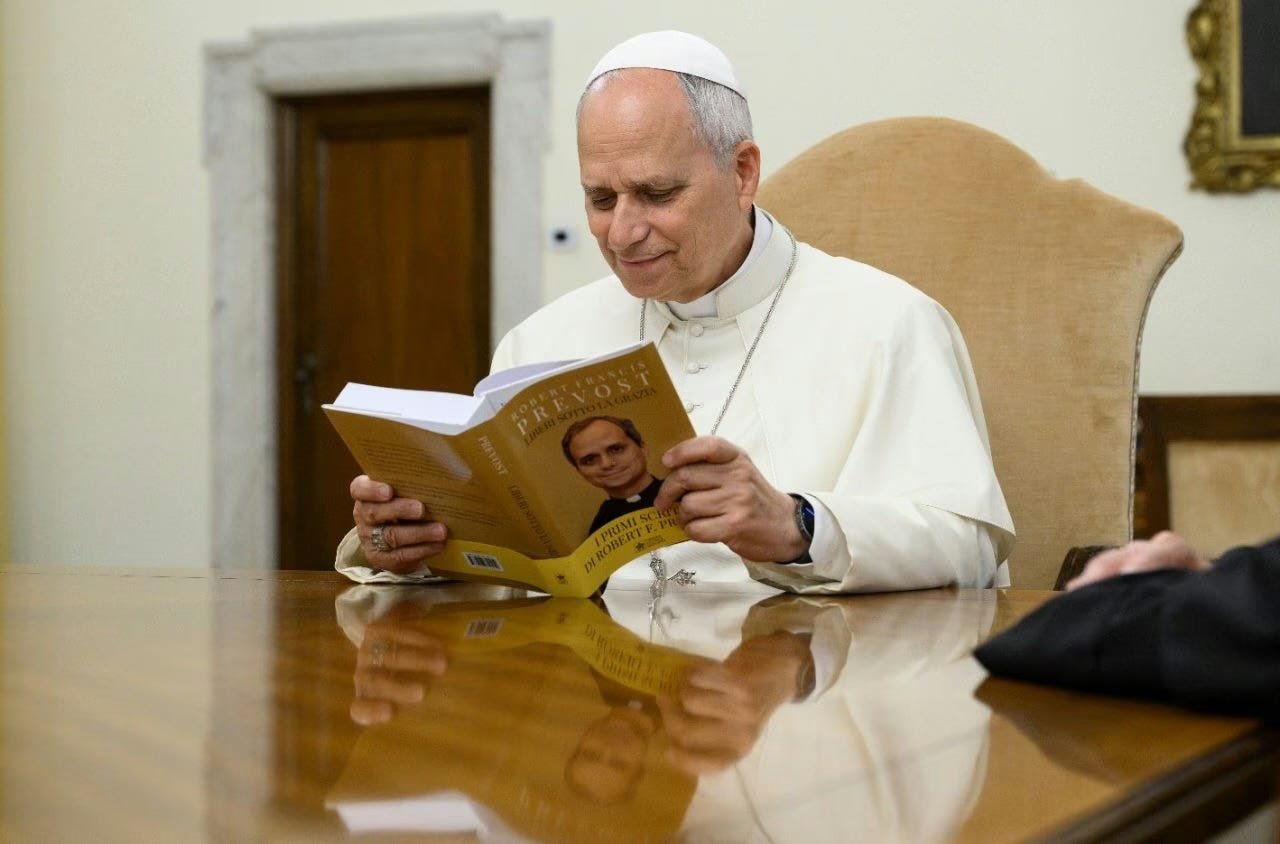
If the reports are accurate, Leo XIV will sign his first encyclical on May 15 under the working title Magnifica humanitas, “Magnificent Humanity.” The title alone could have been produced by a Vatican generator trained on NGO grant proposals, World Economic Forum panels, and the collected speeches of every postconciliar committee that ever discovered “the human person” while misplacing the supernatural end of man.
The reported themes are artificial intelligence, peace, the crisis of international law, and other contemporary threats facing humanity. Vida Nueva, relying on KNA, says the date was chosen to echo the great social encyclicals: Rerum Novarum in 1891, Quadragesimo Anno in 1931, and Mater et Magistra in 1961. It also reports that Leo has framed the digital revolution as a parallel to the industrial revolution of Leo XIII’s day.
It is true that there are moral questions surrounding artificial intelligence. There are real questions about war, law, labor, surveillance, bioethics, economic manipulation, and the reduction of man to a programmable unit in a digital empire. A true pope could address these things with force.
The problem is the pattern.
Whenever the Conciliar Vatican turns toward “the world,” it speaks with a confidence it can never summon when confronting the apostasy inside its own walls. It can diagnose humanity, but not heresy. It can discuss international law, but not Eucharistic sacrilege. It can warn against technological dehumanization, while tolerating the liturgical, doctrinal, and moral de-Catholicization of the faithful.
A starving man does not need a symposium on agricultural policy before he is given bread. Europe is losing the Faith. Germany bleeds Catholics by the hundreds of thousands. France cannot produce enough priests to bury its dead parishes. The post-Vatican II order has produced emptied churches, collapsed vocations, doctrinal fog, sacramental abuse, and a class of bishops who speak fluently about ecology, migration, democracy, dialogue, and “the human family” while treating actual Catholic doctrine as a radioactive inheritance from some less enlightened age.
And Leo’s first great act of paper appears ready to tell the world that humanity is magnificent.
Fallen man is not saved by being admired. He is saved by grace, repentance, baptism, the Cross, the sacraments, the true Faith, and final perseverance. Try finding that urgency in the bureaucratic spirituality of the modern Vatican.
Leo XIII Had Workers. Leo XIV Has Stakeholders.
The comparison with Rerum Novarum is meant to give the new encyclical weight. It may do the opposite.
Leo XIII wrote in a world convulsed by industrial capitalism, socialism, Masonic republicanism, and the great social dislocations of modernity. Yet he did not write as a chaplain to the age. He wrote as a pope conscious that the Church had something to teach the world because she possessed revealed truth. Rerum Novarum defended private property, condemned socialism, upheld the natural family, and treated the social order as subordinate to divine law.
That is precisely the missing note in the present Vatican posture.
The old social teaching assumed that Christ is King. The new social rhetoric often sounds as though Christ is an honored adviser to the United Nations. The old papal voice judged the modern world. The new voice wants a seat at the table where the modern world judges “threats facing humanity.”
There is a difference between Catholic social doctrine and Catholic-flavored humanitarianism. Catholic social doctrine flows from the Kingship of Christ, the natural law, the moral law, the family, property, hierarchy, duty, justice, and man’s supernatural end. Catholic-flavored humanitarianism borrows Catholic words and empties them into the bloodstream of the global managerial class.
That is why the working title gives away the game. Magnifica humanitas. Magnificent humanity.
Not Christus Rex. Not De Ecclesia. Not De Poenitentia. Not De Eucharistia. Not De Apostasia. Not De Vera Fide.
Humanity.
Always humanity.
The world desperately needs to be told that Jesus Christ is God, that the Catholic Church is the one true Church, that false religions do not save, that mortal sin kills the soul, that the Eucharist must not be received by public adulterers, that the Mass is the propitiatory Sacrifice of Calvary, that bishops who mutilate the Faith are wolves, and that the postconciliar revolution has devastated the vineyard.
Instead, the first encyclical is expected to address artificial intelligence and international law.
No doubt there will be solemn paragraphs about human dignity. There may be elegant Augustinian references. There will probably be warnings against technological domination and appeals for peace. All fine as far as they go.
They simply do not go to the root.
The Monks Who Finally Ran Out of Deck Space
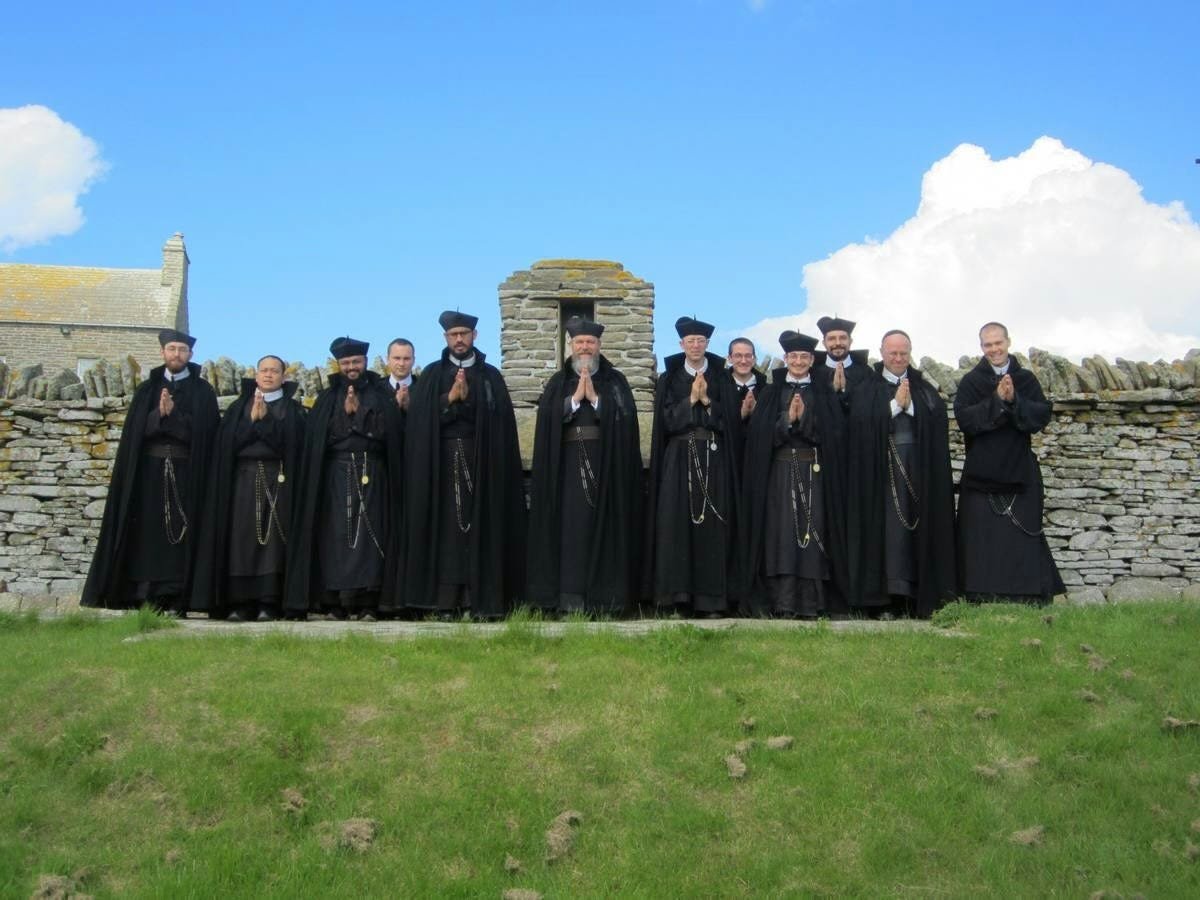
Then, almost as if Providence wished to provide a commentary on the coming encyclical, the Transalpine Redemptorists made their own announcement.
On May 2, 2026, the Sons of the Most Holy Redeemer publicly released a letter and declaration titled “The Dogma to Steer By.” Their blog says the declaration was made public on the feast of St. Athanasius. The group, long known for its complicated history with the SSPX and Rome, has now declared that the modernist occupation has reached the point where recognition of Leo XIV and his bishops can no longer be maintained.
Their reported line is brutally simple: “The pirates have boarded the Ark of Peter. There is no room for us on the deck.”
That line will sting because it is true in a way even many non-sede traditionalists already half-believe.
How many traditional Catholics live as practical sedevacantists six days a week and official recognize-and-resisters on Sunday? They avoid diocesan formation, distrust episcopal guidance, flee parish liturgy, treat Rome’s documents as dangerous until proven otherwise, warn their children against official Catholic schools, mock synodality, reject Amoris, reject Fiducia Supplicans, reject interreligious prayer spectacles, reject ecumenical nonsense, and then insist that the men producing all of it are simply very bad Catholic shepherds.
The Transalpine Redemptorists tried the other path. In 2008 they left the SSPX orbit and accepted regularization. They chose the canonical deck. They lived for years inside the recognized structure. Now, after Francis and under Leo, they are saying the thing many people have spent decades trying not to say out loud.
This is the theological significance of their move.
It is not merely that another traditional group has become sedevacantist. It is that a group which had made a very public wager on Roman regularization has concluded that the wager failed. The old argument was that canonical security would preserve tradition. The lived experience appears to have taught them that canonical security inside a modernist structure can become a leash.
Rome gives you recognition. Rome takes away your voice. Rome tolerates your liturgy only so long as your existence does not expose the new religion too clearly.
Eventually every traditional Catholic has to decide whether the problem is bad management or a false ecclesial orientation. Bad management produces incompetence. A false ecclesial orientation produces a different religion with Catholic vocabulary.
The latter is harder to admit. It also explains far more.
Amoris Laetitia: The Wound Leo Will Not Touch
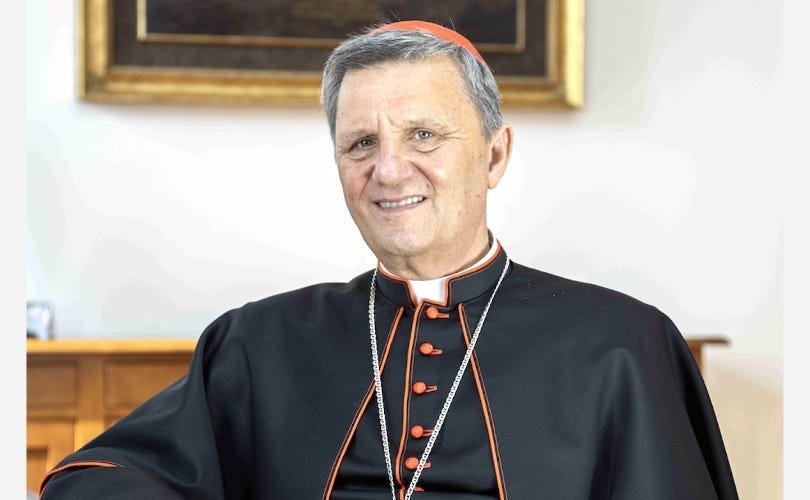
(Cardinal Mario Grech, general secretary of the General Secretariat of the Synod of Bishops.)
The coming October meeting on Amoris Laetitia may be the clearest test yet.
Michael Haynes reports that the bishops’ meeting convened by Leo XIV to discuss Amoris Laetitia will take place from October 7 to 14, with the Dicastery for Laity, Family and Life formally responsible, while the General Secretariat of the Synod provides “organizational and methodological support.”
That phrase should chill anyone who watched the Synod on Synodality.
“Organizational and methodological support” is how revolutionaries say “control the room.” The method determines who speaks, how long he speaks, what questions are permitted, which objections are processed into harmless language, and how dissent is absorbed into the final document as “tension,” “discernment,” or “a call for deeper listening.”
The issue is not whether the meeting is technically a synod. The Vatican reportedly insists it is only consultative. Regardless, the postconciliar machine no longer needs formal labels. It works through process.
The problem with Amoris Laetitia has never been that it needed a better communications strategy. The problem is that it opened a path for those living publicly in adulterous unions to receive Holy Communion without amendment of life. Francis later endorsed the Buenos Aires interpretation, saying there were “no other interpretations,” and the 2023 Dicastery for the Doctrine of the Faith response to Cardinal Duka’s questions explicitly stated that the Buenos Aires documents were published as authentic Magisterium. The same DDF response says Amoris Laetitia “opens the possibility” of access to Reconciliation and the Eucharist in certain cases for divorced persons living in a new union.
That is the wound.
Leo does not need to hold a meeting to discover what the controversy is. He does not need listening tables or presidents of bishops’ conferences comparing pastoral anecdotes over espresso. He does not need another exercise in “reception.”
He needs to say that the divorced and civilly remarried who live in sin cannot receive sacramental absolution or Holy Communion unless they repent and resolve to live in continence.
That sentence would do more for families than a week of episcopal methodology.
But of course, saying it would expose the entire Francis project. It would expose the bishops who implemented it, the theologians who defended it, the papal apologists who gaslit the faithful over it, and the conservative careerists who told everyone to calm down because nothing had really changed.
So the machine does what the machine always does. It schedules a meeting.
The Synodal Technique: Never Correct What You Can Process
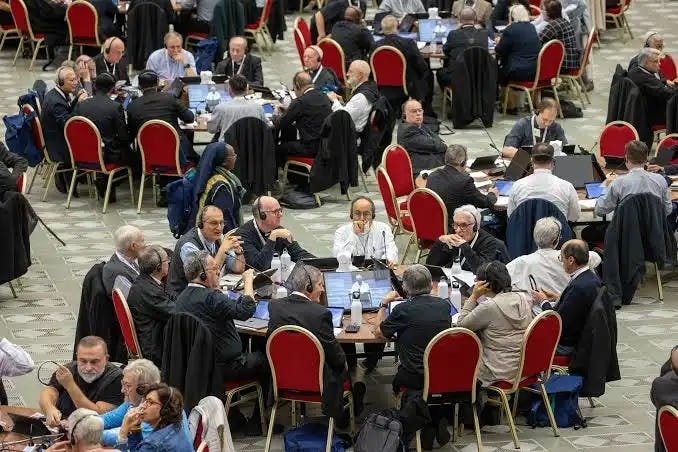
There is a reason these people love process.
Doctrine requires judgment. Process postpones judgment indefinitely. Doctrine says yes or no. Process says walk together. Doctrine demands submission. Process invites participation. Doctrine defines the boundary. Process moves the boundary while praising the pain of those who noticed.
That is why Amoris Laetitia remains the perfect postconciliar document. It does not usually announce its rupture in the voice of Luther. It murmurs. It footnotes. It discerns. It lets “concrete circumstances” do the work once done by dogma. It teaches by permission, ambiguity, and selective enforcement.
The result is very simple: public adulterers may, in some places, approach the Eucharist after a pastoral process. Catholics who insist on the prior discipline are treated as rigid, unmerciful, or insufficiently formed by the “logic of accompaniment.”
This is pastoralism weaponized against the sacraments.
A true shepherd guards the altar because he loves souls. A false shepherd opens the altar to sacrilege and calls the resulting disaster mercy. The adulterer is confirmed in sin. The abandoned spouse is mocked by policy. The faithful are scandalized. The priest becomes a case manager. The Eucharist becomes a therapeutic object.
Despite the fantasy sold by Trad Inc., ten years after Amoris Laetitia, Leo is not preparing to bury it. He is preparing to revisit it.
That tells us more than any Vatican profile ever will.
Leo Happily Meets With Bishop Who Desecrated the Sacred Heart of Jesus

Then comes Bishop Hermann Glettler of Innsbruck.
Glettler has encircled a loaned statue of the Sacred Heart from Vienna’s Votive Church with string lights for a work titled “Wounded Light,” displayed from April 25 to June 14, 2026. His Instagram language reportedly describes “auratic cones of light,” “sites of inflammation,” and “light-shy wounds.” Reports confirm the existence of Glettler’s “Wounded Light” post and its connection to the “My World on Fire” exhibition at Kunsthaus Mürzzuschlag.
This is the part of the crisis that is almost too disgusting to analyze.
The Sacred Heart of Jesus is the burning furnace of charity. It is the pierced Heart of the Redeemer, opened for sinners, adored in reparation, enthroned in Catholic homes, loved by saints, mocked by revolutionaries, and forgotten by sentimental churchmen who prefer “wounds” as aesthetic material.
What does the modern bishop do with the Sacred Heart?
He turns it into an installation.
Lights. Surfaces. Wounds. Exhibition copy. Sacred imagery transported into the sterile language of art-world inflammation. One can already smell the white wine, hear the grant-funded whispering, and see the bishop explaining that the work “interrogates vulnerability” or “opens a space of wounded luminosity.”
Enough.
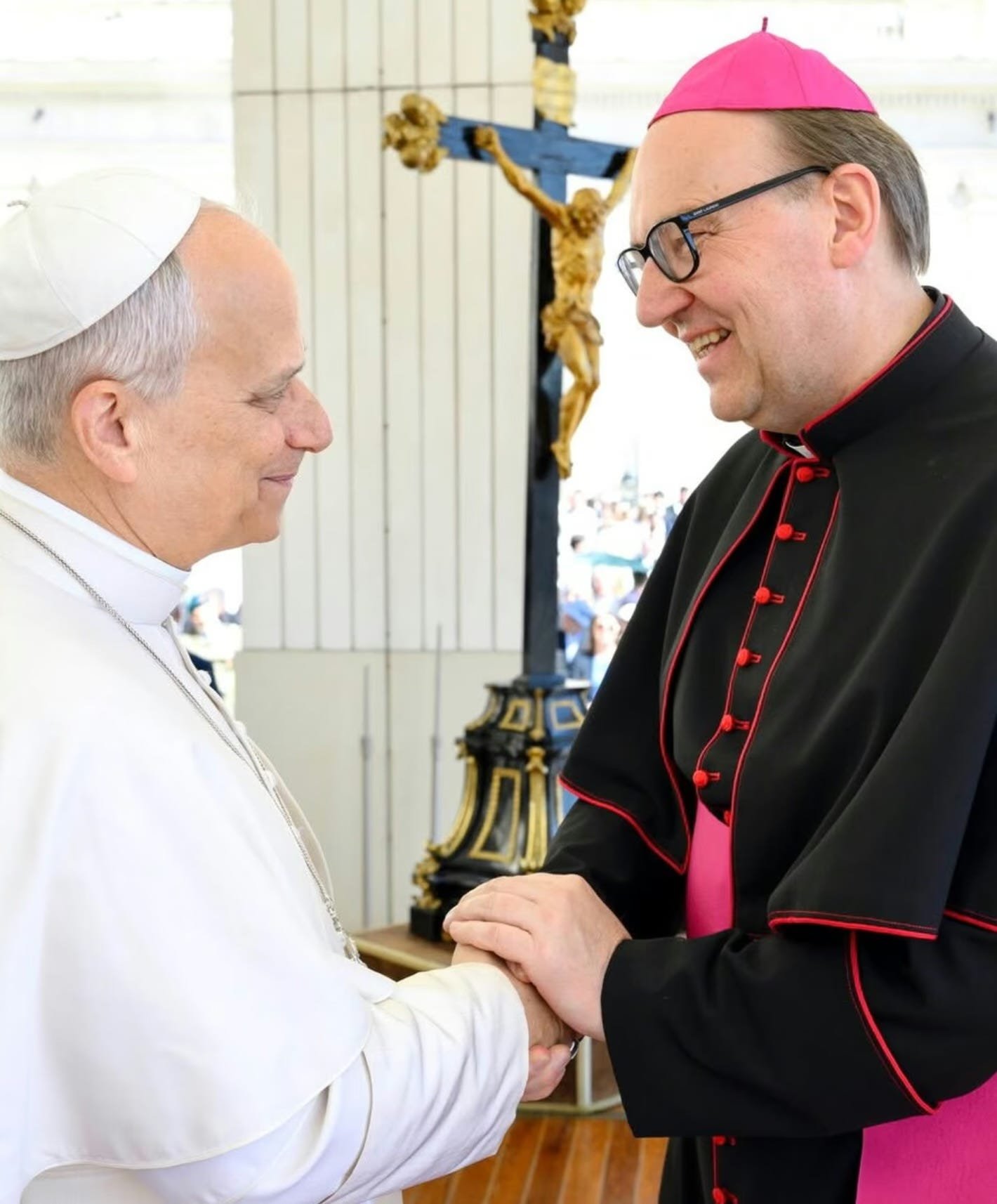
The only reason Leo should be meeting such a bishop is to rebuke him, remove him, or order public reparation. Instead, according to the report, Leo received him after the general audience.
That is the entire pontificate in miniature.
Traditional Catholics are told to be patient. Bishops who preside over sacrilegious artistic nonsense are received. Families who kneel for Communion are humiliated. Public adulterers receive pastoral pathways. Synodal managers receive methodology. The Sacred Heart gets string lights.
And then we are asked to admire the magnificent humanity of it all.
The Office Has Been Commandeered

The deeper issue here is not Leo’s personality. That is the trap.
Conservative Catholics keep waiting for the right man to manage the wrong system. They study tone, gestures, appointments, interviews, smiles, silences, travel schedules, vestments, and alleged private remarks. They want a “course correction” because admitting structural rupture would force them to rethink everything.
But what if the office has been functionally commandeered?
I do not mean that every act is scripted by some cartoon villain in a smoke-filled room. Reality is usually less theatrical and more depressing. The Vatican has become an ecosystem. It has its personnel, assumptions, slogans, diplomatic instincts, theological taboos, media incentives, donor networks, academic dependencies, episcopal pipelines, and ideological reflexes. Men are formed by it, elevated through it, protected by it, and then presented to the faithful as fathers in God.
The result is a Roman apparatus that knows how to speak to Davos, Brussels, Turtle Bay, and the academy, while often sounding embarrassed by Trent, Quas Primas, Mortalium Animos, Pascendi, and the old Roman Canon.
That apparatus can produce an encyclical on AI. It can convene a meeting on Amoris Laetitia. It can receive bishops like Glettler. It can tolerate sacrilege, ambiguity, ecumenical absurdity, liturgical collapse, and doctrinal mutation.
What it cannot do is simply speak like the Catholic Church of all ages.
The Transalpine Redemptorists have now said, in effect, that the pirates have boarded the ship. Many will dismiss them. Some will say they went too far. Others will whisper privately that they understand. Trad Inc. will probably produce cautious commentary about prudence, avoiding rash conclusions, and the danger of despair.
But the uncomfortable question remains.
How much more evidence is required before Catholics admit that the problem is not merely bad passengers on the deck, but the flag flying over the vessel?
The Test of a Father
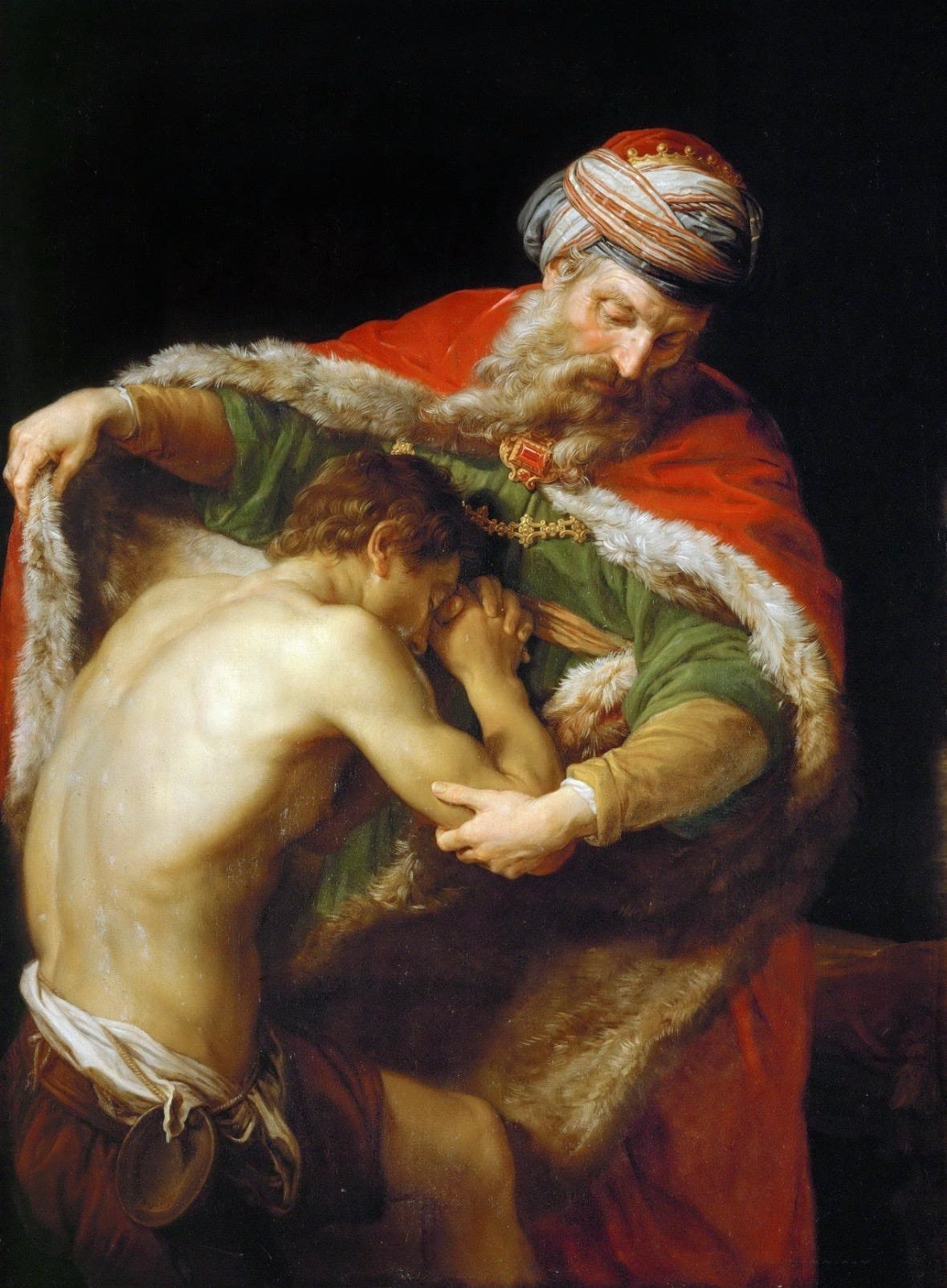
A father confronted with poison in the pantry does not call a listening session about nutrition. A father whose child is being attacked does not publish a reflection on human dignity while the attacker remains in the house. A father who sees the family altar profaned does not receive the profaner with a diplomatic smile.
He acts.
That is why the modern Vatican so often feels fatherless. It speaks. It processes. It accompanies. It publishes. It receives. It consults. It listens. It issues statements about peace and dignity and the human person.
But where is the rod? Where is the warning? Where is the condemnation? Where is the zeal for the house of God? Where is the terror of sacrilege? Where is the Roman clarity that once made heretics tremble and Catholics breathe easier?
Leo XIV’s first encyclical, if the reports hold, may be praised as timely, relevant, bold, and socially engaged. The usual outlets will say he is stepping into the tradition of Leo XIII. The Vatican commentators will explain the symbolism of May 15 as though selecting a date were an act of restoration. The professional middle will sigh with relief because nothing too alarming happened. The machine will congratulate itself.
Meanwhile Amoris Laetitia remains. The Synod Secretariat remains. The bishops remain. The sacrilege remains. The faithful remain confused. Europe continues to fade. And another traditional community has looked at the official structure and concluded that the deck is no place for Catholics.
No Room on the Deck
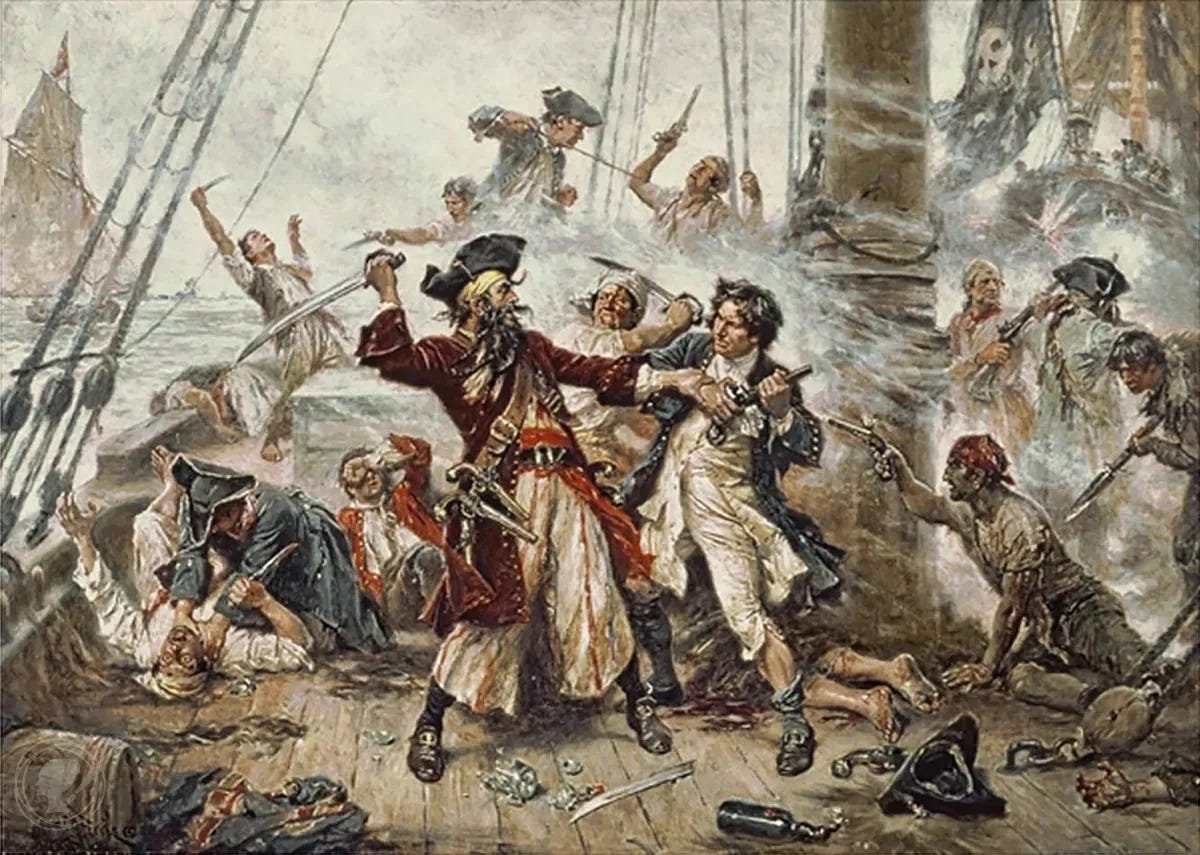
Maybe that is the phrase that should haunt this moment.
No room on the deck.
There is plenty of room in the Vatican for climate language, AI ethics, interreligious dialogue, synodal tables, artistic provocation, pastoral ambiguity, and global humanitarian theater. There is room for bishops who make Catholic symbols look ridiculous. There is room for officials who normalized sacramental confusion. There is room for every euphemism ever invented to avoid the word “sin.”
For traditional Catholics who want the old Faith whole and entire, the space narrows every year.
That narrowing is clarifying. Painful, yes. Scandalous, certainly. But clarifying.
The old compromises are failing. The old explanations are fraying. The old “wait and see” posture is becoming harder to defend with a straight face. The Conciliar Church keeps telling us what it is, not only in its documents, but in its instincts. It sees the crisis of man more clearly than the crisis of Faith. It is more comfortable correcting technology than correcting adulterous Communion. It can aestheticize the wounded Sacred Heart, but struggles to make reparation to Him.
If Magnifica humanitas becomes the charter of this next phase, then the title may be more revealing than intended.
Magnificent humanity.
Diminished Christ.
That is the exchange at the heart of the postconciliar revolution. And until Catholics are willing to name it, the pirates will keep the deck, the bureaucrats will keep the wheel, and the faithful will be told that the voyage is going splendidly.
The mast may be lonely.
It may also be the only place left from which to see the truth.