

There are Vatican stories that require a few days before their significance settles in.
This one required about thirty seconds.
On September 8, Andrea Ding Yang was consecrated Archbishop of Chongqing. Rome announced that Leo XIV had appointed him on July 28 after approving his candidacy under the secretive Vatican-China agreement. Beijing’s Catholic apparatus supplied a slightly different chronology: Ding had already been “elected” bishop-designate on April 15. At the consecration, according to the official Chinese Catholic website, the approval letter read aloud came from the Chinese Bishops’ Conference.
Then you read Ding’s résumé.
And the story changes.
Leo Gives Beijing Its Man
The Vatican biography is tidy. Seminary in Beijing. Studies in Macau and Rome. Formation work. Parish assignments.
Missing are some rather colorful details.
China’s state-recognized Catholic organization identifies Ding as a deputy secretary-general of the Chinese Bishops’ Conference and a member of the standing committee of the Chinese Catholic Patriotic Association. He has spent years publicly promoting Beijing’s program of “Sinicization.”
In 2021, at celebrations for the Chinese Communist Party’s centenary, Ding said Catholics should act concretely in “loving the Party, loving the country, and loving socialism,” accept the Party’s overall leadership and advance the Sinicization of Catholicism. That account comes from Chongqing’s own United Front apparatus.
Two years later he was quoted by the All-China Youth Federation explaining that his ordinary preaching should help believers understand “socialist core values” and deepen their identification with the motherland, Chinese culture, the Communist Party and “socialism with Chinese characteristics.”
This continued.
In 2025 Ding personally taught Catholics about the Sinicization of religion at an event held under the guidance of Communist Party and state religious-affairs officials. Late that year he led clergy through regulations associated with Beijing’s campaign for the “strict governance of religion.” In June 2026 he reported on an eight-month program of regulatory education, including clergy “self-examination and self-correction.”
Then Leo approved him as archbishop.
Call it what it is.
A man with an extensive record of helping a Communist state domesticate Catholicism has received episcopal legitimacy from Rome.
The scandal here reaches beyond one embarrassing quotation about socialism. A bishop is a successor of the Apostles. Even Vatican II describes bishops as men who govern their churches in Christ’s name with a sacred authority that is proper to their office.
Ding’s public record describes another loyalty structure altogether. The Party sets the boundaries. Religious life is brought into conformity with state policy. Clergy study Party-approved rules, perform ideological self-correction and deepen the faithful’s identification with socialism.
Where, precisely, does Caesar stop?
Rome’s answer seems to be: we can work something out.
That is the tragedy of the Vatican-China deal in miniature. Beijing produces a candidate acceptable to its political machine. Rome eventually supplies canonical legitimacy. Both sides announce victory.
The underground Catholic who endured decades precisely because he believed Communist control of the Church to be intolerable is left staring at the bulletin.
Leo’s Academy for Life Finds a Way to Say Yes to Assisted Suicide
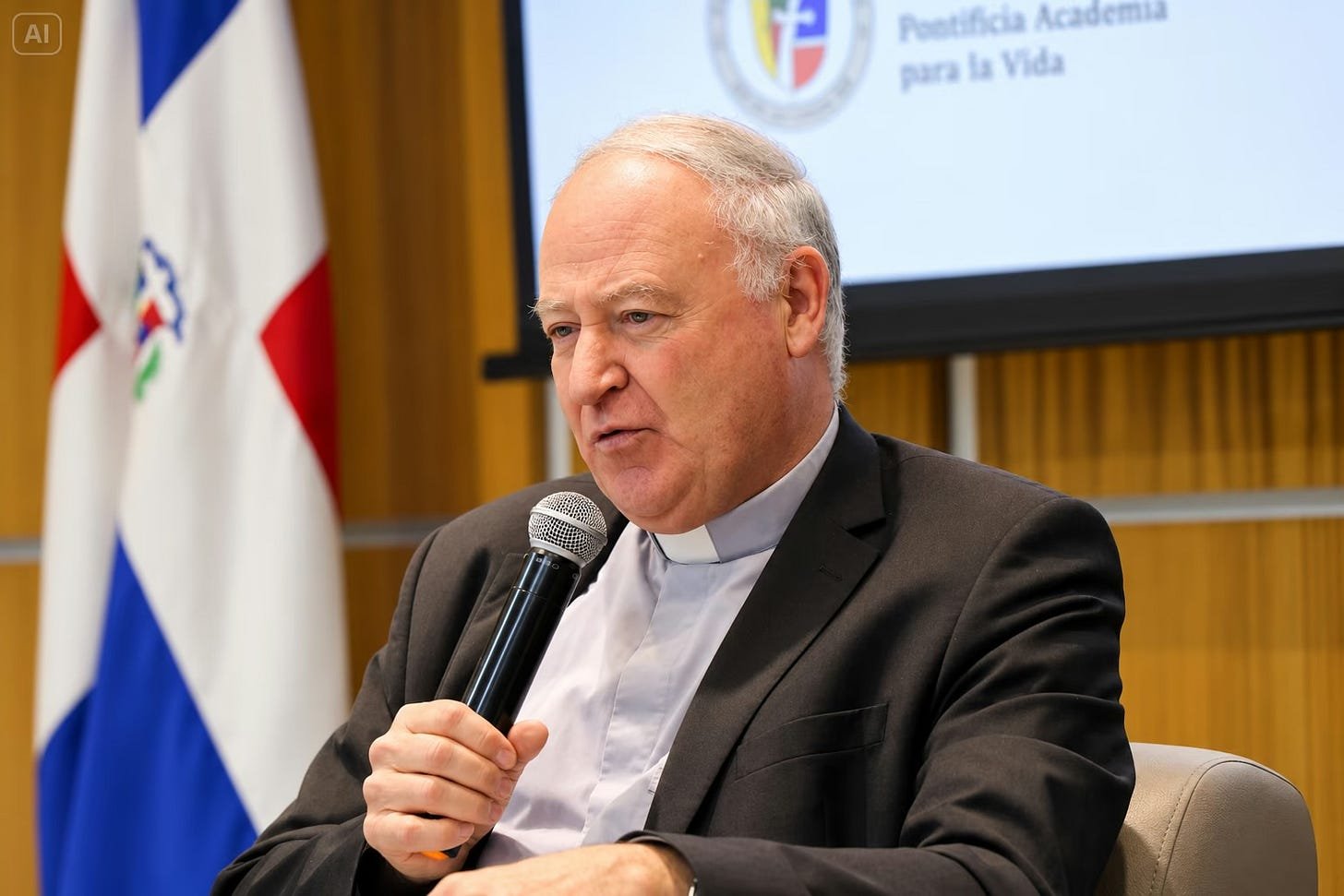
A day earlier, another Leo appointment made news in Italy.
Archbishop Renzo Pegoraro heads the Pontifical Academy for Life. Leo appointed him president barely three weeks after his election in May 2025, despite Pegoraro’s already public record of treating contraception and assisted suicide as morally negotiable under certain circumstances. Leo then promoted him again in March 2026, making him a bishop with the personal title of archbishop.
So this one belongs directly at Leo’s door.
On September 6, Avvenire asked Pegoraro about assisted-suicide legislation in Italy.
Pegoraro said Catholics might face an “imperfect law” permitting assisted suicide “to which it would nevertheless be moral to give one’s assent,” on the theory that still worse legislation might otherwise pass.
That is an astonishing thing for the president of the Pontifical Academy for Life to say.
Catholic moral theology already has a category for dealing with evil laws. Evangelium Vitae 73 allows a legislator, when an unjust regime is already established and cannot presently be abolished, to support a more restrictive measure for the sole purpose of limiting the harm.
That is very different from saying Catholics may morally assent to assisted suicide.
You may tolerate an evil you lack the power to eradicate while working to reduce it.
You may never turn the evil itself into a morally acceptable option.
Otherwise every intrinsic evil becomes negotiable the moment somebody threatens something worse.
Approve a little assisted suicide because Parliament may approve more. Accept a little abortion because the next bill may be broader. Permit one form of euthanasia because another might be uglier.
There is always something worse imaginable.
That is precisely why the Church speaks of intrinsically evil acts.
Pegoraro’s problem is deeper than one rotten sentence. In 2022 he suggested that contraception could be morally permissible when avoiding pregnancy for medical reasons conflicted with preserving a couple’s sexual life. He also treated assisted suicide as potentially preferable to euthanasia because it involved more safeguards.
The method is consistent.
State the Catholic prohibition.
Introduce competing “values.”
Add difficult circumstances.
Then search for a path around the prohibition.
Leo knew, or certainly should have known, this record when he selected Pegoraro to run the Vatican institution supposedly charged with defending human life. He appointed him anyway.
Then he elevated him.
And now Leo’s handpicked president of the Pontifical Academy for Life is publicly explaining when Catholics might morally assent to a law permitting assisted suicide.
At some point appointments become arguments.
John Paul II founded this Academy so Rome could say a clear no to the culture of death.
Under Leo, its president is explaining the circumstances under which the answer might become yes.
Synodality Moves From Listening to Governing
Rome released another document on September 8.
Study Group 6 of the Synod on Synodality proposes “full representation” of consecrated persons and lay people in Church decision-making bodies. The official Vatican summary also calls for formal agreements between dioceses and religious institutes covering “gender equality,” joint formation in synodality and leadership, and the systematic incorporation of associations into diocesan participatory structures.
The fuller report goes farther: consecrated persons and laity are envisioned as full members rather than mere consultants at diocesan, national, international and Vatican levels. Women religious would enter processes involving the selection of bishops responsible for consecrated life. Seminarians and novices would receive explicit formation in synodality, “mutuality,” equality, co-responsibility and “conversation in the Spirit.”
None of these proposals is law yet. The Synod secretariat says so explicitly. Leo ordered the reports published for further implementation and consideration.
Here is the part worth remembering: Robert Prevost himself belonged to Study Group 6 while prefect of the Dicastery for Bishops. He remained a member until April 2025, weeks before becoming Leo XIV.
So much for the theory that synodality was Francis’s eccentric hobby and Prevost would quietly let it die. Or Michael Matt’s fantasy that Leo understands synodality differently than Francis.
The current project is constructing a permanent architecture of shared governance.
The 1983 Code still says that those in sacred orders are qualified for the Church’s power of governance, while lay faithful may cooperate in its exercise. Even Lumen Gentium says the bishop personally possesses proper, ordinary and immediate authority in his particular church.
The Synodal vocabulary keeps pushing in another direction: representation, equality, accountability, mandatory seminars, stakeholder inclusion, co-responsibility.
It sounds less like the Mystical Body and more like a nonprofit rewriting its bylaws after a human-resources retreat.
The most revealing part may be the seminary requirement.
Movements survive when they capture formation.
Teach the next generation of priests that “synodality” is a constitutive way of thinking about authority before they have ever governed a parish, and twenty years from now nobody will remember that Catholic ecclesiology once began with Christ giving authority to Apostles rather than with balanced representation around a conference table.
Kraków Finds a Rainbow Model
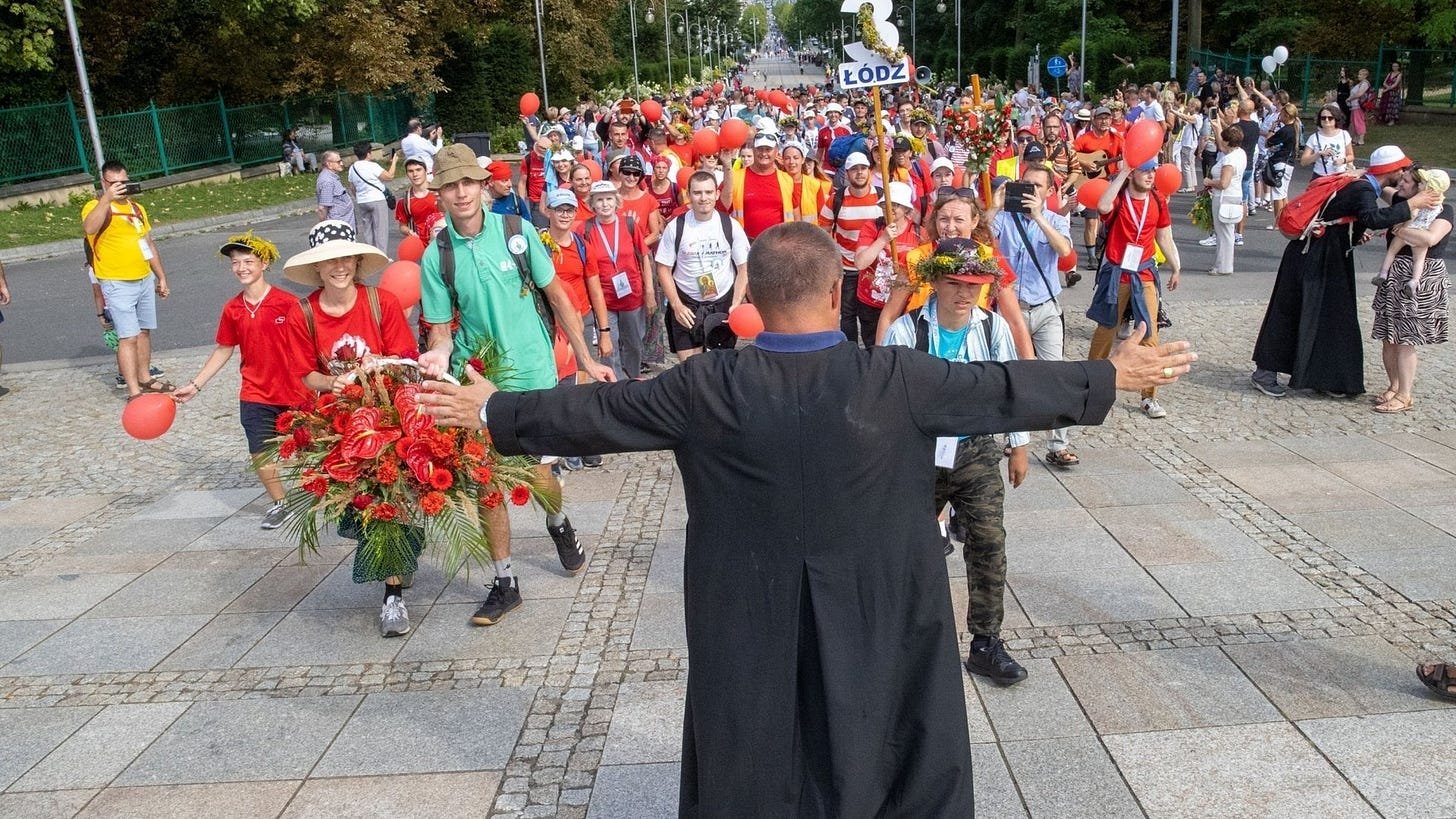
That future can already be glimpsed in Poland.
Leo appointed Cardinal Grzegorz Ryś Archbishop of Kraków in November 2025.
The first report from Kraków’s new pastoral synod now contains a section calling for a “radical change of language toward LGBT+” and the creation of “safe pastoral havens.” One model specifically recommended is Wiara i Tęcza—“Faith and Rainbow.”
Faith and Rainbow describes itself as an ecumenical organization seeking “full acceptance” of LGBT people in churches and society. It says every sexual orientation and gender identity is a “gift from God.” Its own mission page goes further: the organization wants to accelerate changes in Church teaching toward recognition of same-sex marriages and other same-sex unions.
And this is being floated as a pastoral model in the archdiocese of Kraków.
Nobody disputes the obligation to treat every person with justice and charity. The controversy begins when an organization committed to changing Catholic doctrine becomes the template for Catholic pastoral ministry.
That is a different operation entirely.
A pastoral refuge built around Catholic teaching could help people carry crosses, live chastely, receive the sacraments and grow toward holiness.
A refuge modeled on an organization that openly campaigns to change the teaching eventually changes the teaching.
Maybe slowly.
Maybe while insisting that doctrine remains untouched.
But institutions teach by what they fund, recommend, celebrate and normalize.
Ryś inherited the Kraków synod after Leo personally chose him to succeed Archbishop Marek Jędraszewski. Within months, the synodal machinery is recommending pastoral models borrowed from an organization working to alter the Church’s sexual doctrine.
The personnel and the process fit together rather neatly.
“Many Paths, One Humanity”
Then there is Goa.
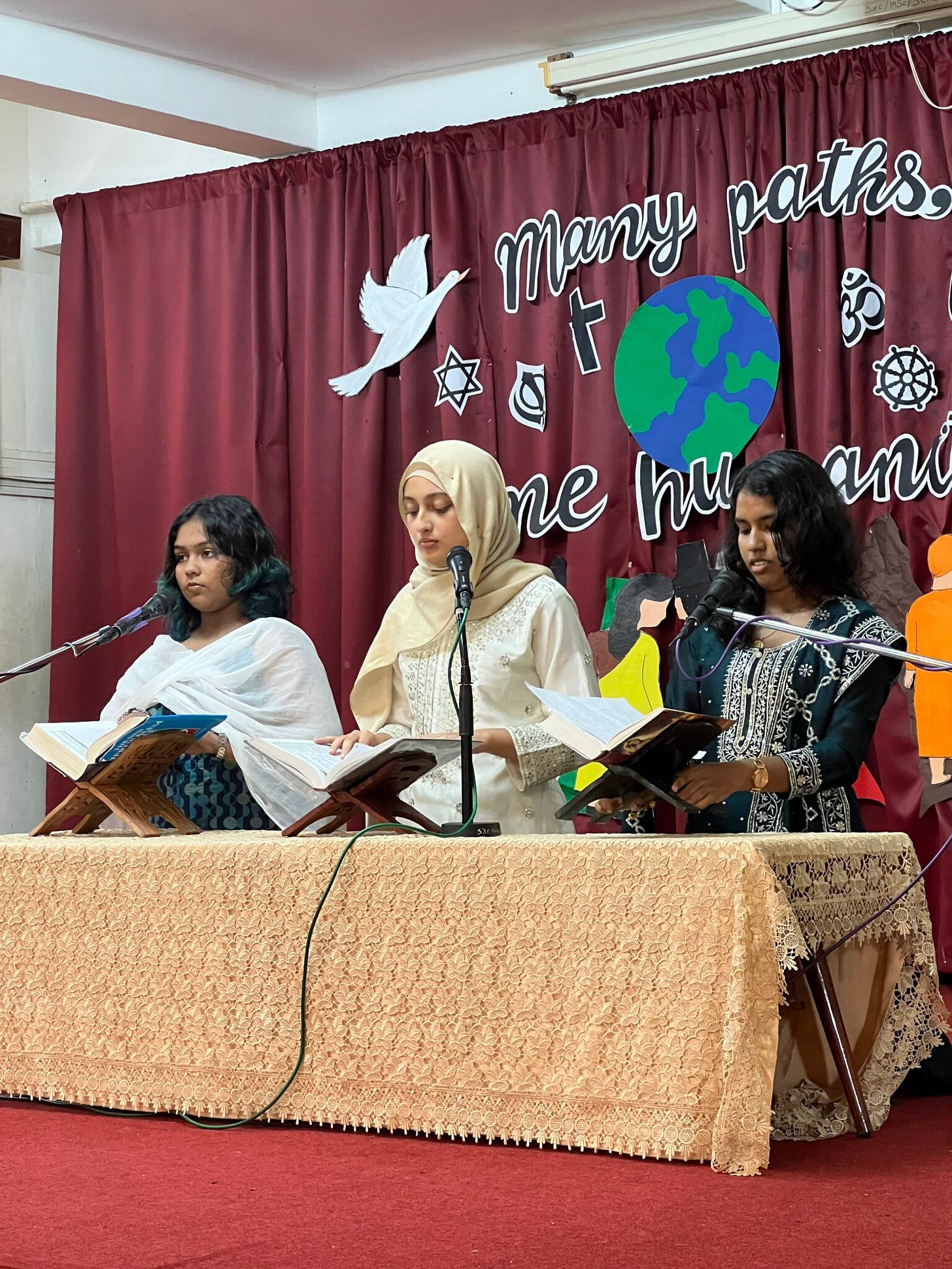
The Archdiocese of Goa and Daman itself reported that St. Xavier’s College in Mapusa celebrated Sadbhavana Diwas on August 17 under the theme “Many Paths, One Humanity.”
An All India Catholic University Federation program opened with the ceremonial lighting of a lamp. Students representing three religious traditions performed an “Interfaith Scripture Reading and Reflection.” The reflections centered upon peace, harmony, understanding and “shared human values.” A Catholic priest later reflected on the Hindu-derived phrase Vasudhaiva Kutumbakam—“the world is one family.”
It is almost too perfect.
Many paths.
One humanity.
Shared values.
Scriptures from several religions placed together as resources for mutual reflection.
Pius XI spent Mortalium Animos warning Catholics about almost exactly this religious mentality. He condemned gatherings constructed around the idea that differing religions can meet upon a common spiritual foundation while their contradictory truth claims recede into the background. Such a method, he warned, leads naturally toward religious indifferentism.
Even Nostra Aetate, whatever one thinks of its novelties, says that while truth and holiness can be found outside the Church, Christ remains the one in whom the fullness of religious life is found.
“Many Paths, One Humanity” says something else in the ear of an ordinary eighteen-year-old.
The event teaches through juxtaposition.
Here is one sacred text. Here is another. Here is another. Each supplies wisdom. We light the common lamp, identify our shared values, sing about healing the world and conclude together.
The missionary imperative has evaporated before anyone needs formally to deny it.
That is how indifferentism usually wins. It arrives smiling.
The Crisis Is Becoming Structural
A Communist-approved cleric preaches identification with the Party and socialism, then receives an archbishop’s crozier with Roman approval.
The president of the Pontifical Academy for Life discovers circumstances in which Catholics may morally “assent” to an imperfect assisted-suicide law.
A Vatican synodal group pushes lay and consecrated representation deep into decision-making structures while future priests are trained in the new system’s vocabulary.
Kraków’s synod recommends taking pastoral cues from an organization that explicitly wants Catholic teaching on same-sex relationships changed.
A Catholic institution in Goa celebrates “Many Paths, One Humanity.”
At a certain point the argument over isolated abuses becomes silly.
These are structures. Appointments. Official reports. Episcopal decisions. Approved institutions. Formation programs.
That distinction matters enormously.
A bad pope can sin. A wicked bishop can keep a mistress. An incompetent chancery can make absurd decisions. Catholic history contains enough clerical corruption to fill several libraries.
The theological crisis begins when the organs claiming to teach and govern the Church repeatedly act as though things the Church once treated as fixed—religious truth, moral absolutes, the constitution of ecclesiastical authority, the independence of the Church from hostile states—have become subjects for management, dialogue and renegotiation.
Then the traditional Catholic has to ask a nastier question.
What exactly are we witnessing?
Development?
Corruption?
A hierarchy exercising legitimate authority disastrously?
Or a visible institutional structure that has become so detached from the religion it inherited that its claim to be exercising Catholic authority demands examination rather than automatic submission?
Sedevacantists have an answer. Recognize-and-resist traditionalists have another. The SSPX has spent decades constructing its own explanation.
The labels can wait.
Look at the evidence first.
Beijing apparently understands what Rome still possesses: legitimacy.
Activists understand what synods possess: machinery.
And the revolutionaries inside the Church understand something traditional Catholics frequently forget.
Whoever controls appointments, formation and institutions eventually controls what ordinary Catholics come to regard as Catholicism.
That is why these stories matter.