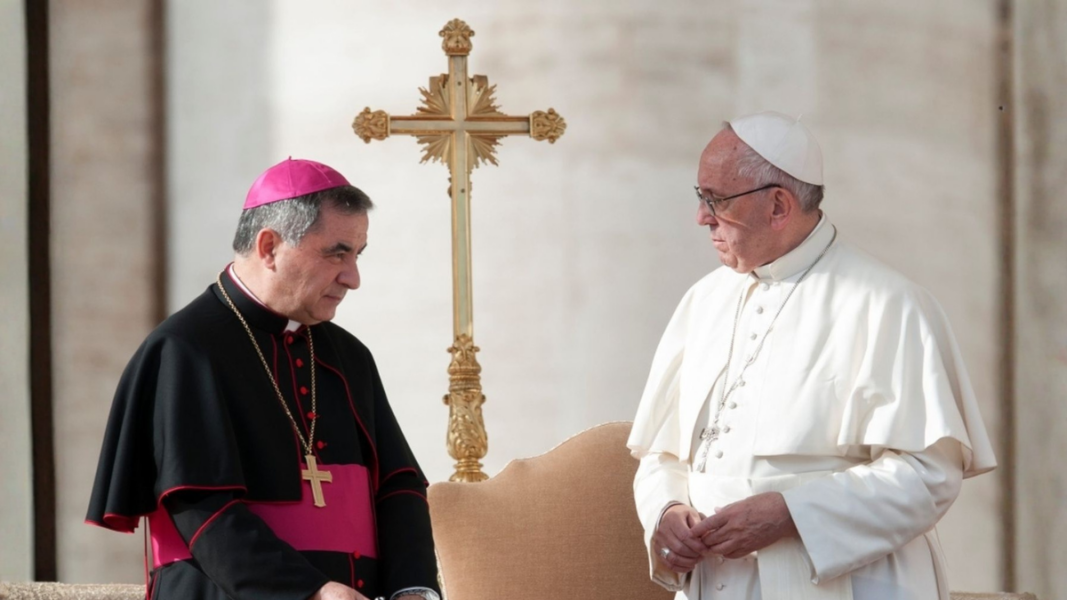
The London case had been presented as the great symbol of financial reform promoted under the pontificate of Francis. The investigations, initiated in 2020, led to the historic criminal trial held in the Vatican and the convictions handed down in 2023 against several defendants, including Cardinal Angelo Becciu and financier Raffaele Mincione.
A trial that could end in collapse
The situation became more complicated after the Vatican's appeals court ordered in March a review of the entire investigation and prosecutorial process that gave rise to the trial. The magistrates questioned the validity of several executive acts authorized personally by Pope Francis to permit the initial investigations.
The Pillar argues that this decision opens the door to an especially delicate scenario: that the mega-trial could end up being declared null, preventing the prosecution of several of the main figures involved in the controversial London financial operation.
For the Vatican, such an outcome would represent a devastating blow after nearly a decade of investigations, leaks, and enormous media exposure of the financial corruption scandals at the heart of the Roman Curia.
The Secretariat of State ceases cooperation
Last week, Swiss authorities closed the investigation into Enrico Crasso, the former financial manager linked to the Secretariat of State's investments, because the Vatican refused to provide key witnesses for the proceedings, including, as The Pillar recalls, Monsignor Alberto Perlasca and Archbishop Edgar Peña Parra.
The move has generated bewilderment among observers and legal experts, since the Secretariat of State itself appears to be actively weakening judicial proceedings originally launched to recover funds and demonstrate that it had been a victim of fraud.
New Economic Risks in the United Kingdom
The strategy could moreover have even more costly consequences in British courts. Financier Raffaele Mincione maintains open new legal actions against the Secretariat of State in the United Kingdom, alleging that he acted with Vatican authorization and that he ended up being used as the sole responsible party for the financial disaster.
The situation proves especially uncomfortable because some British courts have already issued ambiguous rulings on the case. Although English justice rejected declaring that Mincione acted "in good faith", it also dismissed several accusations of fraud and conspiracy leveled by the Vatican.
Furthermore, during these proceedings embarrassing episodes emerged for the Holy See, such as Archbishop Edgar Peña Parra's statement acknowledging that he had authorized an invoice for five million euros that he knew was "entirely fictitious".
If the Vatican continues refusing to cooperate fully with foreign courts, judges could interpret that the Secretariat of State itself has de facto abandoned its accusations. That would open the door to new judicial defeats and possible million-euro indemnities against the Holy See.
From Symbol of Reform to Symbol of Failure
The true problem for the Vatican is no longer merely economic. For years, the London case was presented as the great demonstration that the Holy See was determined to combat internal financial corruption and to professionalize its economic management.
However, warns The Pillar, if the trial ends up collapsing, if some of the principal defendants manage to avoid definitive convictions and if the Vatican itself ends up facing new million-euro losses, the scandal could ultimately be transformed into exactly the opposite: the most visible symbol of the limits, contradictions and failures of the financial reform promoted during the pontificate of Francis.