Ordinarily, Catholic ecclesiastical pastoral practice and the common perception of Christian faithful displace Christ's return to the moment of the Universal Judgment, when time, history, and creation as we know it will end forever, and redeemed humanity will dwell in the heavenly Jerusalem.
As if one feared a God who would return to visit us in time, and one wished to postpone the moment of his return among men.
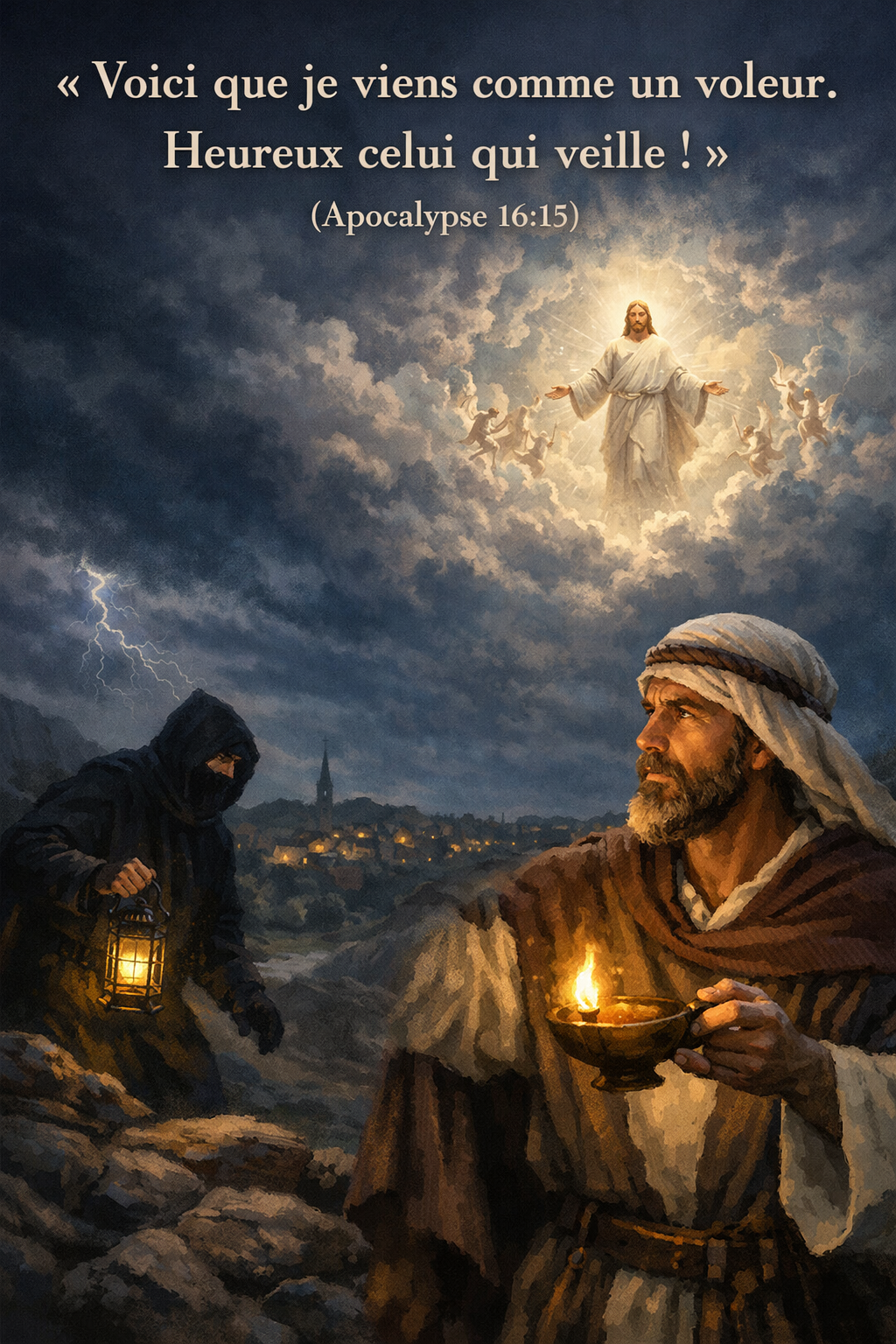
Yet many passages of the New Testament — and also of the Acts of the Apostles — seem on the contrary to refer to a return of the risen Christ in history, destined to inaugurate a phase of the world prior to the final Judgment and different from the present phase.
This is what is called the "second coming of Christ", or else the "intermediate coming" of the Lord.
It is a fascinating theme, not only for Christian faith (including Protestant), but also on the cultural and hermeneutical plane. Let us attempt to focus on these passages, beginning with certain texts of the Acts of the Apostles, to then broaden the reflection to the resonances present in the Gospel of Luke and in the Apocalypse of John.
The Acts of the Apostles and the expectation of the Kingdom
During the few days — forty — when the Risen One meets his apostles and converses with them, they, filled with enthusiasm at the shattering and absolute novelty of this first return from the dead never before occurred, immediately pose to him the question closest to their hearts as Israelites: "Lord, is it now the time when you will restore the Kingdom of Israel?"
Christ does not answer: "But what do you say? I reign only from the cross" (as one sometimes hears today).
On the contrary, his response entails confirmation of the future advent of this "time of the Kingdom of God on earth".
Jesus tells them indeed that it is not for men to know the "times" that only the Father knows, and that the time inaugurated by his Resurrection is that of the proclamation of the Gospel, of trial and testimony, for the conversion of the nations (pagan and idolatrous) to the one true God (Acts 1:6-7).
But can this time — which continues even today — extend indefinitely? Certainly not: it would make no sense.
Christian kerygma is not an end in itself; by nature, it is oriented toward the realization of Christ's sovereignty on earth, which must sooner or later be accomplished.
"Thy kingdom come"
The prayer of the Our Father reminds us of this: "Thy kingdom come, thy will be done on earth as it is in heaven."
This teaching is already announced by the Psalms (Ps 110: "until I make your enemies a footstool for your feet") and confirmed by the preaching of Saint Paul (1 Cor 15:23-25), who takes up precisely the psalm of messianic triumph on earth.
Shortly after, Jesus ascends to heaven before the incredulous and astonished eyes of the twelve apostles. Heavenly angels must then intervene to turn their gaze from heaven and remind them: "This Jesus, who has been taken up from you into heaven, will come in the same way as you have seen him go into heaven" (Acts 1:11)
A return in time, not yet the final Judgment
The angelic teaching thus confirms a return of Christ to the earth, in time, in a phase that has nothing to do with the Universal Judgment, where the earth disappears and all stands before the throne of God the Father.
It is a movement ontologically exactly inverse to a new public descent of the risen Christ among men.
Let us return to the Acts of the Apostles (Acts 2:17-21). At his first great public preaching at Pentecost, Peter addresses the Israelite pilgrims who had come to Jerusalem from throughout the Mediterranean basin. From his very first words, he inscribes the novelty of the risen Christ in a very precise messianic and eschatological logic, presenting the Resurrection as an event that had inaugurated the last days (eschatais hēmerais).
Not only that, but Peter prophesies, taking up the visions of Micah, Malachi, and Joel, the "great day of the wrath of the Lord", understood as a special manifestation on the earth — let us emphasize — of God's power against the wicked and pagan and idolatrous powers, and for the liberation of the just.
This divine manifestation therefore does not end human history, but opens a new phase, better, and it is preceded — as Peter recalls — by celestial upheavals affecting the sun and the moon.
The "great day of the Lord"
This theme is announced by Christ himself, as the Gospel of Mark reports, and even constitutes the main reason for his condemnation by the Sanhedrin (Mark 14:62).
Thus, in the Bible and the Gospels, the theme of the "great day of the Lord" (megas hēmera Theou) has nothing to do with the Universal Judgment, which is a different reality (Matt 25:31-45; Rev 20:11-13).
Peter calls it: "the day of the Lord, great and glorious" (epiphanēs).
The Greek term epiphanēs means precisely the manifestation of the risen Lord, visible to all, powerful and clear. In other words, this is a second coming of Christ to the earth, intermediate between the Incarnation and the Universal Judgment which, for its part, will definitely transcend creation.
The time of restoration
In a third passage of the Acts of the Apostles, Peter again adopts a messianic and eschatological tone in preaching in the Temple of Jerusalem after a miraculous healing. He clearly teaches that the Ascension of Jesus is linked to his imminent return for restoration:
"Heaven must receive him until the time of the restoration of all things, which God spoke by the mouth of his holy prophets from of old." (Acts 3:21-22)
This time of restoration cannot coincide with the end of time proper to the Universal Judgment. It must necessarily be a new historical phase, where good will prevail over evil, and where Christ's kingship will triumph over pagan and idolatrous powers.
Gospels, Apocalypse and faith on earth
In the Gospel of Mark, one finds an analogous vision of a second coming of Christ that presupposes the continuation of the world and not its end: "Then they will see the Son of Man coming on the clouds with great power and glory" (Mark 13:25-26)
To this return corresponds not the dissolution of all things, but the gathering of the elect, as the Apocalypse of John recounts after the opening of the sixth seal.
Another evangelical passage, this time in Luke, confirms this interpretation: the Resurrection of Christ did not exhaust all the prophecies. There remain to be accomplished those of the great day of the Lord and of the gathering of the elect.
The passage is famous: "But when the Son of Man comes, will he find faith on the earth?" (Luke 18:8)
This question moves and challenges. It is posed just after a parable on the justice of God and on the fact that it will be realized on the earth. It clearly presupposes a physical — and not allegorical — return of Christ to the earth, that is, the parousia.
Saint Paul and the three final phases
To conclude, let us return to the First Letter to the Corinthians:
For as in Adam all die, so also in Christ shall all be made alive.
But each in his own order: Christ the firstfruits; then at his coming those who belong to Christ. Then comes the end, when he delivers the kingdom to God the Father after destroying every rule and every authority and power.
For he must reign until he has put all his enemies under his feet. The last enemy to be destroyed is death…
(1 Cor 15:22-28)
This passage is dense and powerful, yet very clear. Paul teaches in it a progression of times within the ultimate period inaugurated by the Resurrection of Christ:
1. First phase: the Resurrection of Christ, which opens the new history of salvation.
2. Second phase: the parousia, the powerful manifestation of Christ on the earth; its protagonists are "those of Christ", the saints and martyrs risen to reign with him (Rev 20:4).
3. Third phase: the delivery of the millennial Kingdom to the Father, after all pagan, idolatrous, and antichristian powers have been subjected or destroyed.
The first time is that of liberation from sin, of proclamation and witness.
The second begins after the fall of "Babylon" and corresponds to the binding of Satan for a thousand years: Christians will then reign over the world and the nations will be converted to Christ. This time has obviously not yet begun.
After the millennial Kingdom and the final Judgment will come the disappearance of the present creation and the descent of the heavenly Jerusalem, "adorned as a bride". The last enemy to be destroyed will be death, with its companions: pain and fatigue.
One cannot say that Scripture lacks logic or coherence.
Source: Maurizio Blondet, December 24, 2025 / https://www.maurizioblondet.it/la-venuta-intermedia-di-cristo/