When, in 1953, after Stalin’s death, innocent political prisoners began to be released from Soviet camps, Anna Akhmatova remarked: now that Russia which imprisoned and that Russia which was imprisoned shall meet and look one another in the eye.
The same occurred in the twentieth century when psychology revealed that countless woes and sorrows of human life stem from the brutality of parental upbringing. Then a cry arose across the planet—the greater half of humanity screamed in pain, while the other half, the one that had caused this pain, mocked the cry and called those who uttered it weaklings.
The Church is called a mother, yet on earth this mother is an exceedingly inept parent, inflicting irreparable wounds upon her children and resembling far more a stepmother.
It was only from the second half of the twentieth century that believers and clergy worldwide began to speak openly of this traumatising aspect of the Church. Earlier, among European and Russian believers, such talk was unheard of, and only lone voices—like those of Archibald Cronin, Sister Luke, or Charlie Chaplin—rose in defence of those harmed by the Church. Yet in the Russian Orthodox Church, discussions of the wounds the Church inflicts upon its faithful remain taboo to this day. Since most believers are precisely those who inflict these wounds upon others, people within the ROC do not grasp the issue at all; those who dare speak of it are seen as bearers of ill tidings. In medieval fashion (still prevalent in the ROC), such messengers were to be executed rather than listened to.
One such priest spent an entire hour urging me not to broach the subject, lest, as he put it, we ‘air the dirty laundry in public.’ As if those looking in from outside could not see that believers are often deformed creatures and clergy bear little resemblance to God. Yet to this priest, living within the confines of his own temple, it seemed that if the matter were left unspoken, the widespread falsehood within the Church’s people could be concealed from outsiders, from parishioners, and even from himself.
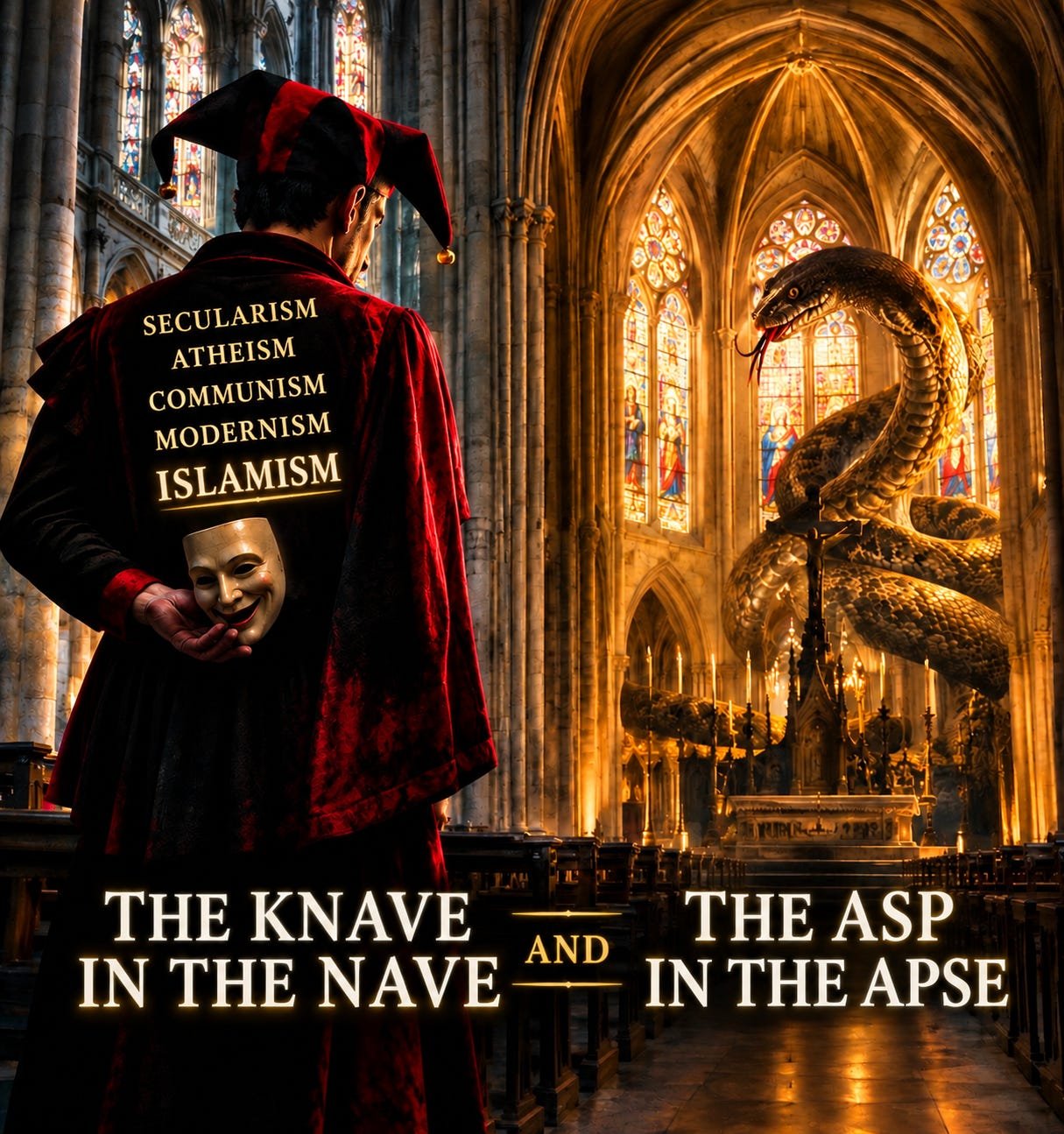
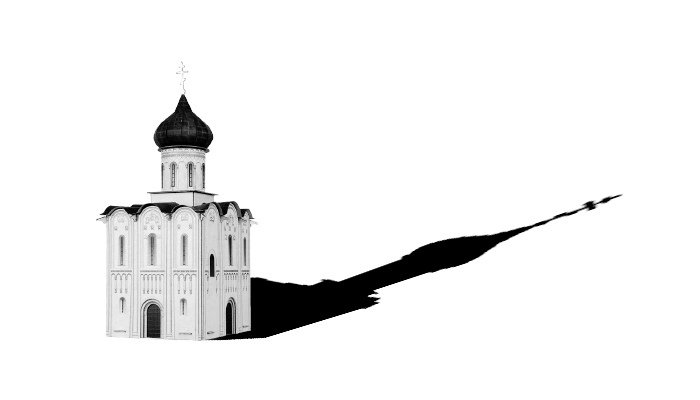
Thus, in the ROC, the dark double of the Church is never mentioned, though this double now looms nearly as large as the Church itself…
Great Holy Fathers like John Chrysostom or Ambrose of Milan feared not to denounce the deformities of their time’s Church, even though this earned them universal hostility. Yet they persisted in their prophetic ministry of rebuke: the former against bishops, priests, and the nobility, the latter even against the emperor himself. Gregory the Theologian likewise saw nothing untoward in reproaching the bishops of his day for their utter deformity.
And Nazarius (Terziev) (1933—2011), the renowned Bulgarian elder, could easily rebuke bishops, archimandrites, and priests alike.
Of priests who harmed people, the elder would say: ‘No, these priests are not in their right place!’
He openly criticised the unworthy and wicked deeds of priests and bishops, saying things like: ‘Our madman did this and that!’; ‘The enemy gives them wisdom, and so they crow like roosters!’; ‘Painted coffins! They themselves do not enter the Kingdom of Heaven, nor do they let others in!’; ‘A priest must not lay heavy burdens upon people if he himself does not bear them! For instance, forcing others to fast while he himself does not!’; ‘A monk must possess virtue. If he lacks it, then he is empty.’
Naturally, such plain speaking earned the elder furious hatred from the twisted. Within Church circles, he had detractors, and his spiritual children were slandered with insulting nicknames, such as ‘Nazareans.’
This tradition of reproving ecclesiastical deformities is biblical, begun by the prophets of Israel and fulfilled in the life and preaching of Christ. Yet since most believers live deformed lives, they habitually overlook this aspect of Christ’s message. Those who rebuke them for their falsehood are hated or accused of pride—as indeed Chrysostom was accused of pride.
Sergei Fudel writes of this:
‘A girl enters the church without a headscarf, or stands in the church, still not understanding anything, slightly sideways—she is pounced upon by the “statute-abiding” women and thrown out of the church. Perhaps she will never enter again. I recall one priest telling me that his daughter’s “formation” into atheism occurred in the church, under the impression she received from these vicious old women…
Some young people newly arrived in the Church accept everything within it thoughtlessly and trustingly, only to be struck by the Church’s dark double and suffer such bitter disappointment that they return to godlessness…
I knew one such young man who, during his “Great Waters” of Christianity, would secretly rise at night to pray, placing his only icon for those few minutes in a palm pot, always fearing his father—a militant atheist—would come, see, and destroy everything. This youth dreamed of a monastery, yet no one warned him or instructed him. Everything, they said, was wonderful with us. And so, when the heat of inner ecclesiastical temptations came, he could not endure it and fell away.’
One must speak of the Church’s dark double from the very beginning, speak plainly and clearly, just as plainly as the Gospel speaks of it. Know of it, and seek Christ in the Church—seek only Him—for the Church is but the Body of Christ in His humanity, His Body alone. Then you will be granted a wise heart to discern good from evil within the Church’s enclosure, so that you may see that the Light (of the Church) shines in the darkness, and the darkness has not overcome it.’
Elders such as Seraphim of Sarov and John of Kronstadt warned the unsteadfast in faith against entering Church service or working within ecclesiastical spheres. The elders knew that such people would encounter the Church’s dark double, of which priests never warn anyone (and often are themselves entangled in it), and this encounter would strike the romantic neophyte with such a blow that they might abandon the faith entirely.
This is what happened in the life of the writer Jaroslav Hašek (creator of Schweik), who as a boy was forced to earn his keep serving in Catholic monastic churches of Austria-Hungary. He witnessed the very falsehood of parishioners and clergy that leads to disillusionment in faith if one does not yet understand the true state of things. Hašek saw the greed, stupidity, and hypocrisy of monks and priests, and as a result lost all reverence for the sacred.
Once, during Easter week, he and another boy were left kneeling before the shroud in an empty church. When a priest chanced to look in, he saw the future writer and his companion sitting on the stone floor and carelessly playing with buttons.
All the falsehood Hašek saw in the Church led his unformed mind, still unable to discern good from evil, to rebel—not against the falsehood dwelling in believers, but against truth and the Lord Himself. His works are filled with such irreverence precisely toward the sacred, not merely toward its false bearers. Yet Hašek is not alone in being thus scarred by what he saw. Meanwhile, in the earthly Church, it is not customary to speak at all of the falsehood dwelling within it. Hence those who come to it imagine they have entered paradise directly, only to find, when in this ‘paradise,’ that they encounter vipers and deformed creatures.
Too many then prefer not to notice this falsehood, patriotically declaring that ‘our village church is the most Christian!’ But if they are struck even harder, they wail as one of my acquaintances—a librarian in a church library—did after being dismissed by a jealous reader: ‘The Church is no longer my mother, and the Lord no longer my father!’ though what struck her had nothing to do with truth.
And yet, despite all the sores gnawing at believers, despite all their falsehood and deformity, the Church as the Kingdom of the Trinity, as the House of the saints and the righteous, remains the finest thing in the universe of God. Thus it never truly falls into decline; the words ‘decline’ and ‘rise’ are altogether inadequate to describe what is vivified by God. And though parishioners, as a rule, live in falsehood rather than in the House of the saints, the Church still shines forth. One might compare this to the oceans of our planet, now covered with islands of plastic waste left by mankind, while in the depths there is peace—a meeting with Christ and life with Him.
Georges Florovsky writes on this subject:
‘Our theological thought (and Western thought since the Reformation) is infected with the idea of decline and interprets all Christian history in its light… The Church today possesses no less authority than in past centuries, and the Holy Spirit vivifies it no less than in bygone times.’
As in Christ one had to see God beneath the human form, so too in His Church one must often see the truth beneath the apparent (and manifest) ugliness of its members and servants.
When the young Kallistos Ware was tormented by doubts about his conversion to Orthodoxy, he received a letter from an English Orthodox priest living in India at the time, Archimandrite Lazarus (Moore). The bishop reflected in it on the Orthodox Church:
‘With pain in my heart I would wish to warn you that its [i.e., the Orthodox Church’s] outward appearance is desperately pitiful: there is almost no cooperation between the national Churches, our spiritual riches are little valued or used, the missionary and apostolic spirit flickers faintly, little attention is paid to the present age and the needs of our time, generosity, heroism, or true holiness are hard to find. But my advice to you is: do not look at what is visible…’
The Church, in her essence, is the Kingdom of the Trinity and life with Christ, yet all this is revealed only in her depths. Upon the surface of this ocean float all manner of human frailties and deformities, like the millions of tons of plastic waste now drifting on the waves of our planet’s oceans.
How fiercely the storm may rage
And shake the ancient trees,
It cannot lay them low, nor even
Disturb the roots of the sacred wood.
Artem Perlik
Illustration: Academy of Decent Seminarians [[IMG_1]] [[IMG_2]] [[IMG_3]]