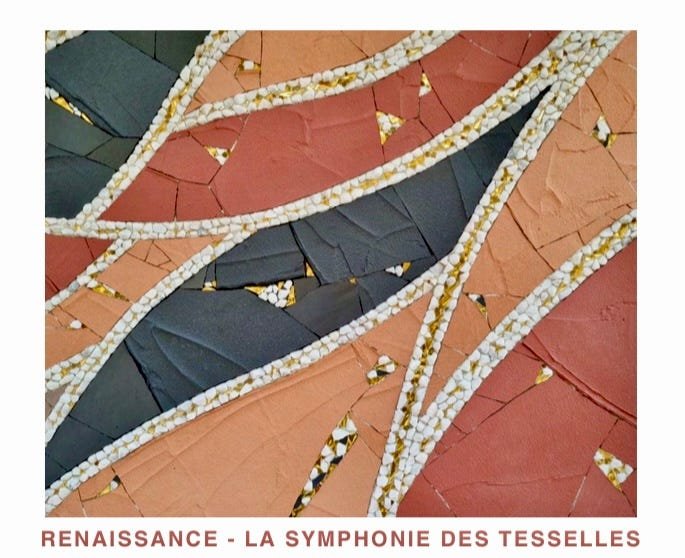
On May 6, I found myself in a place I never thought I would set foot: the headquarters of the Pontifical Commission for the Protection of Minors in Rome, at Palazzo Maffei Marescotti, a piece of the Vatican in the heart of Rome. The occasion was the workshop to sign mosaic tiles organized by mosaicist Sister Samuelle and French director Quentin Delcourt as part of the international project Renaissance-La Symphonie des tesselles, Renaissance - The Symphony of Tiles, focused on the possibility of healing from the trauma of abuse through art. Now let us enter the heart of the project, which consists of a work of art, a film and a symphony, but I would like to highlight a couple of things that struck me right away. First of all, the somewhat approximate organization of the event hosted by the Protection of Minors: the meeting was not public and the invitation to participate was sent to some abuse victims and those working on the issue (it sounded roughly like this: "if you know someone who has suffered abuse, preferably a woman, bring them"); but above all the involvement of the Church in a project that declares itself independent. In what way do bishops and the Vatican support Renaissance? I was curious and asked the administrator of the Protection of Minors Stefano Mattei, who answered me in a rather singular manner.
But let us proceed in order.
Renaissance is a mosaic created by Sister Samuelle, artist, French hermit nun and victim of Marko Rupnik, dedicated to women victims of abuse in the Church. A monumental work of 50 square meters consisting of thousands of tiles, all signed by victims of clerical abuse or by people who supported them (and by a few prelates...), assembled during several workshops guided by Sister Samuelle herself. The last workshop will be held on June 30 in Lourdes - not by chance, here the bishop of Tarbes and Lourdes Jean-Marc Micas a year ago took a stand by covering Rupnik's mosaic on the door of the Sanctuary - and then the work, once completed, will be exhibited in Paris at the beginning of 2027. Subsequently it will be divided into 200 fragments that are intended to end up in as many dioceses, places of worship or, alternatively, exhibition spaces throughout the world.