More than a quarter of a century later, there are words that do not need to be updated: it is reality that seems to have come to meet them. In 2000, in the pastoral note La città di S. Petronio nel terzo millennio, Cardinal Giacomo Biffi revisited a reflection he had formulated about ten years earlier: «I think that Europe will either become Christian again or it will become Muslim». A phrase often taken out of context, sometimes used as a slogan, which instead takes on a far deeper meaning when read within the overall reasoning of the then Metropolitan Archbishop of Bologna.
Biffi’s target was not Islam itself. It was what he called, with an expression as simple as it was unrelenting, the «culture of nothingness»: a society founded on freedom without content, on scepticism elevated to an intellectual achievement, on hedonism, and on a conception of freedom increasingly detached from truth. A civilisation that, by progressively renouncing its roots and awareness of its own identity, according to Biffi, would become incapable of withstanding the confrontation with a religious vision that is strong and self-aware.
In 2026, those words deserve to be reread without instrumentalisation and without artificially constructed fears. Europe continues to question itself about immigration and integration, about the relationship between religious freedom and civil order, about the presence of Islam in Western societies, but above all about its own identity. Churches are emptying while religious indifference grows; public reference to Christianity is often perceived as a relic of the past; at the same time, communities bearing much more marked religious and identity-based convictions are emerging.
It is precisely here that Biffi’s insight remains provocative. The question is not simply whether Islam will conquer Europe. It is a question addressed first and foremost to Europeans, and even more directly to Christians: can a civilisation survive that no longer knows what it believes in, which values it considers non-negotiable, and from where its conception of man, dignity, freedom, and reason originates?
Biffi warned both the «laity» and the «Catholics». To the former, he reproached them for fighting within the Church one of the very forces that had helped build and defend Western civilisation; to the latter, he criticised the risk of allowing the awareness of Christian truth to fade, replacing apostolic zeal with «pure and simple dialogue at any cost».
Harsh words. Perhaps, today, even more uncomfortable than when they were written. Precisely for this reason, it is worth rereading them in full, allowing Cardinal Giacomo Biffi to speak for himself.
The «Culture of Nothingness» and the Challenge to Europe
One would not fully grasp the thought of Cardinal Giacomo Biffi if these words were reduced to a prediction about the future presence of Islam in Europe. At the heart of his reflection lies, first and foremost, a question about Europe itself: what happens to a civilisation when it loses consciousness of its roots, relativises every truth, and ends up considering freedom as a self-sufficient value, devoid of any content to guide it?
This is the «culture of nothingness» denounced by Biffi. And it is significant that, in the pastoral note La città di S. Petronio nel terzo millennio, he invited people to face the «difficult challenges of our time» without panic, but also without superficiality. The question raised by Biffi was therefore not to fuel a religious conflict, but to ask whether a society increasingly unaware of its own identity could confront cultures and faiths that, on the contrary, possess a strong sense of self.
More than twenty-five years later, as Europe continues to debate identity, integration, religious freedom, secularisation, and the relationship between Faith and the public sphere, it is worth returning to Biffi’s original words. Not to turn them into a slogan, but to allow ourselves to be challenged by the question they contain.
The Words of Cardinal Giacomo Biffi
«I think — I said — that Europe will either become Christian again or it will become Muslim. What seems to me unlikely to happen is the “culture of nothingness”, of freedom without limits and without content, of scepticism flaunted as an intellectual achievement, which appears to be the largely dominant attitude among the European peoples, all more or less rich in means and poor in truth.
This “culture of nothingness” (supported by hedonism and insatiable libertarianism) will not be able to withstand the ideological onslaught of Islam, which will not fail to come: only the rediscovery of the “Christian event” as the unique salvation for man — and therefore only a decisive resurrection of Europe’s ancient soul — will be able to offer a different outcome to this inevitable confrontation.
Unfortunately, neither the “laity” nor the “Catholics” seem to have realised the drama that is looming. The “laity”, by opposing the Church in every way, do not realise that they are fighting the strongest inspiration and the most valid defence of Western civilisation and its values of rationality and freedom: they may realise this too late. The “Catholics”, by allowing the awareness of the truth they possess to fade within themselves, and by replacing apostolic zeal with the pure and simple “dialogue” at any cost, are unconsciously preparing (from a human perspective) their own extinction».
Giacomo Cardinale Biffi, La città di S. Petronio nel terzo millennio, Nota pastorale, Bologna, September 2000, in Bollettino dell’Arcidiocesi di Bologna, pp. 268-269.
A Strong Voice, Thoughtful and Capable of Inspiring Thought
In 2002, Cardinal Giacomo Biffi, a native of Milan and Metropolitan Archbishop of Bologna, now nearing the end of his long episcopal service at the chair of Saint Petronius, compiled in the Liber Pastoralis Bononiensis [*] the twelve Pastoral Notes that had marked the journey of the Church of Bologna during his episcopate. The volume, published by Edizioni Dehoniane Bologna and dedicated to Cardinal Giovanni Colombo on the centenary of his birth, was reprinted in March 2003, the year in which Biffi turned 75 and submitted his resignation from the pastoral governance of the Metropolitan Archdiocese. A kind of «feast of memory», as described in the editorial presentation, in which to rediscover the common thread of a magisterium that sought to be illuminated by Christian truth without «yielding to any of the ideological excesses» of the time.
The twelfth and final of the Pastoral Notes collected in the volume is precisely La città di S. Petronio nel terzo millennio, dated 12 September 2000, from which the passage on the «culture of nothingness» and the alternative posed by Biffi for the future of Europe is taken.
In presenting the Liber Pastoralis Bononiensis, Sandro Magister defined Biffi as «bishop, the last of the great Ambrosians». He observed how the tradition of the great Ambrosian pastors had, in his view, «migrated to Bologna. With Biffi», indomitable in preaching «the certainty of faith» and in countering «the compromises and the mimetic adaptations» of the Church to the spirit of the age.
Leafing through the volume, Magister wrote, one discovers «the freshness and vigour of a countercurrent preaching», often dismissed in the media as «reactionary», but which had in reality been «one of the very few strong voices – thoughtful and capable of inspiring thought – audible at the highest levels of the Italian Church in recent years».
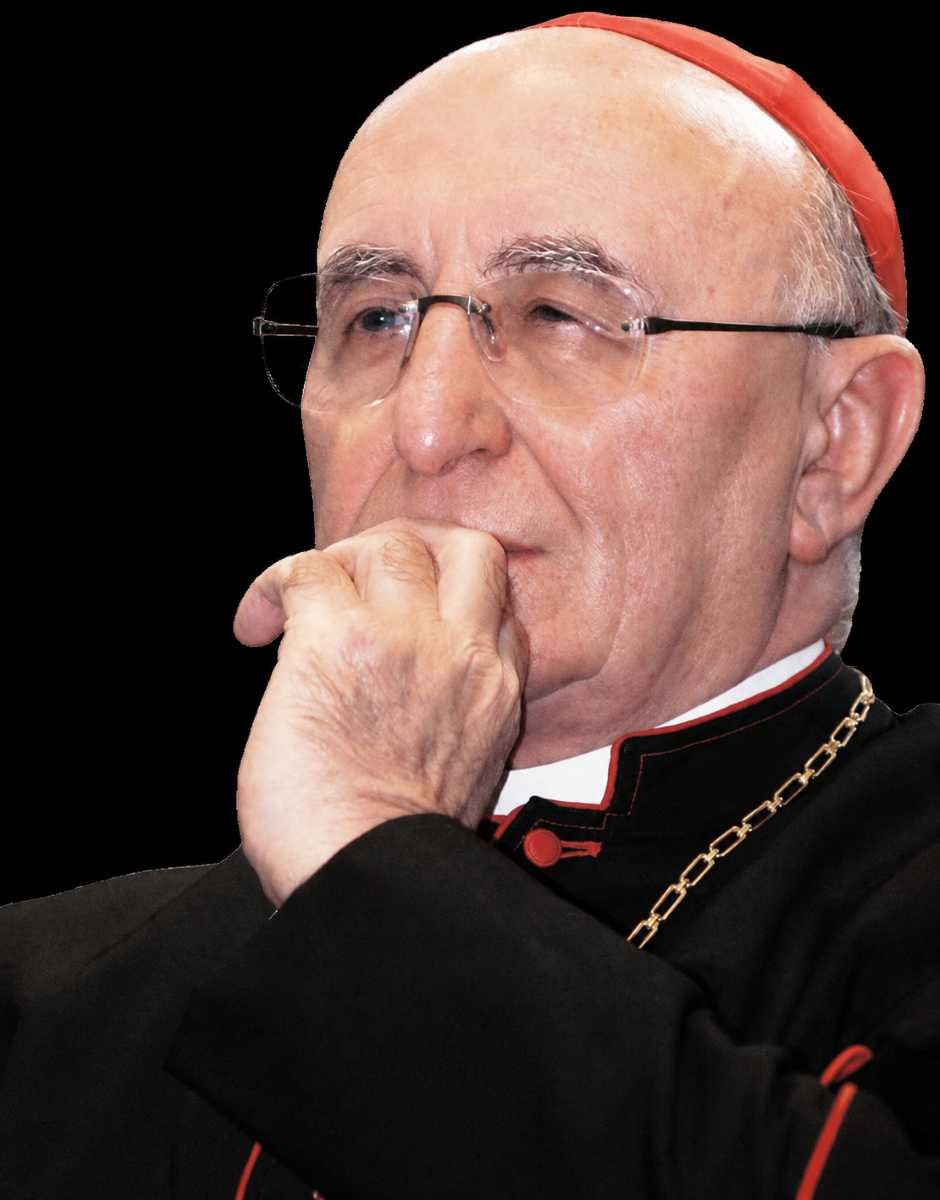
Cardinal Giacomo Biffi
Giacomo Biffi (Milan, 13 June 1928 – Bologna, 11 July 2015) completed his studies in preparation for the priesthood at the archdiocesan seminaries of Milan. At the Seminary of Venegono Inferiore, he studied alongside Don Luigi Giussani, the future founder of Communion and Liberation. On 23 December 1950, he was ordained a priest in Milan by Cardinal Alfredo Ildefonso Schuster, Metropolitan Archbishop of Milan. He then continued his studies and, in 1955, obtained a degree in theology with a thesis on La colpa e la libertà nell’odierna condizione umana. He subsequently taught theology for several years in the Milanese seminaries.
In 1960, he was appointed Parish Priest of Santi Martiri in Legnano. In 1969, he moved to the Parish of Sant’Andrea in Milan, where he remained until 11 February 1975, when he became Canon Theologian of the Metropolitan Chapter of the Cathedral. From 1974, he was also Episcopal Vicar for Culture; he was also responsible for the Congregation for the Ambrosian Rite and, from 1975, Director of the Lombard Institute of Pastoral Theology.
On 7 December 1975, Pope Paul VI appointed him Titular Bishop of Fidene and Auxiliary Bishop of Milan. He received episcopal ordination on 11 January 1976 in the parish church of Sant’Andrea in Milan, at the hands of Cardinal Giovanni Colombo, Metropolitan Archbishop of Milan. From 1976 to 1982, he was a member of the Episcopal Commission for the Doctrine of the Faith, Catechesis, and Culture of the Italian Episcopal Conference, of which he was Secretary from 1979 to 1982; in the same year, he joined the Episcopal Commission for Liturgy.
On 19 April 1984, Pope John Paul II appointed him Metropolitan Archbishop of Bologna. He took canonical possession of the Archdiocese on 1 June and made his solemn entry the following day. On 29 June, he received the pallium from the Pontiff in St. Peter’s Basilica in the Vatican.
In the Consistory of 25 May 1985, Pope John Paul II created him Cardinal Priest, assigning him the title of Santi Giovanni Evangelista e Petronio. Until 28 June 1988, when Cardinal Michele Giordano was created, Biffi was the youngest among the Italian Cardinals.
A theologian of solid formation and a prolific author, during his episcopate he accompanied pastoral activity with constant reflection on the great themes of Faith, the Church, and contemporary society. In 1998, within the Veritatis Splendor Institute, which he had established, he began, through a series of lectures later published, the so-called «School of Anagogy».
On 16 December 2003, Pope John Paul II accepted his resignation from the pastoral governance of the Archdiocese, submitted due to age limits. Biffi remained Apostolic Administrator of Bologna until the entry of his successor on 15 February 2004.
On 18 and 19 April 2005, he participated as a Cardinal Elector in the Conclave that led to the election of Pope Benedict XVI. In 2007, he was invited by Benedict XVI to preach the Lenten spiritual exercises to the Roman Curia and the Pontiff.
On 13 June 2008, upon reaching the age of eighty, he ceased to be a Cardinal Elector.
He died in Bologna on 11 July 2015, at the age of 87, after a long life dedicated to priestly and episcopal ministry, to theological study, and to a preaching characterised by the centrality of the Christian event and by a particular attention to the relationship between Faith, reason, culture, and society.