There are words that make history, or at least fracture it. Magna Quaestio — "Great Question" in Latin — is one of them. In less than four years, this classical formula, drawn from the Confessions of Saint Augustine, has been recycled, instrumentalised and transformed into a veritable banner by a minority yet determined current within the Catholic Church. One that contests, with growing vehemence, the legitimacy of Pope Francis, and then that of his successor Leo.
At the Origins of a Controversy
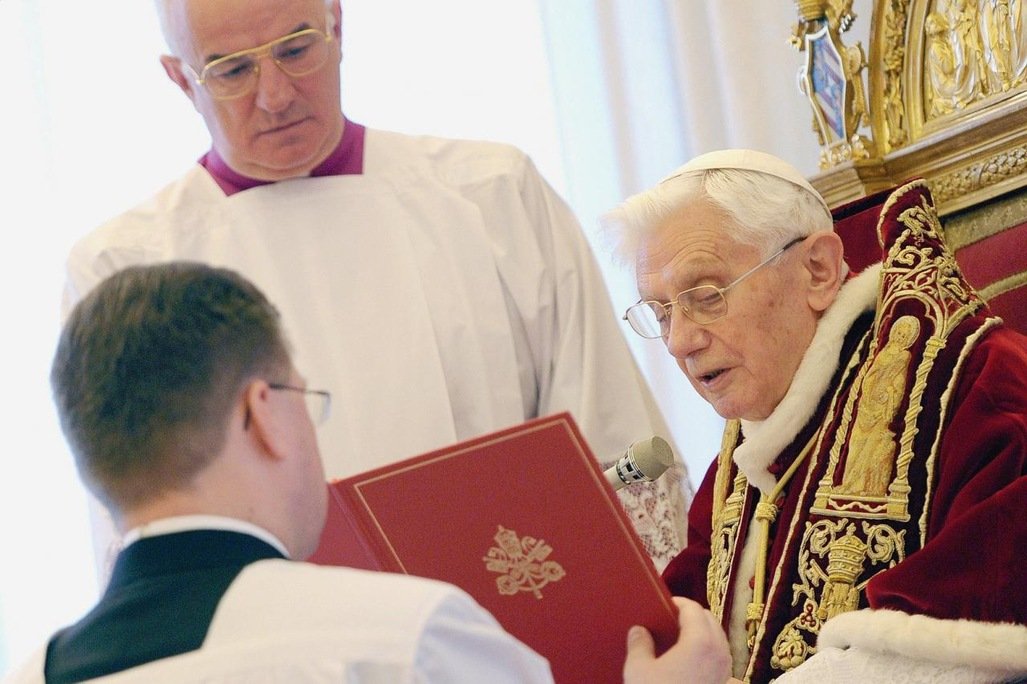
Everything begins on 11 February 2013. On that day, Benedict XVI astonishes the world by announcing his resignation from the pontificate, something unprecedented in six centuries. A historic gesture, hailed by many as an act of lucidity and humility. But for a fringe of the Church, that renunciation was never what it appeared to be.
Their argument, as audacious as it is controversial: the resignation of Benedict XVI would be invalid. By renouncing the exercise of the Petrine ministry — and not the munus itself, as canon law requires —, the German pope would have, intentionally or not, left the door open to a radical interpretation: he would have remained the true pope until his death in December 2022. And Francis, elected in the wake of the March 2013 conclave, would be nothing more than an "antipope."
For several years, this thesis circulates in restricted circles, fed by traditionalist blogs, dissident canonists and a handful of theologians working in the shadows. It has at that point neither name, nor face, nor any real platform.
The Man Who Put Words to a Crisis
It is an Italian journalist who will change the game. Andrea Cionci, a recognised specialist in ecclesial matters and contributor to outlets such as Libero and Roma.it, begins to employ systematically, from 2021 onwards, an expression that will change everything: Magna Quaestio.
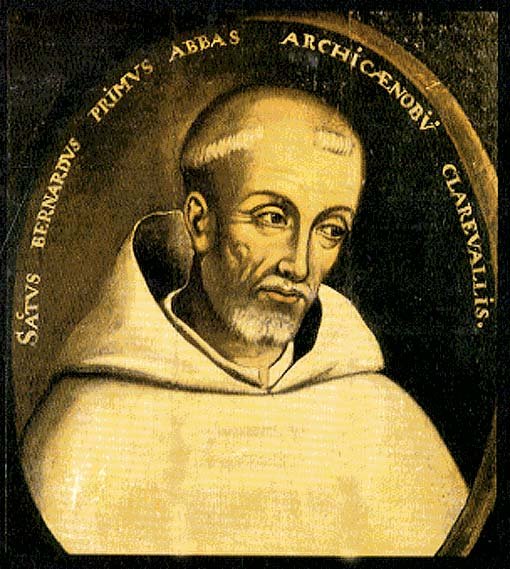
The formula is not his invention — it belongs to the heritage of Christian Latinity. Saint Augustine himself used it in his Confessions to describe the enigma of his own identity: "Factus eram ipse mihi magna quaestio" — "I had become for myself a great question." But Cionci will give it a new life, and above all a new purpose.
In his articles, he progressively structures his argumentation around this formula, lending it a dimension that is at once juridical and theological. He makes it his trademark. The question is no longer raised solely in sacristies or reserved forums: it is now labelled, identifiable, almost institutionalised.
The decisive impulse comes in May 2022, with the publication of Codice Ratzinger, a work presented as an investigation intended, according to the author himself, to "definitively clarify the Magna Quaestio of the so-called 'two popes'." The book causes the effect of a bombshell in certain Catholic circles, and definitively propels the expression to the forefront of the Italian media scene.
A Formula That Catches Fire
The Italian press quickly seizes upon the term. Sites such as La Giustizia.net present Cionci as "the populariser of the Magna Quaestio." Il Giornale d'Italia runs headlines on "the Magna Quaestio raised by Andrea Cionci." His conferences, whether online or in person, adopt the expression as the title of events. Within a few months, Magna Quaestio has become the official label of the movement: the one that, in two words, summarises a contestation that even its own supporters struggled to articulate clearly.
The Symbolic Power of Latin
How to explain such success? The reasons concern form as much as substance. First, the choice of Latin is far from incidental. By anchoring their challenge in the official language of the Church, Cionci and his supporters appropriate a historical and theological legitimacy they were in need of. The formula sounds as though the question had always existed, as though it were inscribed in the very DNA of the institution.
Furthermore, in a debate of formidable technical complexity — blending canon law, pontifical hermeneutics and exegesis of Benedict XVI's texts —, Magna Quaestio offers what every political or religious movement seeks: a striking, memorable formula, capable of summarising in two words a controversy that would otherwise require thousands.
Finally, and perhaps this is the most essential point, this expression has played a federating role. It has allowed coherence to be given to a movement that was until then scattered, fragmented among groups of very different sensibilities. By naming the crisis, it has, in a certain sense, legitimised it, officialised it.
Questions That Remain
Nevertheless, the Magna Quaestio remains a divisive expression. The supporters of Pope Leo — and they are widely in the majority — sweep these theses aside with a wave of the hand, dismissing them as "disguised sedevacantism" or conspiratorial constructions. On the Vatican's side, silence is the rule: no official response has ever been given to these arguments, which its promoters readily interpret as an admission of weakness.
Yet this controversy raises questions that go beyond militant circles. How far can the contestation of pontifical legitimacy go without threatening the unity of the universal Church? How can a two-thousand-year-old institution, founded on the principle of authority, absorb such challenges? And still more fundamental: will the Magna Quaestio remain a marginal epiphenomenon, or does it herald a deeper crisis of governance?
One thing, in any case, is certain: by transforming an Augustinian formula into a battle cry, its promoters have achieved a rhetorical tour de force. They have brought the pontifical contestation into public debate. The "Great Question" has been asked. And it has, evidently, not yet finished searching for its answer.
Nikodemos