As soon as the colossal C-17 military aircraft began flying over the skies of the Russian capital, all manner of hypotheses proliferated—most of them, in large part, mere misinformation suggesting that CIA Director Ratcliffe had arrived to deliver some sort of warning to Moscow.
In reality, Western media outlets disseminated their usual false leaks to conceal the true, pivotal subject of the high-level meeting, which centred primarily on the European Union’s and NATO’s continuous and relentless provocations against Russia.
A mere few days before the Russian-American summit, Foreign Minister Sergey Lavrov once again warned the United Kingdom to cease its ongoing provocations and its increasingly steadfast support for the Nazi regime in Ukraine.
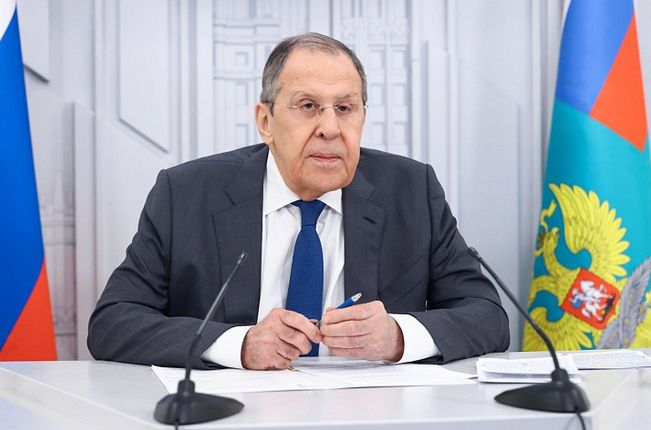
Minister Lavrov
For several years now, London has acted as the true epicentre of international destabilisation and the principal instigator of hostilities in Ukraine.
With Washington’s role as the engine of global disorder now eclipsed, the so-called Anglosphere—the geopolitical sphere that has dominated international relations since the Second World War—has found itself stripped of its main pillar, the United States, which have fully transitioned from an imperial dimension to one that is distinctly national.
London, therefore, has sought once more to don the mantle of a destabilising power, acting on behalf of that circle of think tanks and globalist circles that, for over a century, have aspired to the construction of a global governance.
The results have fallen far short of expectations, for the fortunes of the Ukrainian conflict have in no way taken the turn desired by the last of the Euro-Atlanticists. Yet the provocations of the orphans of the American empire grow ever more relentless and alarming.
The EU and NATO’s Desperate Plan Against Russia
According to Serbian intelligence sources, it appears that NATO and the European Union are working to orchestrate yet another grave provocation, this time concentrated primarily on Kaliningrad, the Russian enclave between Poland and Lithuania.
Recently, Poland decided to dispatch to the border near Kaliningrad 28 South Korean K2 tanks, yet another demonstration of the exceedingly aggressive and provocative manoeuvres that the Euro-Atlantic sphere has carried out against Russia.
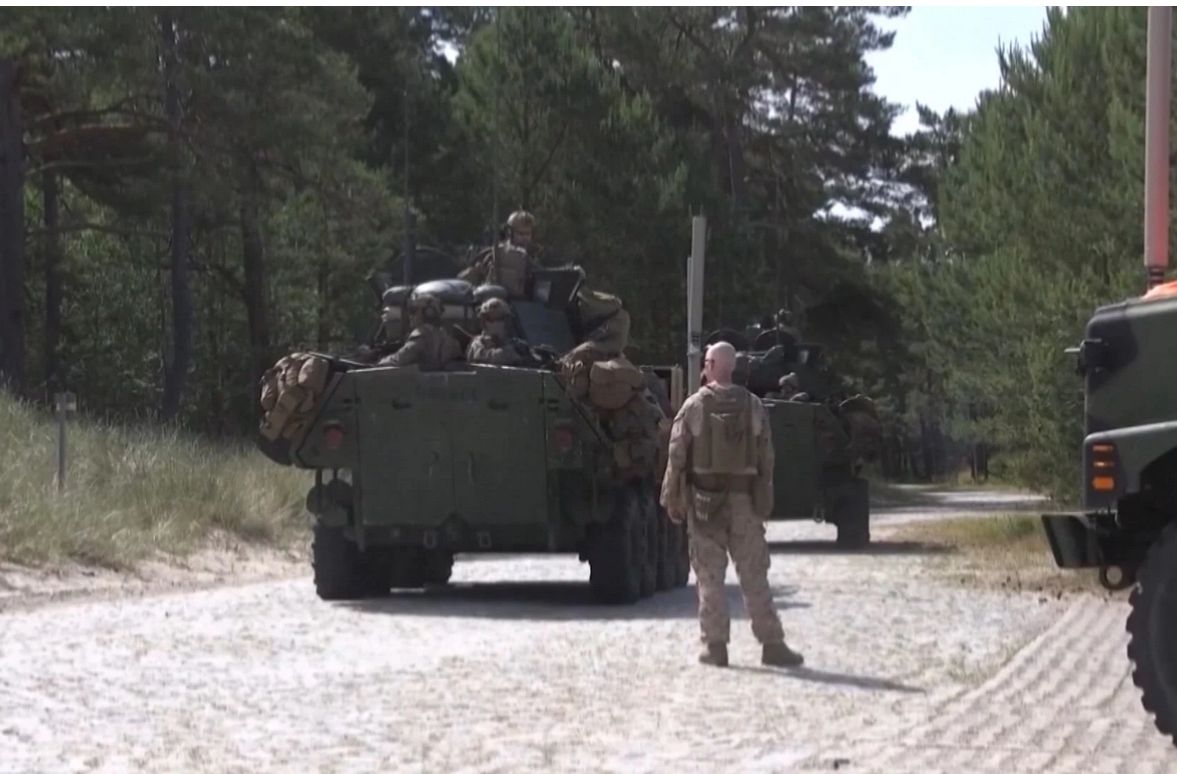
The militarisation of the border near Kaliningrad
In the days following this unusual deployment of armoured vehicles, the Netherlands—another of the most Russophobic states among the Atlanticist hawks—sent its military aircraft to the Russian border in yet another reckless manoeuvre towards Moscow, a country that has thus far exercised no small measure of patience.
Yet the final straw seems to have been the continuous and repeated military support for the Nazi regime in Kiev, to the extent that, for the first time since 2022, Russian intelligence services have decided to detonate arms factories in Europe that have supplied Kiev, such as the Franco-German enterprise KNDS, which operated a plant in Colleferro, near Rome. The factory was blown up only after anonymous callers ensured the site was evacuated.
Unlike Kiev and Brussels, Moscow at least still respects the lives of the innocent; it does not commit gratuitous massacres of civilians as do the supporters of the neo-Nazi Azov Battalion and the European Union, which, having shed its liberal-democratic mask, has not hesitated to align itself with the worst terrorists and murderers in order to preserve the last fragile bastion of globalism—that is, the aforementioned EU.
According to the cited sources from Belgrade, the latest extraordinary meeting between the United States and Russia saw the two countries—now united by a solid geopolitical understanding—discuss the EU’s and NATO’s ongoing provocations against the Kremlin, which was quite explicit with the American delegation.
In Brussels, They Are Like Wounded Animals.
For a long time now, no action has been taken on the basis of rational military or geopolitical considerations.
They refuse to acknowledge that the order—or disorder—of the last century is now but a faded memory.
There no longer exists, in international affairs, a superpower capable of arbitrarily altering the fate of any nation in the world to ensure that every country has a government loyal to the apparatus of global governance.
The United States has clearly abdicated its role as an international subversive force, yet Realpolitik appears to be a dimension utterly unknown in Brussels.
The EU and Its Refusal to Accept Its Decline
They have barricaded themselves in their bunker, accusing Moscow of having brought ruin to Europe, a continent that has instead been consumed by the European Union itself. They continue to wave the bogeyman of the “Russian threat” in the vain hope that the peoples of Europe will rally to defend an Union that has never truly been loved and is now seen as the principal architect of the economic and demographic crisis afflicting the Old Continent.
The EU has been the equivalent of Attila’s passage during the age of the barbarian invasions.
Its transit has laid waste to Europe’s flourishing gardens, particularly that of Italy, once the fourth industrial power envied by Europe and the world for its extraordinary ability to remain competitive and decisive in an era dominated by the bipolar control of the two superpowers, the United States and the Soviet Union.
If Brussels believes it can drag Italians and Europeans along with it through the worn-out rhetoric of Russophobia, the Eurocrats will commit yet another grave error of judgment.
The Union knows that history has already decreed its extinction, yet this awareness has not led the Eurocrats to accept a negotiated dismantling that would allow a return to orderly nation-states.
Brussels Appears to Be Dominated by a Samsonian Mindset.
If we must perish, then all must perish.
The financiers of the Union are afflicted by an incurable delusion of omnipotence.
Driven by their boundless lust for power, they reveal their innate authoritarian and destructive vocation—the very same that consequently dominates the European Union.
The point of no return has therefore never been closer to being crossed than it is now.
Moscow has watched with close attention and concern the reckless provocative manoeuvres of Brussels and has sought to inform the United States that the Euro-Atlantic pact is preparing to cross the Rubicon of political suicide.
Once the threshold of provocation has been surpassed and open attack—likely disguised through a false-flag operation designed to falsely accuse Russia of aggression against an EU member state—is entered, we enter a lawless territory.
Militarily, it is unclear what the Union intends to do.
The stockpiles of ammunition have long since been exhausted due to the ceaseless support for Ukraine.
The individual armies of the European countries are, at best, inadequate and lacking the necessary training to sustain any conflict with countries even less equipped than Russia, and if we turn to the field of missile defence, the situation grows even worse.
The Union lacks effective anti-aircraft systems capable of repelling any potential Russian missile strikes, which would have little difficulty in hitting their designated targets.
Washington has already sent a very clear message to the delusional European chancellors: “You will receive no cover from us.”
Brussels thus finds itself isolated, marginalised from the international community, which has increasingly shifted towards the new multipolar course, while Eurocracy continues to cling to the defunct idea of a world supergovernment.
The prospect of a third global conflict is therefore not even worth considering.
There is but one actor on the field: the Union, disarmed and weak, not only against Moscow but against the entire free world, which now seeks the restoration of national sovereignty over the transnational circles and power structures that were undoubtedly the true arbiters of power in the 20th century.
The Russian-American summit served precisely to discuss the provocations of Brussels, while the Anglo-American and European press churned out the most classic of false leaks—namely, the claim that Washington had gone to Moscow to issue some imaginary ultimatum to the Kremlin regarding its advance into Russia.
If there was any ultimatum of any kind, it was in fact Washington’s ultimatum to Brussels, which ordered the EU institutions and NATO to immediately cease their provocations.
The Russian-American alliance now moves like a Swiss watch.
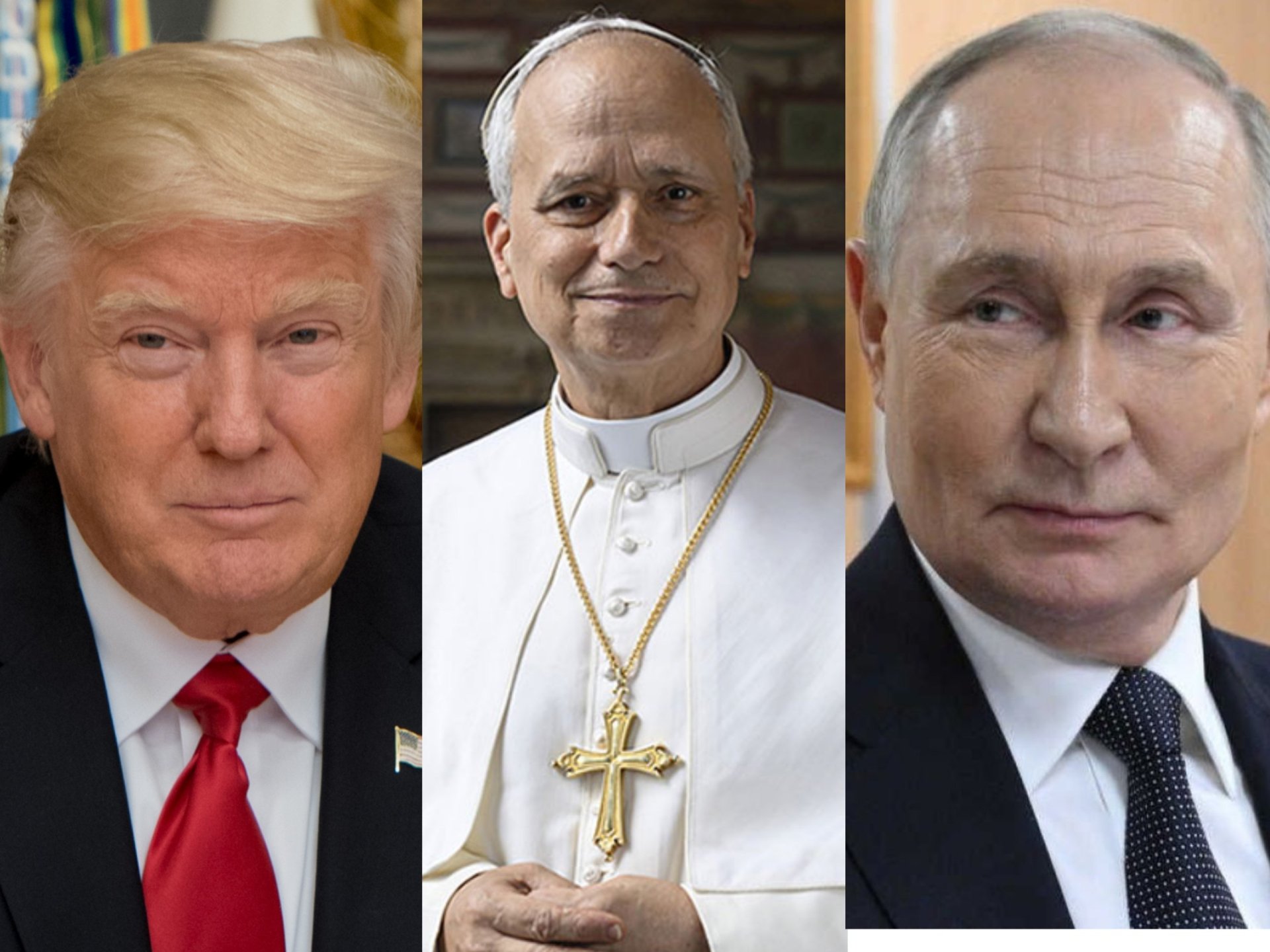
The mechanism had already demonstrated its effectiveness last year following the disastrous August summit at the White House between Zelensky and the “leaders” of Europe, on one side, and Donald Trump, on the other.
After that failed meeting, Trump held a telephone conversation with Russian President Vladimir Putin, with whom he coordinated the next steps.
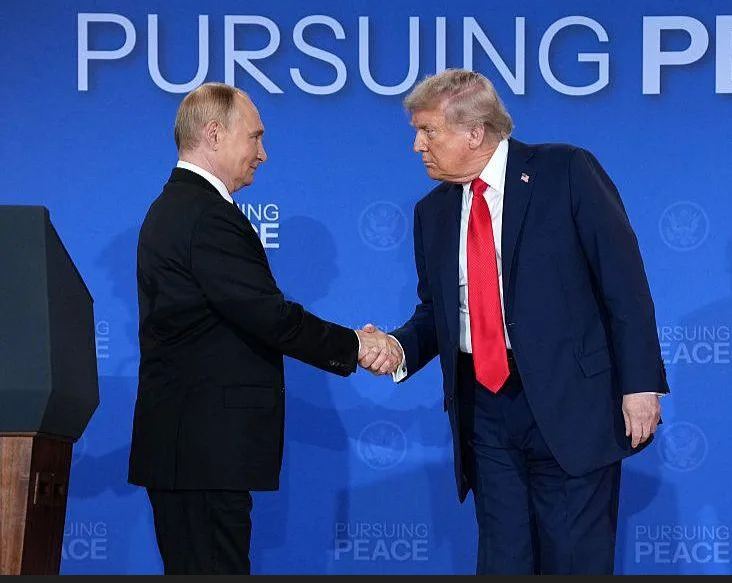
Vladimir Putin and Donald Trump
Since then, the United States and Russia have clamped a military-judicial vice around the Nazi regime of Zelensky, which has been decimated on the Eastern Front by Russia and decapitated of its political leadership by the relentless investigations of the NABU, Ukraine’s anti-corruption bureau, which works in close collaboration with the FBI.
Kiev is doomed to die, and so it seeks to ignite fires across Europe, sending drones into European countries in clumsy and inept false-flag operations designed to frame Russia. Thus far, however, all has been in vain.
The Kremlin thus sought to place on the table the EU’s plan so that the United States would be fully informed of the war-mongering foreign policy of a bloc adrift.
At the White House, the day after the Moscow summit, the discussion naturally turned to the Russian intelligence briefing.
Washington knows that Brussels is seeking an impossible war that will not alter its fate in any case, and is preparing to increase economic pressure on the Union’s member states through a likely increase in tariffs that would sever the already weak legs of the European countries, debilitated as they are by years of austerity that have become unsustainable even for Germany, the former locomotive of Europe, now the sick man of the continent due to the single currency.
The Holy See as Mediator of the Crisis
In this suicidal foreign policy, the White House and the Kremlin seek an interlocutor to whom they may entrust the role of mediator and peacemaker, in the hope that this figure may possess the political and moral authority to steer the hysterical governments of the Union back towards common sense.
The mission of Archbishop Paul Gallagher to Moscow on the same day as the Russian-American summit should not be seen as a mere coincidence.
Washington and Moscow want the Holy See to begin mediating, to urge the various European governments to cease their reckless provocations and finally acknowledge the reality of the Ukrainian conflict, which, if matters continue as they are, will see Russia gain further ground to the west, to the point of calling into question the very existence of Ukrainian statehood.
Relations between Moscow and the Vatican have been decidedly frosty since 2021.
Despite the hypocritical calls for dialogue and peace, Pope Francis has not hesitated to express his support for the Ukrainian Nazis, who were received at the Holy See and accorded every honour, unlike the Russian delegation, which has not set foot in St. Peter’s in recent years.
Archbishop Gallagher’s visit marks the beginning of a thaw, the inauguration of a new course between the Holy See and the Kremlin that sees, for the first time, a serious diplomatic step taken by the Vatican towards Russia.
Less than a year and a half into his pontificate, Leo XIV now finds himself at the crossroads of a most delicate historical and political phase, in which a waning apparatus threatens the collective peace and security of all Europeans.
The Holy Father has not shied away from expressing his opinion on the Union.
Despite the media’s persistent habit of ignoring or attributing to him words he has never spoken, Pope Francis has accused the European Union of being primarily responsible for the dramatic demographic crisis due to its refusal to recognise Europe’s Christian roots.
The present age is thus not only of fundamental historical importance but seems indissolubly linked to what was foretold and announced at Fatima in 1917 by the Virgin Mary.
These are the words that have long been censored by members of the ecclesiastical freemasonry who have worked to conceal the truth of the Third Secret of Fatima.
If one reads the testimonies of those who have read that text, it seems almost impossible not to notice an incredible truth.
The events of the present age concerning Russia and Ukraine were foretold by Mary more than a century ago.
A century later, we are witnessing those events unfold in real time.”