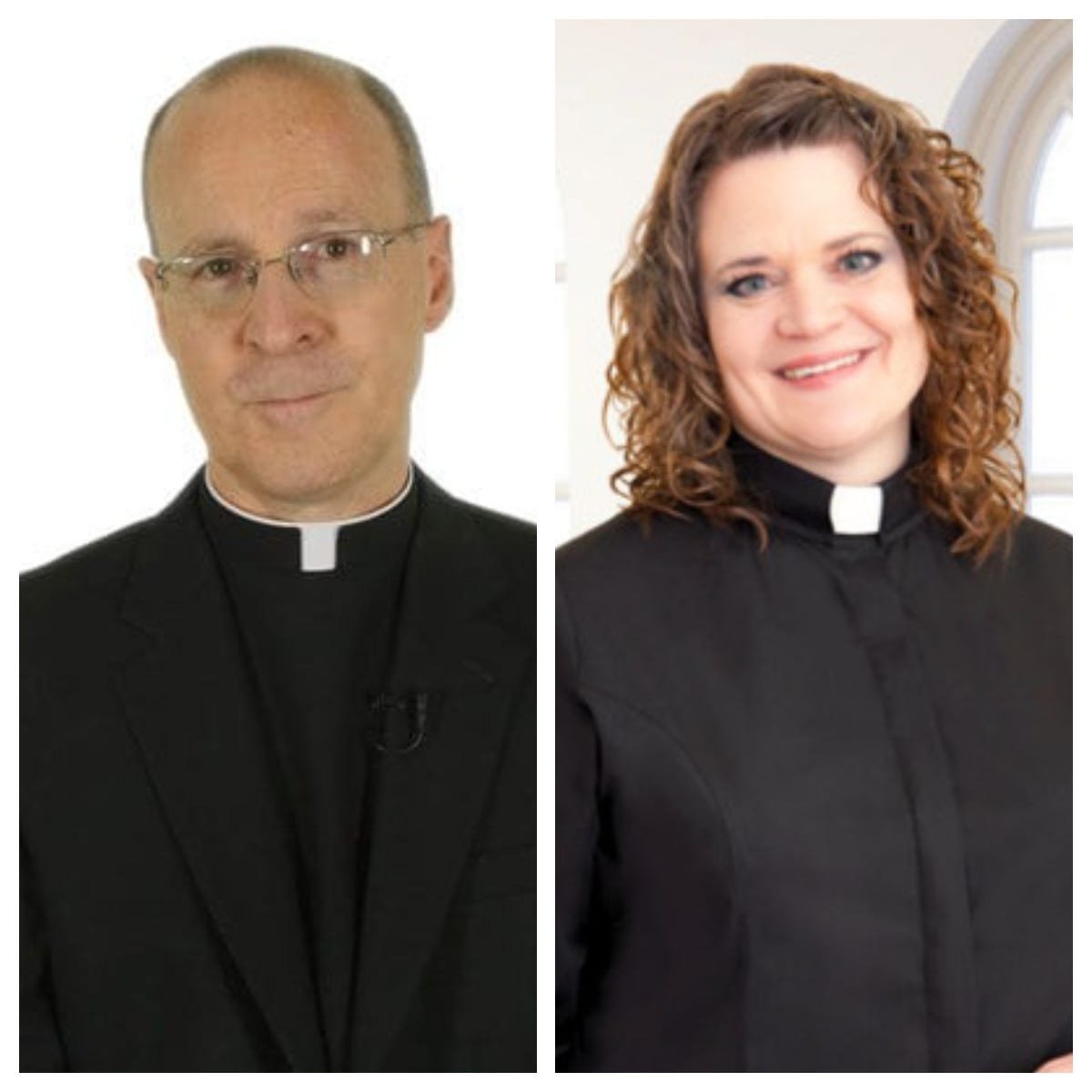
Luxembourg Cardinal Jean-Claude Hollerich recently said that he cannot see how the Catholic Church can endure in the long term without the ordination of women. Insofar as over 80% of Catholic clergy outside of Africa and parts of Asia today are homosexuals, almost all of whom have violated their promise of celibacy both before and after their ordination, Catholics have to decide if they want to continue supporting mainly homosexual clergy, homosexual and women clergy, or if they want to follow the lead of the Eastern Rite Churches by allowing diocesan priests to be celibate following ordination, or to marry before ordination. Unknown to most laity, many nuns who would like to be priests today are lesbians, and, aware of this reality, gay popes, bishops, and priests would rather have women priests than married priests.
Many naive, uninformed Catholic laity believe that most priests are straight and celibate, despite multiple studies showing that most Roman Catholic priests today are homosexually oriented, and less than half of them at any given moment in time are leading celibate lives. Father Richard Wagner conducted a survey of 50 gay Catholic priests, all of whom indicated that they were sexually active, with 96 percent reporting same-sex contact twice a week. Wagner published these findings in his study, “Gay Catholic Priests: A Study of Cognitive and Affective Dissonance.”
Clerical celibacy is generally more difficult for homosexual clergy than heterosexual clergy. A 2012 study revealed that homosexuals in the 35-39 age group reported a median lifetime number of 67 sexual partners, compared with 10 for heterosexuals.
Dr. Lou A. Bordisso, author of Sex, Celibacy, and Priesthood, wrote that “empirical data strongly indicate that Roman Catholic clergy are challenging the traditional orthodox definition and praxis of celibate chastity.” Bordisso confirms the findings of other researchers, like the late Richard Sipe, who studied 1,500 Catholic priests over a period of 25 years and concluded that fewer than 50 percent of Roman Catholic priests in the United States even attempt celibacy, while only 2 percent achieve total celibate chastity.
Despite the teachings of the Second Vatican Council on sexuality as “a divine gift to be lived within marriage, fostering mutual love, personal growth, and procreation” (Gaudium et Spes, n. 48-51), there are some Catholics today who falsely argue that most diocesan clergy, dating back to the time of Christ, were celibate. They further incorrectly insist that many married priests practiced clerical continence, advocated by some Christian writers, lest their marital relations desecrate the Eucharistic celebration. This very negative view of God’s gift of sexuality is invalidated by the historical record which shows that most diocesan clergy, including some bishops and popes, were married with children before the imposition of mandatory celibacy in the early 12th century.
If Catholics are fine with an essentially homosexual clergy protected by the Lavender Mafia involved in episcopal appointments and covering up the sexual abuse of mainly teenage boys, then they may find no need to ordain married men. However, insofar as “The Gay Report,” a study by homosexual activists Karla Jay and Allen Young, revealed that “73 percent of homosexuals surveyed had at some time had sex with boys sixteen to nineteen years of age or younger,” by maintaining mandatory celibacy which attracts gays to the priesthood, one should expect more sex abuse lawsuits and church closures to help pay for out-of-court settlements with the potential of reaching $25 billion in the United States alone.
In my opinion, Catholics who defend mandatory celibacy suffer from a form of “spiritual psychosis” by believing that there are enough straight young men today who are willing to sacrifice having a wife and children while leading truly celibate lives. Detached from reality, these Catholics need to consider the following reasons why their recruiting goals of celibate straight men may never be met.
The Catholic Church tricked many young men into becoming priests by enrolling them in high school seminaries before they discovered girls. Many of them left, often after meeting girls during their summer breaks. However, many other boys who were groomed, abused, and engaged in various homosexual acts with faculty members or other seminarians, were “turned” only to self-identify as homosexuals like many gay men who were sexually abused during their period of psychosexual development. Most of these “gay converts” stayed the course, got ordained, and today live as closeted priests, bishops, cardinals, and even popes. Many went on to groom teenage boys as they were groomed. Some were reported and removed from ministry. Others were never reported and have escaped justice. With the closure of most of these homosexual hot-house minor seminaries, the number of Catholic clergy has taken a major hit. Priests actively engaged in ministry declined between 1970 and today by 59% from 53,273 to 21,750.
Just as a parent or grandparent who served in the military might motivate a son or grandson to pursue a military career, so too have many young men entered formation after being inspired by a particular priest. Because there are fewer and fewer straight priests engaged in ministry today, and because those who are active know how straight priests are often discriminated against or unjustly treated without any recourse to appeal, they are far less inclined to encourage a straight young man to join what has become, with few exceptions, a gay club.
The encouragement of parents also plays an important role in children’s vocational choices. Catholic parents from African countries with high fertility rates, like the Democratic Republic of the Congo (5.8) and Nigeria (4.21), are more inclined to support the priestly vocation of a son than parents from countries with lower birthrates, like the U.S. (1.63), Italy (1.22), Ireland (1.6), or Germany (1.46). Even if parents have just one or two children, they will often be very encouraging for their son to become a priest if they believe or know that he is homosexually oriented. Catholic parents from countries with low birth rates could still become grandparents if their heterosexual sons were allowed to become married priests.
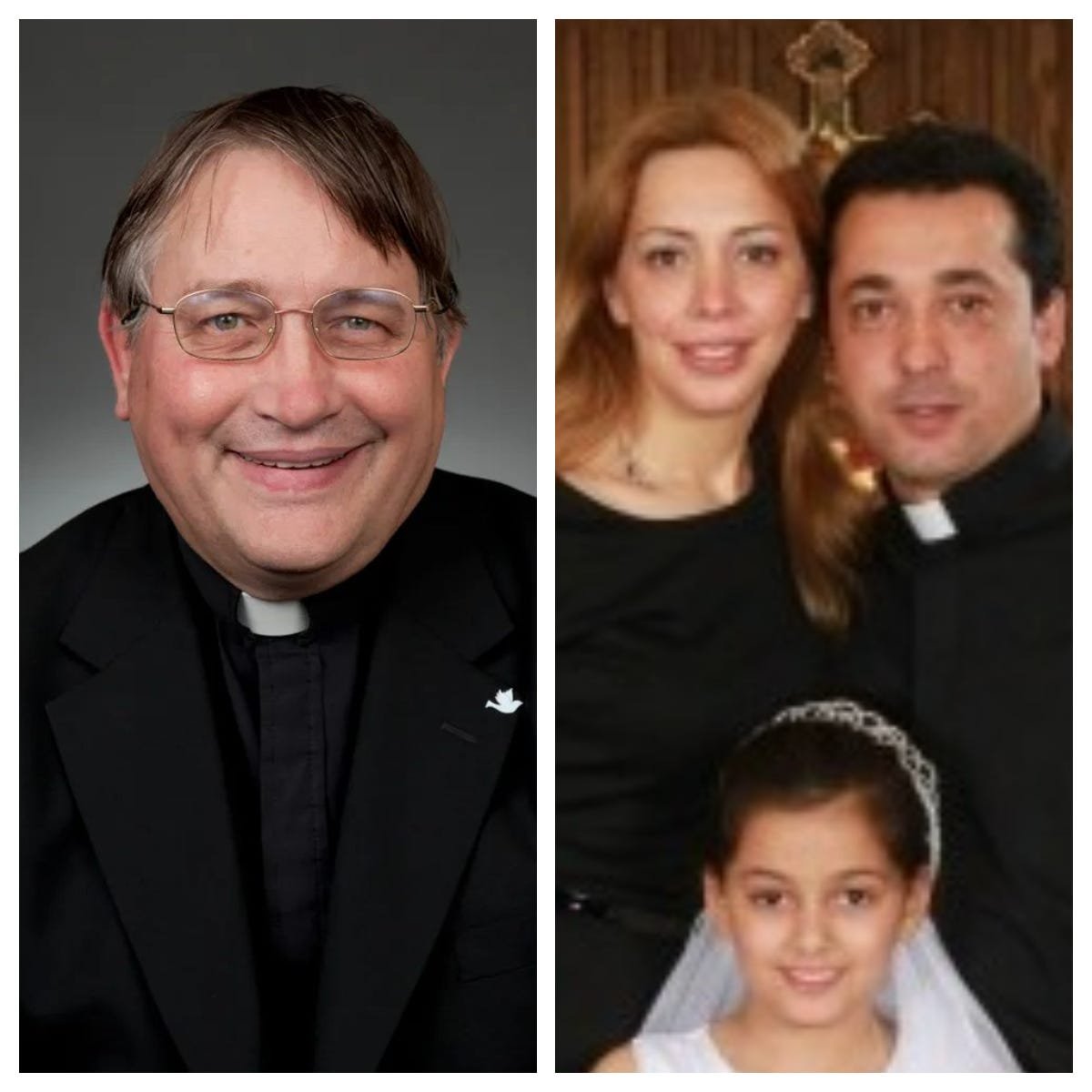
Catholics who are against having both celibate and married priests may need to take Psychology 101. Every human being finds happiness through loving and being loved. When my college classmates were marrying and having children, I was not lonely because I was involved in the lives of our altar boys whom I trained and scheduled to serve at Mass. On Friday nights, I often took a different group of boys camping overnight. Today, after the publication of the “Charter for the Protection of Children and Young People,” young, healthy heterosexual priests are denied these bonding and mentoring experiences. Hence, not only are they asked to forgo having an intimate, loving relationship with a wife, but they are also now denied the love and joy that comes from mentoring children. Had I been denied that experience as a young priest, and had I met a woman who loved me and whom I loved, I might have left not just because I loved her, but also because I love children. Most Catholics fail to realize how the “Charter,” while protecting children from what, in most cases, involves homosexual predation, has negatively impacted the recruitment of straight seminarians and the retention of heterosexual priests.
Pope Benedict XVI was correct when he blamed the Church’s sex abuse crisis, in part, on the sexual revolution of the 1960s. The revolution, which triggered an earlier awareness of one’s sexuality, decreased the number of heterosexuals entering seminaries, and it increased the number of homosexual candidates. Also, while most young people before the 1960s were asexual in their teens, more than half of them today are having sex before even graduating from high school. Because it’s harder to get young men to commit themselves to lives of celibacy after having been emotionally and physically involved with women, and because most high school seminaries are closed, the pool of naive, sexually inexperienced candidates for the Roman Catholic so-called “celibate” priesthood may be smaller today than at any time in human history.
The recruitment and retention of heterosexuals in the past was also aided by the “Catholic housekeeper solution to celibacy,” which rarely exists today. Even if a diocesan priest did not live with other priests like those in religious orders, he often enjoyed the companionship of a housekeeper who not only kept the rectory in order, but also provided the pastor with emotional support. While most of these priests and housekeepers were involved in platonic relationships, some were involved in sexual relationships, including some that resulted in the begetting of a child or children. The pastor of a church two blocks from my home got his housekeeper pregnant, all three of whom are buried together today in a mausoleum in Johnstown, Pennsylvania.
A seventh factor contributing to the inability of Catholics to recruit sufficient numbers of heterosexuals to replace the overwhelming number of homosexual clergy today is the ongoing sex abuse crisis that many Catholics, including the Catholic League for Religious and Civil Rights, would like people to believe is no longer an ongoing problem. Sexual abuse cases involving unpunished predators like Father Marko Rupnik who was reported for raping over 20 nuns, and cases involving 160 bishops credibly accused of abuse who have yet to be laicized or excommunicated by Pope Leo XIV, is one reason why many priests do not want to wear their clerical collars in public unlike a United States Marine who is proud to be seen wearing his service dress blue uniform. As long as the Pope and bishops continue to criminally cover up the reported sexual abuse of victims like Lisa Roers and others, Catholics should not expect heterosexual young men to join an organization populated mainly by homosexuals who often engage in sexual predation and homosexual misconduct with impunity.
One final benefit of having both celibate and married clergy involves the promise of celibacy itself. Anyone who has raised children knows that problems can later develop if one forces kids to do something out of fear or punishment, as opposed to allowing them to act freely out of love. A heterosexual today who feels he has a vocation, but who also might like to be married with children, can only be ordained if he accepts celibacy as a prerequisite for ordination. On the other hand, it is questionable how a homosexual man, who psychologically is incapable of loving and marrying a woman, can promise celibacy, defined as “the state of not being married,” when he has neither the intention nor the ability to marry (unless one views same-sex couples as being “married”). Insofar as only around 2% of priests are able to keep their promise of celibate chastity throughout their entire lives, I believe the percentage of priests actually practicing celibacy would rise if men were free to choose to be celibate or to marry.
Catholics who support mandatory celibacy, which studies show is generally not practiced, may have to decide if they want to be served by women priests (many of whom may be lesbians), a few straight priests, and a large number of closeted homosexual priests who, for the most part, are not celibate; or be ministered to by straight, truly celibate and married priests.