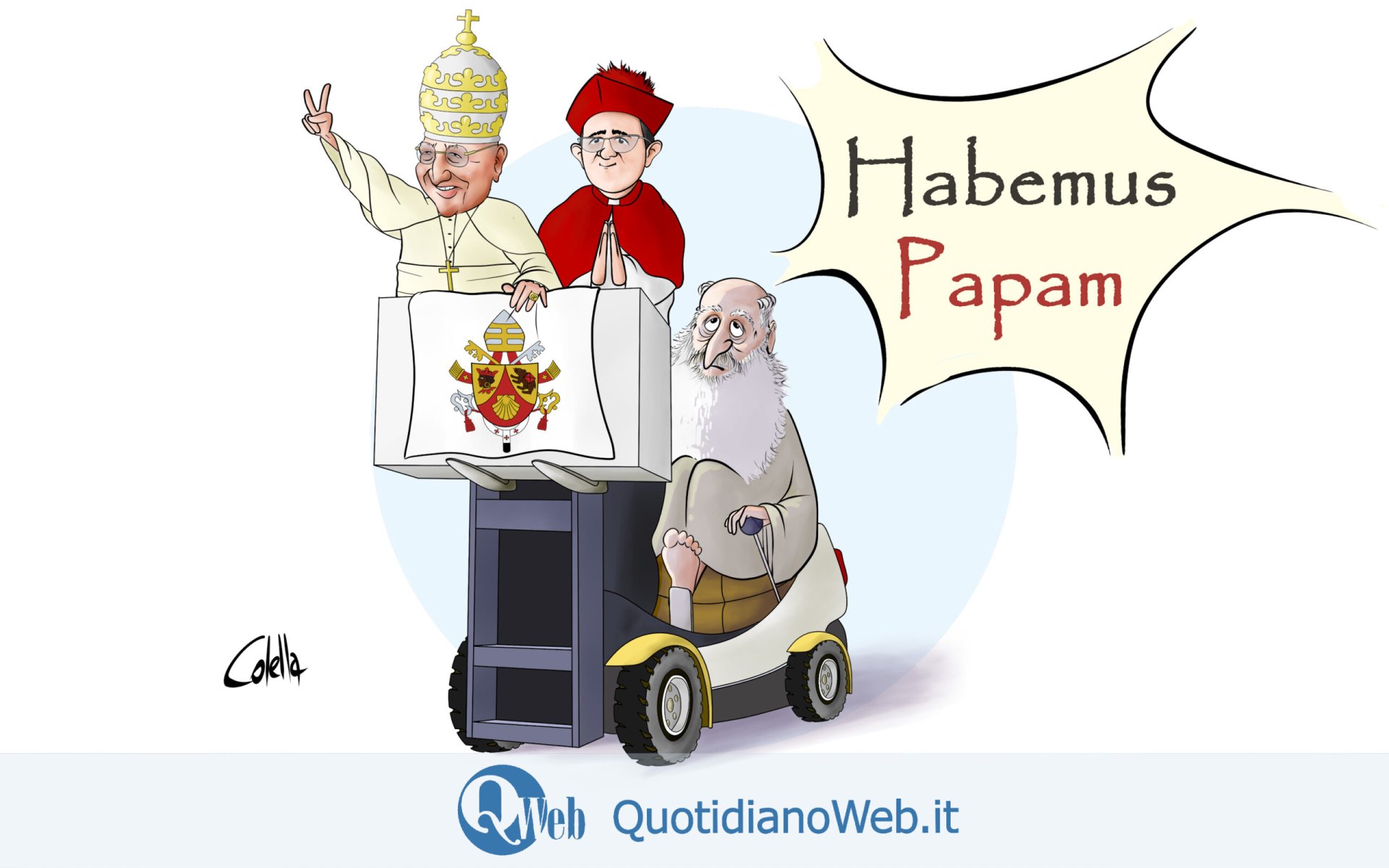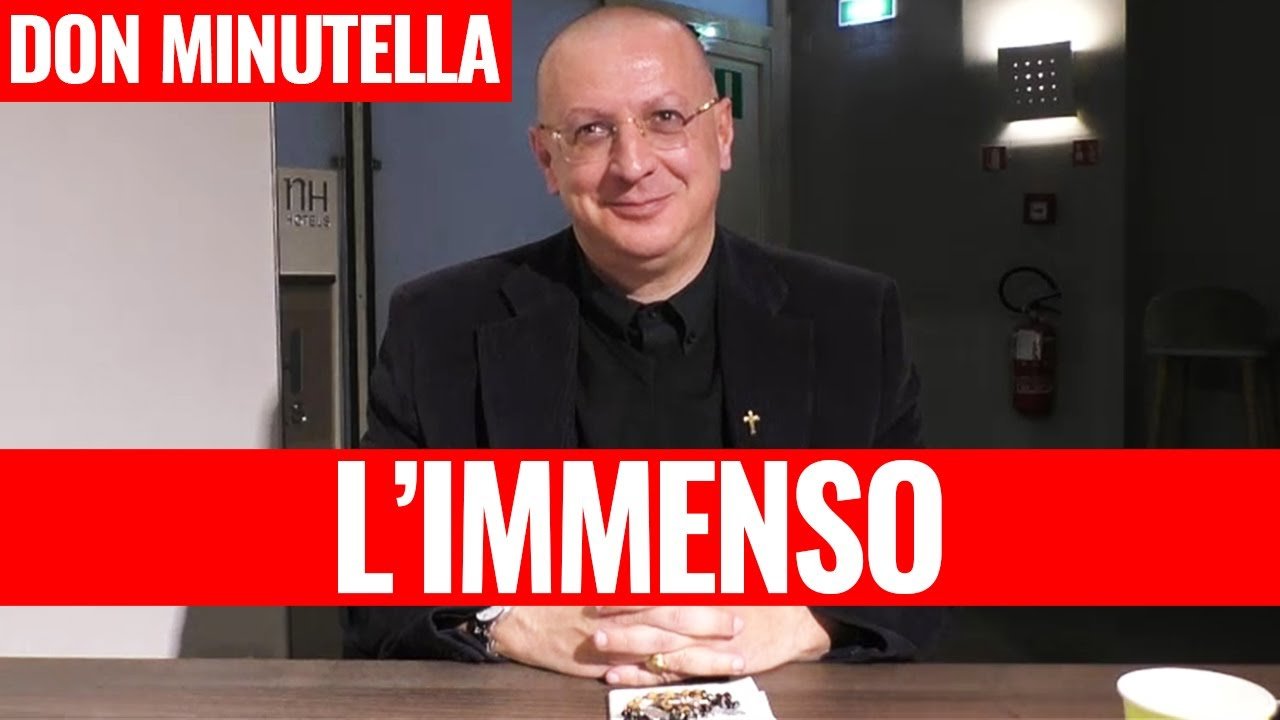

Before addressing the clinical case at hand, it is well to briefly summarize what I wrote in my previous article on the “Syndrome of the Great Prelate”, published in this newspaper (HERE).
After years of longing for his acclamation as the Great Prelate—because the Madonna wants it, Heaven wants it, everyone demands it; and those who disagree can leave—on 24 June 2025, Fr. Alessandro announced his abandonment of the *Piccolo resto*, as some priests contested his «candidacy».
Having overcome this moment of discouragement, Fr. Minutella obtained the long-awaited recognition in Monza on 29 June; yet immediately thereafter, the solemn Election plunged the Palermo-born priest into a profound existential crisis. He could no longer bear it, and as I have already written, the imposing figure of the Great Prelate, summoned by Heaven to save the Church fallen into the hands of Satan, had its days numbered.
In violent distress, on 18 June, he cried out: “Do not call me the Great Prelate. Do not say those words—I have only been due to tell you that myself. I am, I am, but do not say it. As soon as you do, the devil will gore you.” While the Great Prelate faded into the background—even involving the well-known Rai programme “Chi l’ha visto?” (“Who’s Seen Him?”)—the Lion of Mary was winning ever greater support.
I acknowledge that even for a skilled psychologist, deciphering the mechanisms of the mind of this priest, who with a deft alchemical sleight of hand dissolved the Great Prelate into the figure of the Lion of Mary, presents a daunting enigma. On several occasions, the neurologist Sigmund Freud, considered the father of psychoanalysis, addressed the theme of narcissism, and though his thought is by no means considered infallible, it can nonetheless aid us in unraveling this clinical case.
The refusal of Minutella to recognize himself as the Great Prelate is tied to the mechanism of “repression”, which Freud explains in this way in Report of the “Wiener medizinische Presse”:
«This psychic mechanism is a unitary mechanism; for all hysterical phenomena arise through the psychic mechanism of hysterical or neurotic “repression”. Even in normal life, one seeks to forget events that evoke unpleasant memories […] This is accomplished by eluding every perception that might reactivate the idea in question through associations, or by exercising control over one’s flow of thought so as to avoid everything that might awaken this painful representation, and by becoming increasingly cautious in one’s repression and forgetfulness, one attains such a virtuosity that the memory in question no longer surfaces spontaneously to the consciousness».
After the eclipse of the Great Prelate, the Lion of Mary was no less vain than his predecessor, and spared himself no praise: God has given me unusual, singular qualities… For this mission the Lord has granted me intellectual gifts. I have a lightning-quick ability to grasp things… it results in an explosive cocktail… One prelate told me I have a mind superior to the common run… and perhaps it is true.
Freud calls this narcissistic trait «the omnipotence of thoughts», which in the Lion of Mary was accompanied by «an obsessive neurosis» directed at the «wicked enemies», whom he never failed to remind his listeners of daily: They want to destroy me… they have tried to kill me… twice they have attempted to poison me, and the nuns are witnesses… even in the Vatican they fear me, and that is why I risk my life.
Indeed, no one fears him, for within Catholic circles Minutella is regarded more as a source of amusement than of awe—but this fiction is part of his intricate psychic fabric. In Minutella’s strategy, the figure of the «enemy» plays a pivotal role: it embodies the forces of Evil that oppose the prophetic mission of the Lord’s Anointed. Emphasizing the actions of the «damned enemy» serves to exalt the figure of the Lion of Mary and elevate his image among the *Piccolo resto* faithful: «The more they ignore us… the more they have decided that we do not exist, the more the Eternal Father plunges them into chaos».
In My Life. Psychoanalysis, Freud writes: «This condition might be termed “narcissism”, or “self-love”, and it was not difficult to see that it is never completely eradicated. The ego remains, throughout life, the great reservoir of libido, from which all cathexis directed toward an object issues, and to which libido from the object can return».
In Introduction to Psychoanalysis, the physician asserts that narcissism and egoism coincide, and that it is a libidinal phenomenon. What, then, would Freud say to our clinical case? Minutella’s libido—the inner drive which the Austrian neurologist also calls «ego-libido»—drives Don Alessandro to an excess of narcissistic, egotistic self-aggrandizement, finding expression in his identifying with a saintly figure foretold in prophecy and chosen by the Lord to save the Church.
As a result of difficulties occasioned by the defrocked Fr. Ramón Guidetti—whose departure diminished donations to the Foundation established by Minutella—on 18 June, we witnessed yet another twist born of an accumulation of neurotic excitation (Freud): «I am considering the possibility that from 1 July I shall retire… find me a job… The end… I am beside myself». There would be a real risk that the Lion of Mary would metamorphosize into the Rabbit of Carini.
In our subject, euphoric states alternate with depressive crises, between laughter and sobs. The mind of the Lion of Mary is haunted by obsessive images, and he perceives enemies on all sides—including within the *Piccolo resto*—living out what Freud would describe as «paranoid delusion». In our protagonist, neurosis and paranoia are hand in glove.
The central problem tormenting the Lion of Mary is the munus petrinum: «Is it mine or is it not? Am I the legitimate successor of Benedict XVI, or not? Can I ordain bishops and priests, or can I not?» The psychic split easily diagnosed in Minutella may be summed up in the following riddle: «Shall I have myself elected Pope by my three priests, or shall I continue in this ill-defined, ever-shifting role of the Lion of Mary?» This ceaseless quest for narcissistic satisfaction of the ego—coupled with the role of victim—Freud would also term «delusion of being observed».
In Hysteria and Anxiety, the Austrian neurologist states that the clinical picture of anxiety neurosis comprises various symptoms, and at least four of these are present in notable measure in the psychological makeup of the Lion of Mary:
General irritability.
Anxious expectation (the central symptom of neurosis).
Anxiety attacks accompanied by the foreboding of sudden death.
Disturbances of the digestive system.
The «anxiety neurosis», which in the case under examination we might term «the neurosis of the Great Prelate», manifests itself also as an unrelenting struggle between Minutella’s ego—dominated by a cruel, attention-hungry narcissistic libido—and his unresolved aspiration to be recognized as the Saviour of the Church. This perpetual libidinal tension culminates in what Freud classifies as a «death drive».
As the physician avers: «Unlike neurasthenia, anxiety neurosis gives the impression that this is a state of over-excitement. Individuals are in a state of constant unrest, in nerve-wracked excitement, and chiefly manifest any and all forms of anxiety: acute anxiety when an attack strikes suddenly, chronic anxiety in a latent, subtle manner ready to cling to any event. Accompanying these are: numbness, difficulty in breathing, tachycardia, congestion, flushing, sweating, sleep disturbances, and the like. Anxiety often takes the form of discomfort, dyspnoea, cardiac or gastric disturbances. In the most severe attacks, anxiety emerges more clearly.»
To understand the precarious psychological state of the former Great Prelate—whose «delusions of grandeur» (Freud) grow ever more manifest—one need only listen to what he declared on the morning of 13 July, which I summarize in his own words: «There is urgent demand (for my recognition as Pope)… it is not I, as they (the enemies) claim that I wish it… it is not I… I have not proclaimed myself anything… I am a poor man without any mental aberrations… I am not deluded… I am guided by the Madonna. If the Madonna wills this, I shall say so to my confreres. I, trembling with fear, how could I say no?… Perhaps we shall have to wait… and so I shall not move… Or if I knew that the Lord wills it, I should not care about the face of Fr. Celestino, nor of Fr. Enrico, nor…» The clinical picture had worsened markedly, and on 22 July, after flashes of elation or «delusion of attention» (Freud), the Lion of Mary cried out at his enemies, who had told him: You are not the Great Prelate, adding: that is something else entirely, and perhaps they (the enemies) are right. This is enough to make even the most imaginative hairs of the neuropharmacologist Vittorino Andreoli stand on end!
Having virtually abandoned hope that he might be consecrated by an Orthodox bishop (or one of the underground Chinese Church) capable of transmitting the succession, Fr. Alessandro’s refrain became: Peter did not receive the laying on of hands; he was chosen directly by Jesus… nor did Paul receive the laying on of hands… and why should this not happen today? The persuasive efforts of the Lion of Mary on behalf of his followers have grown ever more intense, and he has announced 15 August as a pivotal date for the future of the *Piccolo resto*, to be prepared with a solemn fast.
Fr. Franco Brogi has failed to recognize that the problem is psychiatric, and in a video dated 23 July, he urged Minutella toward «conversion». To those unacquainted with Don Alessandro, listening to his 24 July homily one might suppose he had taken performance-enhancing drugs—but no, he was merely under the familiar «delusion» that prompted him to rave in this fashion: «I Am the Lion of Mary. See, my dear children, I Am the guide of what remains of the *Piccolo resto*; without doubt, I Am the legitimate successor of Benedict XVI… I have no doubt of this.»
The «I Am» of Gospel memory (Jn 8:24, 28, 58) echoed among the *Piccolo resto* faithful with all its gravity. Three days later, he declared: «I have not proclaimed myself Pope… in the event that I am Pope, only the Eternal Father and a couple of you know… I fight personally against the devil… I do not speak idle words, look: I never speak idle words!»
In this state of confused alteration of the psyche—though, as he would have it, perhaps recognized as Pope by a couple of people—he continued to attack his enemies: «It is true I have said that I am the successor of Benedict XVI, but I have never said that I am the Pope.» Freud would have asked Fr. Alessandro: if Fr. Celestino celebrates Mass in communion with the Lion of Mary, why do you continue to claim not to be the Pope? With the Lion of *Carini*, however, appeals to rationality are useless. In regard to Minutella’s profound sufferings, even the Sorrowful Virgin assumed a subordinate role: «It seems that whenever Our Lady is offended, I must pay the price… The statue of the Madonna has been insulted twice in Medjugorje, and twice Don Minutella has been insulted worse than the Madonna.»
We know not what Don Alessandro has in store for 15 August; for now, we suspend our analysis, awaiting further developments to examine in due course.
In 1910, Freud wrote to his colleague Carl Jung that Sicily «is the most beautiful region of Italy», and Minutella may well take pride in the great psychiatrist’s compliment to his homeland. In a 1909 lecture, after affirming: «If there is merit in having given birth to psychoanalysis, that merit is not mine» (it belongs to Josef Breuer), Freud maintained that hysteria—and, consequently, neurosis—is not an organic ailment of the brain, and recovery is likely.
In conclusion, and using Freud’s terminology, we wholeheartedly wish Fr. Alessandro a swift «psychic realignment».
Antonio Romano