1.Peter G. Kirchschläger, 49, social ethicist, University of Lucerne, Switzerland
In December 2018declared that the Catholic Church has an unresolved human rights issue regarding the impossibility of ordaining women to the priesthood. He even claimed that the state «must not look away» but is obliged to pressure the Church on this question. To the argument that women dissatisfied with Catholic doctrine can leave the Church, he responded: «This would mean protecting the offender.»
2.Kathryn A. Koch, 45, Wall Street finance
Kathryn Koch worked at Goldman Sachs Asset Management for twenty years, became a partner at Goldman, and led its Public Equity business with assets under management of approximately $300 billion.
In 2015, Koch was named a «Young Global Leader»by the World Economic Forum.
Since 2024, Koch has served on the board of Nasdaq, where she also sits on the Compensation Committee for senior executives.
3.Paolo Foglizzo, 61, editor of the Jesuit-founded journal «Aggiornamenti Sociali», Italy
Foglizzo participated in both the 2018 Synod on Young People and the 2023–24 Synod on Synodality. He was a member of the working group that prepared the «Instrumentum laboris» in April 2023.
In numerous articles, he has advocated for «a transformation of structures and institutions in a synodal manner».And: «The Church feels called to be a space of inclusion without barriers to access.»
In 2021, he stated that «getting vaccinated» was a «duty of fraternity» and an ethical responsibility for the common good.
4.Joseph Jeyaraj Swaminathan SDB, Indian priest, Pontifical Salesian University in Rome
Swaminathan co-authored astudy in 2021 that positively presents elements of Indian spirituality as resources for understanding human flourishing, including Ātman, Brahman, Dharma, and the three guṇas—sattva, rajas, and tamas.
He describes as the «highest truth» of Advaita Vedānta the unity of the human spirit (ātman) with the divine spirit (Brahman). Moreover, he stated that «the highest goal of all human beings is to realize this unity».
The study describes India’s transcendental perspective as the «highest form of well-being», portrays Indian spirituality as a path leading to the awareness of the «Sacred» and «union with the Divine», and discusses yoga, meditation, and prayer as recommended spiritual practices.
5.Peter Klasvogt, 68, German priest, Rector of the Campo Santo Teutonico
Following the manipulative German abuse study, Father Klasvogt described structural Church reform as «absolutely necessary», emphasizing power, sexual morality, and the priesthood. Though not a voting member of the German Synodal Path, he supported the process and later demanded: «Dare more synodality!»
In his 2022 book«Riskierte Berufung» («Risked Vocation»), Father Klasvogt argues that «there will be no priests in heaven, at least not by virtue of their office».
He suggests the Church could develop new ministries for men and women, even with «laying on of hands and prayer», and proposes reviving historical forms of female «quasi-episcopal authority» in modified ways. In the introduction he co-authored, Klasvogt and his co-authors state that Church teachings on women, the priesthood, the body, and sexual morality «must be reviewed with a willingness to change».
6.Clemens Sedmak, 55, Austrian lay theologian, teaches at the University of Notre Dame in Indiana
In a2025 video, Sedmak urged parishes to welcome homosexual couples «with their lifestyles». He praised the «fidelity» in such relationships and noted that couples «remain together» even in difficult times.
Sedmak also approvingly described accommodations for transgender students at the University of Notre Dame to help them «feel welcome».
Regarding divorced and remarried Catholics, Sedmak cited «Amoris Laetitia» and cited the example of a believing Catholic man whose wife left him after 34 years of marriage and who now enters a new relationship with another woman. The man would thereby find himself in an «irregular situation». Sedmak emphasized mercy and the uniqueness of his situation, stating: «The ideal is a lighthouse, not a court.» When addressing the need to «hold fast to the truth», he quoted Bruno Forte: Truth is not something Christians possess, but «someone who possesses us».
7.Emmanuel Katongole, 65, Ugandan priest, professor at the University of Notre Dame, Indiana
Katongole argues that Christianity «must rediscover and build upon the religious heritage of Africa’s indigenous religions».
He says he is rediscovering «the rich resources of native African spiritualities» and advocates reconnecting «with God, with one another, and with the earth». After his birth, his umbilical cord was buried on his family’s tribal land, for «in African cosmology, every living being is connected to the world of the ancestors».
He welcomed the connection Pope Francis has made between indigenous culture and ecology.
8.Lucy Afandi Esipila, Kenya
Lucy Esipila is a staunch advocate of the United Nations’ Agenda 2030: In 2020, she told Caritas Africa that the Church had «internalized» the Sustainable Development Goals, describing efforts to mobilize the Caritas network of 372 dioceses and 15,000 parishes to advance Agenda 2030.
In a 2025 Caritas Africa statement signed by Esipila, she called for debt cancellation so governments could increase spending on women, including «improving reproductive health care». The statement also demanded reform of the «global financial architecture» and a comprehensive UN framework for debt regulation.
More broadly, Esipila has advocated for a strongly redistributive economic agenda, including progressive taxation, universal free public health and education, anti-discrimination measures, and reform of the international financial architecture.
9.Caren Rodrigues, Indian
She is deeply involved in Pope Francis’ «Economy of Francesco» movement, which seeks a «new global economic model» centered on the environment, workers, and justice for the poor. Selected as one of the original delegates and «Life Economists», she became a research fellow at the EoF Academy, representative of the Indian hub, and research coordinator, and in 2024 one of only 34 members of the representative assembly who met Pope Francis in Rome.
10.Omer S. Combary, Burkina Faso
Omer Souglimpo Combary is a Burkinabé professor of development economics. His recent work closely aligns with the global agenda on climate change and the Sustainable Development Goals.
Omer Combary was one of only two lead researchers for the World Bank-funded baseline study in Burkina Faso in 2018 for the «Sahel Women Empowerment and Demographic Dividend» (SWEDD) initiative. SWEDD was more than a poverty study. The World Bank describes the project as aiming to reduce gender inequalities by «improving access to information on reproductive health and contraception».
11.Francesco Coluccia, 53, Italian priest, exorcist, psychologist, and bioethicist
He holds a «pro-life» stance: he has closely collaborated with the Italian «Movimento per la Vita» movement, led prayer at its Vatican assembly in 2025, published a book on the movement in 2026, and champions the sanctity and dignity of human life from conception to natural death.
12.Jacqueline Remond, Australian
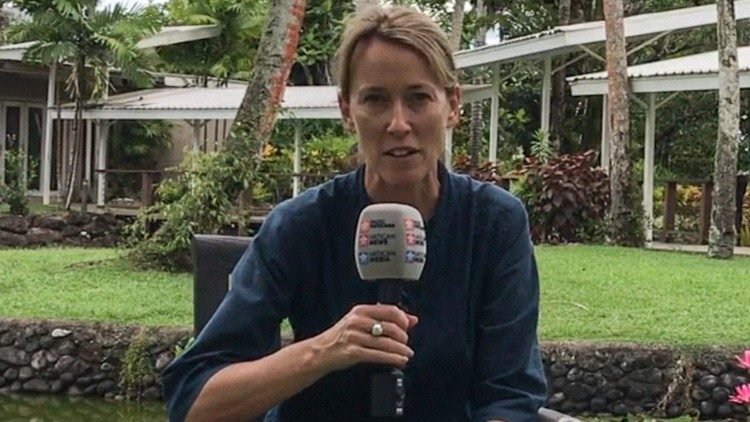
Remond works at the Australian Catholic University in the field of integral ecology.
In 2006, she completed Al Gore’s «Climate Change Leader» training and subsequently gave lectures in Australia’s Kimberley region on Gore’s climate program. From 2007 to 2017, she served as national director of «Catholic Earthcare Australia» and co-founded the «Global Catholic Climate Movement», now known as the «Laudato Si’ Movement».
She is one of the most prominent appointments reflecting the continuity of the Francis era. Her public work revolves largely around climate policy, «Laudato si’», «ecological conversion», and embedding environmental measures in all Catholic institutions.
Remond promotes a sacralized ecological spirituality. In a2023 interview with Vatican News, she called on Christians to «enter into kinship with water», spoke of hearing water «weep» and «sing», urged people to «sing this song together with the water», and described how humanity enters into a «sublime communion» with creation, concluding with the words: «God is in all this.»
 AREAM SUAM
The Most Recent Appointments of Leo XIV.: WEF, Agenda 2030, and “Women Must Become Priestesses”
Tradotto dal tedesco dall'IA
Pope Leo XIV. has appointed twelve new advisors to the Dicastery for Promoting Integral Human Development. Leo XIV. is predominantly filling the Vatican’s socio-political apparatus with anti-Catholic figures.