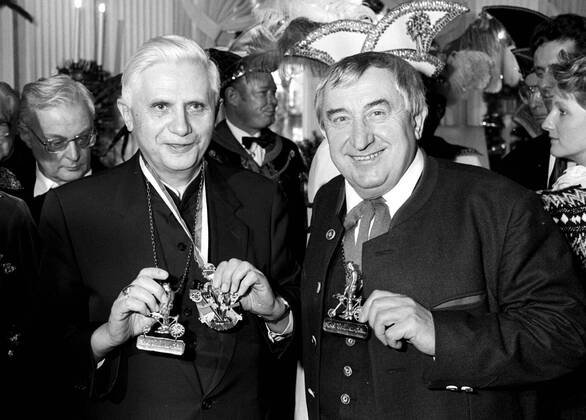
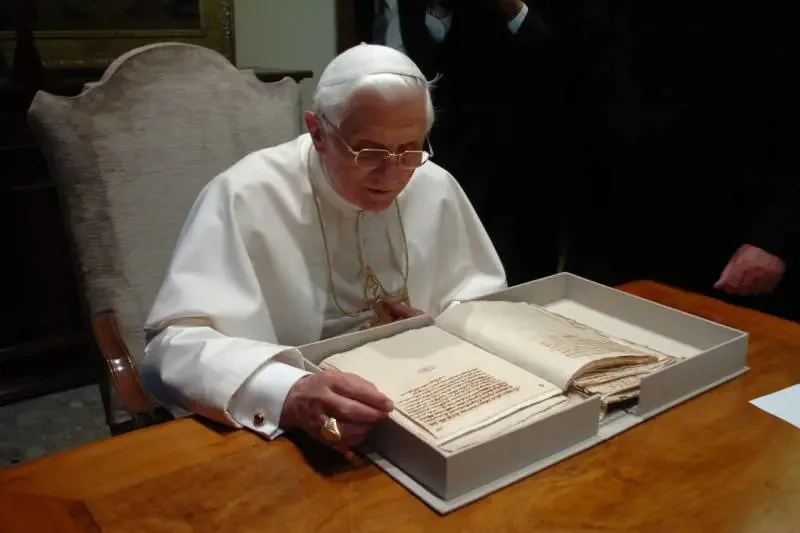
The visit of Leo XIV to Sapienza, amid applause and cheers of "hurrah" from professors and students, symbolically mends the wound of censorship inflicted eighteen years ago on Benedict XVI.
In an era more polarized than 2008, we have moved from the "Pope out of the university" shouted by student/activist groups of Political Science to yesterday's "hurrah for the Pope".
Leo's words on "disarming and disarmed peace" and on "the concerning warming of the climate system" must have seemed to yesterday's papal opponents more acceptable than those Benedict would have wished to pronounce in the same Aula Magna. Yet the Ratzingerian lectio magistralis that remained in a drawer is perfectly overlapping with the "whoever seeks truth ultimately seeks God" pronounced yesterday, off the cuff, by Prevost in the university chapel. A sign that the two Popes share the same idea of the mission that the university and knowledge in general should have.
In any case, the mere presence of the Pope in the Roman university was enough to expose the hypocrisy of the 2008 protest. The invitation to Benedict XVI was defined by 67 professors as a "disconcerting initiative". Their appeal asked to silence the Pope "in the name of secularism, science, culture and respect for this university". Those who defended the anti-Ratzinger protest (many in the then center-left majority: from Emma Bonino to socialists to Refoundation) raised the issue of alleged "Vatican interference". The tranquil visit today of Leo XIV, against which no protests have been raised, demonstrates how at the origin of the militant campaign eighteen years ago there was no defense of secularism. The problem was Joseph Ratzinger's ideas, not the Pope. This is confirmed by the fact that the future Nobel laureate Giorgio Parisi, one of the signatories of the 2008 appeal, even demanded to establish which topics the unwelcome guest could address and which not: "he should come to speak about the death penalty", declared the physics professor, rejecting instead as "out of place" any possible reference to the abortion moratorium. And yesterday Parisi himself was in the front row applauding Leo's words, thus providing us with the symbolic image of how a Pope speaking in Aula Magna is no longer an "incongruous event" for the 2008 protesters.
The censorship invoked "in the name of culture" against an intellectual Pope is a contradiction that will remain in history as a manifestation of intolerance. As Cardinal Walter Brandmüller points out to Il Giornale, a professor in German state universities for decades, the absurdity of the Sapienza episode is aggravated by the fact that "they prevented not only a Pope from speaking, but also a colleague professor with a prestigious curriculum, member of the Academy of Sciences of Rhineland-Palatinate, of the Academie des Sciences Religieuses in Brussels and of the Académie des sciences morales et politiques of the Institut de France". Indeed, the fact that the Pope who went down in the history of contemporary Church for his commitment to presenting the reconcilability between faith and reason was not allowed to speak in a university founded by Boniface VIII appears, today more than yesterday, truly paradoxical.
In short, the success of yesterday's visit by Leo has dropped a mask worn for nearly twenty years: for some, the Pope's right to speak in a university depends on what the key words of a pontificate are. And the conservative Ratzinger, just like the anticommunist Wojtyla who was contested at Sapienza in 1991, had to be denied.