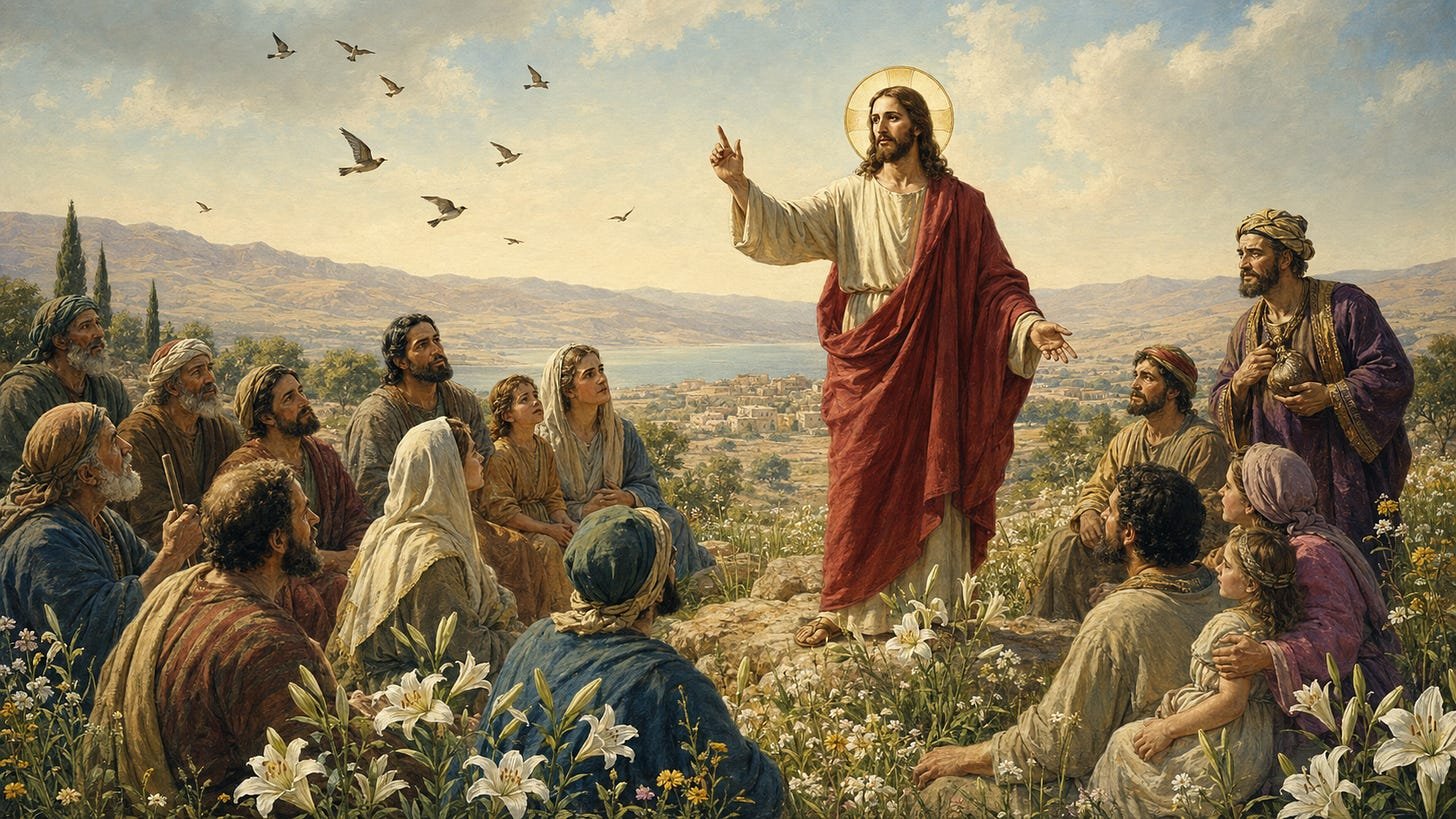

You Samaritans worship what you do not know; we worship what we do know, because salvation is from the Jews. But a time is coming, and even now has arrived, when the true worshipers will worship the Father in spirit and truth; for such people the Father seeks to be His worshipers. (Jesus to the Samaritan woman at the well in John 4:22-23)
Nicodemus responded and said to Him, “How can these things be?” Jesus answered and said to him, “You are the teacher of Israel, and yet you do not understand these things? Truly, truly, I say to you, we speak of what we know and testify of what we have seen, and you people do not accept our testimony. If I told you earthly things and you do not believe, how will you believe if I tell you heavenly things? (Jesus to Nicodemus, a teacher of the Law in John 3:9-12)
One way to understand worship “in Spirit and Truth” could be as follows: I worship God convinced in my innermost being that God must be worshipped after contemplating the Truth that God is which is external to myself.
In that act of worshipping my soul acknowledges and reflects the Truth that God is thus ordering the soul of the believer to the divine will. “Your kingdom come. Your will be done, on earth as it is in heaven.” (Matthew 6:10)
Knowing that God is Truth is essential to reflect Him, to surrender our will to Him. Jesus points at this “knowing” both in the story of the woman by the well and the story of Nicodemus visiting Him at night.
Two events that are negative images of each other …
Nicodemus comes at night, the woman meets Jesus at noon. Nicodemus is a respectable man, the woman is a despised individual of no social importance. Nicodemus questions Jesus cautiously, the woman accepts Jesus teaching amazed that He would even address her! The woman accepts heavenly things such as the water that ends all thirst, Nicodemus has to make a mental effort to wrap his mind around this “being born again” business. The woman surrenders herself to grace but Nicodemus the teacher of the Law wants to make sure. He can’t quite trust yet.
This man comes to Jesus at night
Now there was a man of the Pharisees, named Nicodemus, a ruler of the Jews; this man came to Jesus at night and said to Him, “Rabbi, we know that You have come from God as a teacher; for no one can do these signs that You do unless God is with him.” (John 3: 1-2)
“De noche, todos los gatos son pardos” (“At night, all cats are grey”) says an old Spanish proverb. Confusion is a property of darkness because our eyes are made mainly for the light of day. When we walk at night we have to be more alert because things may not be what they appear to be.
Nicodemus is not jealous of Jesus’ wonderful works. The teacher of the Law is not tainted by the “leaven of Pharisees and Sadducees” and he can see the works of Jesus having a divine origin. At the same time, he is a respectable man, a part of the religious establishment. He is influenced by those surrounding him and that moves him to doubt. But tonight he has come “to the light” who is Jesus.
“For everyone who does evil hates the Light, and does not come to the Light, so that his deeds will not be exposed. But the one who practices the truth comes to the Light, so that his deeds will be revealed as having been performed in God.” (John 3: 20-21)
Jesus reveals his true identity and mission to the woman at the well. That is harbinger of things to come: the Messiah will illuminate the nations first and only later —at the end times— He will shine over Israel. The first will be last. (Matthew 20:16) The woman by the well represents the gentile nations under the sun, ready to receive the message of Christ, ready to be conquered by Christ. Nicodemus represents Israel, eclipsed by the powers of this world, outworn by the just chastisements of God, exiled so many times, oppressed by so many false leaders, blind to the very visitation of their true Lord and King.
Jesus has reserved something special for Nicodemus.
“Jesus responded and said to him, ‘Truly, truly, I say to you, unless someone is born again he cannot see the kingdom of God.’” (v. 3)
“Truly, truly, I say to you, unless someone is born of water and the Spirit, he cannot enter the kingdom of God.” (v. 5)
“‘And this is the judgment, that the Light has come into the world, and people loved the darkness rather than the Light; for their deeds were evil. For everyone who does evil hates the Light, and does not come to the Light, so that his deeds will not be exposed. But the one who practices the truth comes to the Light, so that his deeds will be revealed as having been performed in God.” (vv. 19-21)
Nicodemus left that night with lots of “food for thought” but that last advice in vv. 19-21 must have shown him that his religious companions were indeed evil. Jesus was exposing the deeds of the religious leaders of that time. Nicodemus was beginning to “come to the light” guided by the love of truth he had harvested from years of reading the Law of God.
Nicodemus was —as far as we can tell— a decent man. But he could not save himself. He needed “water and Spirit” and he needed “to be born again” — in other words he needed grace and the sacraments that were entering the world in his own days. He needed his deeds revealed by approaching the Light of the World now sitting in from of him.
The load given of the woman at the well seems like a breeze compared to the heavy burden placed at the feet of Nicodemus. Heavy are the reponsibilities placed on those who know God already. Many more centuries were to come upon Israel after rejecting the gentle, soft yoke of Jesus. One day —not too long in the future— Israel will emerge from the shadows to meet the Master, Jesus of Nazareth. There and then Israel will discover the mission hidden from them since ancient times so Nicodemus can sing as Simeon the Priest of God:
“For my eyes have seen Your salvation,
Which You have prepared in the presence of all the peoples:
A light for revelation for the Gentiles,
And the glory of Your people Israel.”
(Luke 2: 29-32)
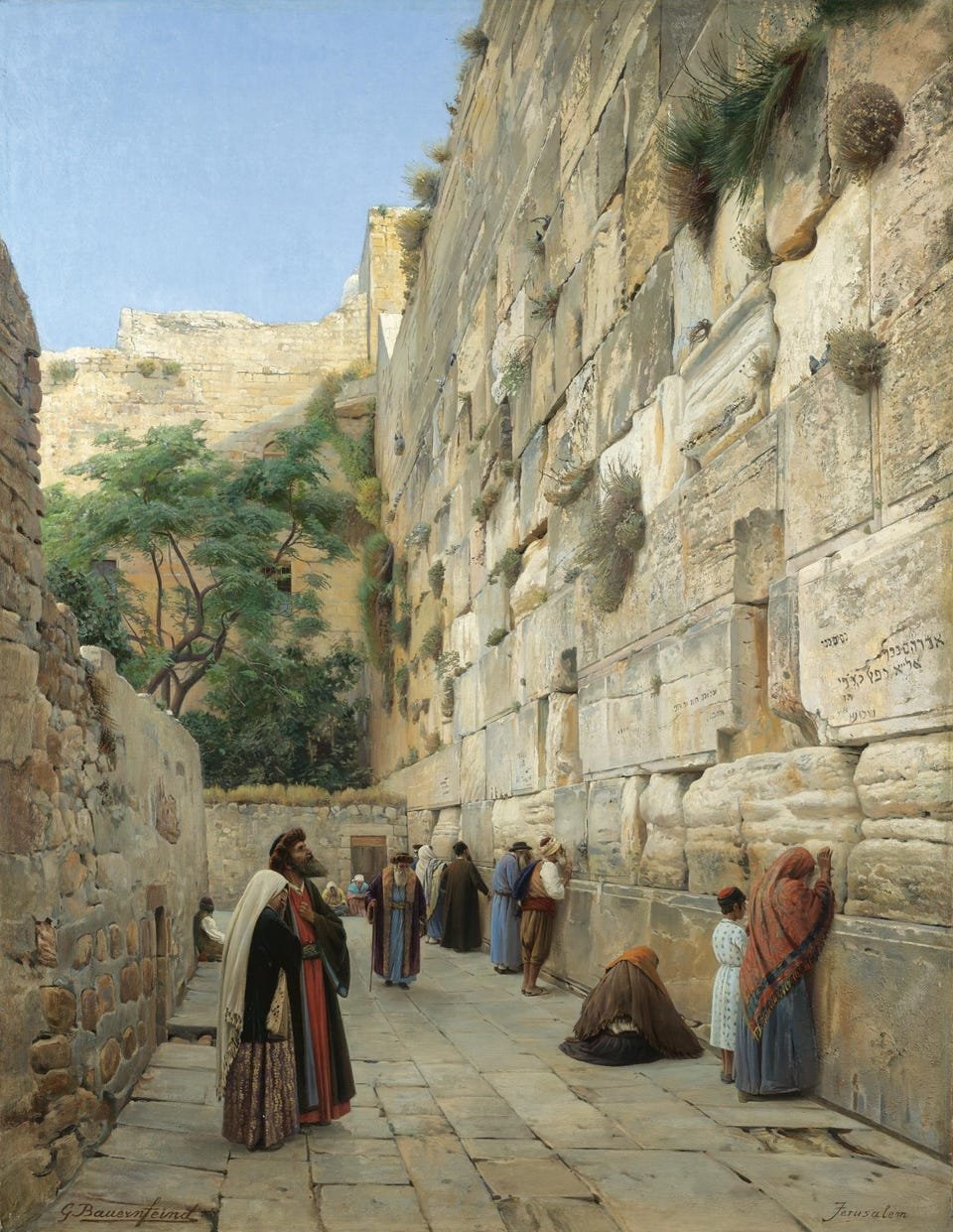
Wailing Wall, Jerusalem — Gustav Bauernfeind (19th century)